

Professional bedbug exterminator in Toronto
Licensed & certified experts using proven bio and chemical treatments to eliminate bedbugs at every life stage — including eggs. Free inspection, same-day response, guaranteed results.
Licensed & certified bedbug exterminators
Struggling with bedbugs? DIY methods fail — bedbugs develop resistance to chemicals over time. Our licensed, certified Toronto exterminators eliminate bedbugs fast with proven treatments, protecting your home, family and peace of mind. Same-day response and guaranteed results.
What are bedbugs?
Bedbugs are small, wingless insects that feed only on the blood of humans and warm-blooded animals. They have lived alongside people for thousands of years and are found worldwide — and Toronto, with its large population, frequent travel and multi-unit housing, sees them reported regularly.
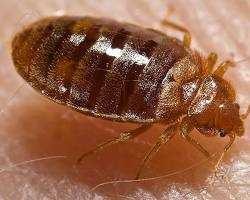
Common Bedbug (Cimex lectularius)
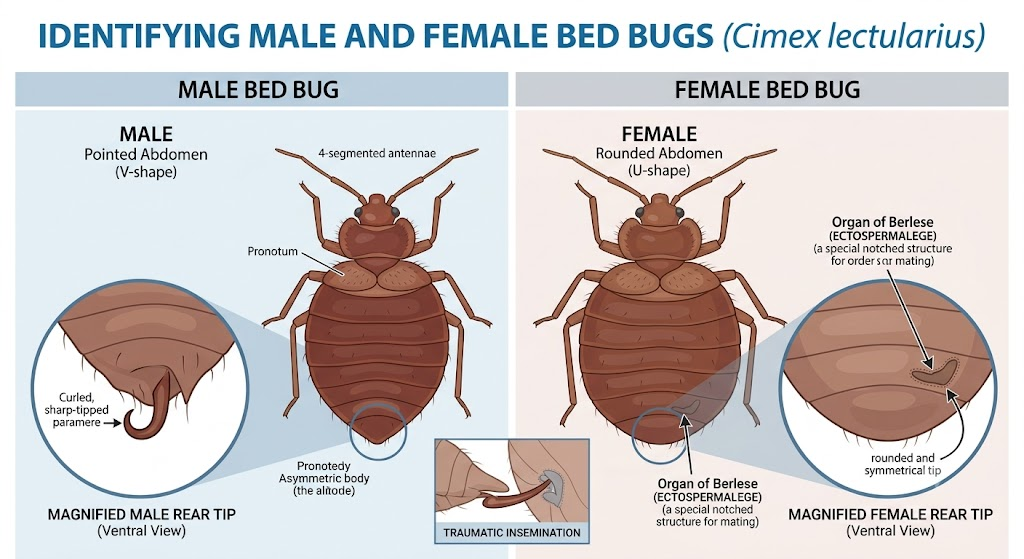
The species most commonly found in Toronto belongs to the family Cimicidae. It is easy to recognise once you know what to look for:
- Wingless, with a flat, oval-shaped body
- Reddish-brown in colour — about the size of an apple seed
- Active mainly at night, feeding on blood for 5–10 minutes before hiding
- Unlike fleas they cannot jump; unlike lice they do not live on the body
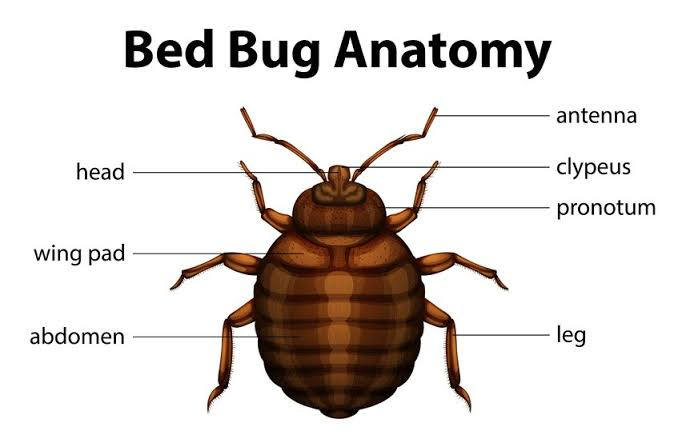
Body parts of a bedbug
Built to hide & feed
- Head — two antennae, compound eyes, and piercing-sucking mouthparts
- Thorax — six legs and no functional wings
- Abdomen — expands greatly after feeding, changing from flat to swollen after a blood meal
From egg to adult
Bedbugs undergo incomplete metamorphosis — egg, five nymph stages, then adult. Every nymph needs a blood meal before it can molt to the next stage, which is why treating only the adults you see never solves the problem.
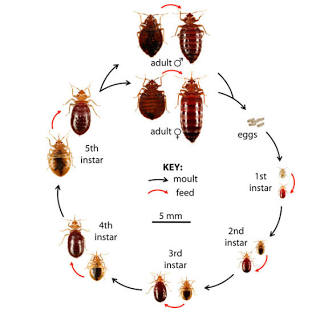
- Eggs — white, about 1 mm long, laid in cracks and crevices; hatch in roughly 6–10 days
- Nymphs — tiny and pale, needing a blood meal before each of five molts
- Adults — about 5–7 mm long and can live several months, sometimes longer in favourable conditions
How long can bedbugs survive without feeding?
| Life stage | Typical survival without a blood meal |
|---|---|
| Eggs | About 6–10 days before hatching (they do not feed while in the egg) |
| Nymphs | Several weeks to a few months, depending on temperature and humidity |
| Adults | Typically 2–6 months indoors; in cooler conditions some have survived up to about a year |
Bedbugs prefer dark, narrow spaces near where you sleep
- Mattress seams & box springs
- Bed frames & headboards
- Furniture joints & sofas
- Behind pictures & baseboards
- Electrical outlets
- Luggage & clothing
Bedbugs are excellent hitchhikers
They do not fly or jump — they travel on the things we carry, which is how infestations move between apartments, hotels and homes.
- Suitcases & backpacks
- Used furniture & mattresses
- Clothing
- Moving boxes
- Public transport, libraries, schools & theatres
- Apartment-to-apartment through shared walls
What to look for
Live bugs & eggs
Live bedbugs in seams and crevices, plus tiny white eggs about 1 mm long.
Shed skins
Pale, empty skins left behind as nymphs molt through their five stages.
Black spots
Small dark droppings on mattresses, seams and nearby surfaces.
Blood stains
Small rust-coloured stains on sheets from crushed bugs after feeding.
Clusters of bites
Itchy bites in lines or clusters — though bites alone cannot confirm an infestation.
Restless sleep
Difficulty sleeping and frequent waking, often the first thing people notice.
How bedbugs affect people
Effects can be significant even though bedbugs are not known to spread infectious diseases.
Skin reactions
Many people develop red bumps, itching and swelling — while some have little or no reaction at all.
Allergic reactions
Some develop larger itchy welts or, rarely, more severe reactions that require medical attention.
Secondary infection
Excessive scratching can break the skin and allow bacteria in, causing infections such as cellulitis or impetigo.
Sleep problems
Difficulty sleeping, frequent waking and a fear of being bitten are common with an active infestation.
Stress & anxiety
Living with bedbugs can lead to anxiety, stress, embarrassment and a reduced quality of life.
Not a hygiene issue
Bedbugs are not a sign of poor hygiene — they are found in clean and cluttered homes alike.
Bedbug vs. flea vs. mosquito
| Feature | Bedbug | Flea | Mosquito |
|---|---|---|---|
| Can fly | No | No | Yes |
| Can jump | No | Yes | No |
| Feeds on blood | Yes | Yes | Females only |
| Known to spread disease | No evidence in normal conditions | Some species can | Yes |
How we get rid of bedbugs
If bedbugs are only in localized areas you may attempt some first steps yourself — but if you're unclear on the severity, it's best to have a Nomore Pest professional assess the situation.
Identify
Confirm and locate all bedbugs on your property and follow the pre-prep instructions before treatment.
Laundry & heat
Wash bedding in hot water and dry on high heat for at least 30 minutes to clear fabrics.
Treatment
Licensed technicians apply proven bio and chemical treatments targeting every life stage — including eggs.
Follow-up
A follow-up inspection is built into every plan to confirm the infestation is fully gone.
Reduce the risk of bedbugs
At home
- Inspect second-hand furniture before bringing it indoors
- Vacuum regularly and reduce clutter
- Check mattresses and bed frames periodically
While travelling
- Inspect hotel mattress seams and headboards
- Keep luggage off beds and floors
- Wash and dry travel clothes on high heat when you return
Bedbug questions
If you notice small rust-coloured stains on your sheets, tiny dark spots on your mattress, shed skins, or wake up with unexplained bites, it's time to call. A professional inspection confirms the infestation and recommends the best course of action.
Current scientific evidence indicates bedbugs are not known to transmit diseases to humans during normal feeding. Their bites can still cause itching, allergic reactions and, from scratching, secondary skin infections.
In warm Toronto homes, adults typically survive 2 to 6 months without a blood meal, and in cool, protected vacant spaces some may survive 6 to 12 months. This is why leaving a room empty does not eliminate them.
Not usually. Bedbugs inside heated homes are protected from the cold. They can die below -18°C for several days, but indoor infestations rarely reach those conditions — so professional treatment is needed.
Cost varies with the size of your home and severity of the infestation. We offer competitive pricing and free inspections, so you know exactly what to expect before treatment begins.
Get rid of bedbugs once and for all.
Our proven treatment targets every stage of infestation — fast, reliable and safe. Book your free inspection today.
Same-day service · Toll-free 800-461-1827 · Toronto & the GTA