You found a small brown bug on the bedroom floor, or on the windowsill, or in the bathroom, and the first thought was bed bugs. That's a reasonable worry, but plenty of harmless or unrelated insects get mistaken for them. Each one needs a different fix, so getting the identification right comes before anything else.
This guide covers the bugs most often confused with bed bugs in Toronto and GTA homes, the features that tell them apart, and what to do once you know what you're dealing with.
Quick Answer: Bugs That Look Like Bbed Bugs
| Look-alike | Fastest way to tell it apart |
| Bat bugs | Almost identical. Longer hairs behind the head; usually tied to bats in the attic or walls |
| Carpet beetles | Rounder, with a hard shell and a mottled pattern; adults fly and gather at windows |
| Cockroach nymphs | Long antennae, run fast, and live in kitchens and bathrooms |
| Spider beetles | Round, shiny and long-legged, like a tiny spider; found near stored food |
| Booklice | Tiny, pale and soft; found in damp spots, books and paper |
| Fleas | Flattened side to side and jump; usually linked to pets |
| Ticks | Eight legs instead of six; picked up outdoors and found attached to skin |
| Flour and grain beetles | Long and narrow with a hard shell; found in the pantry |
What a Bed Bug Actually Looks Like
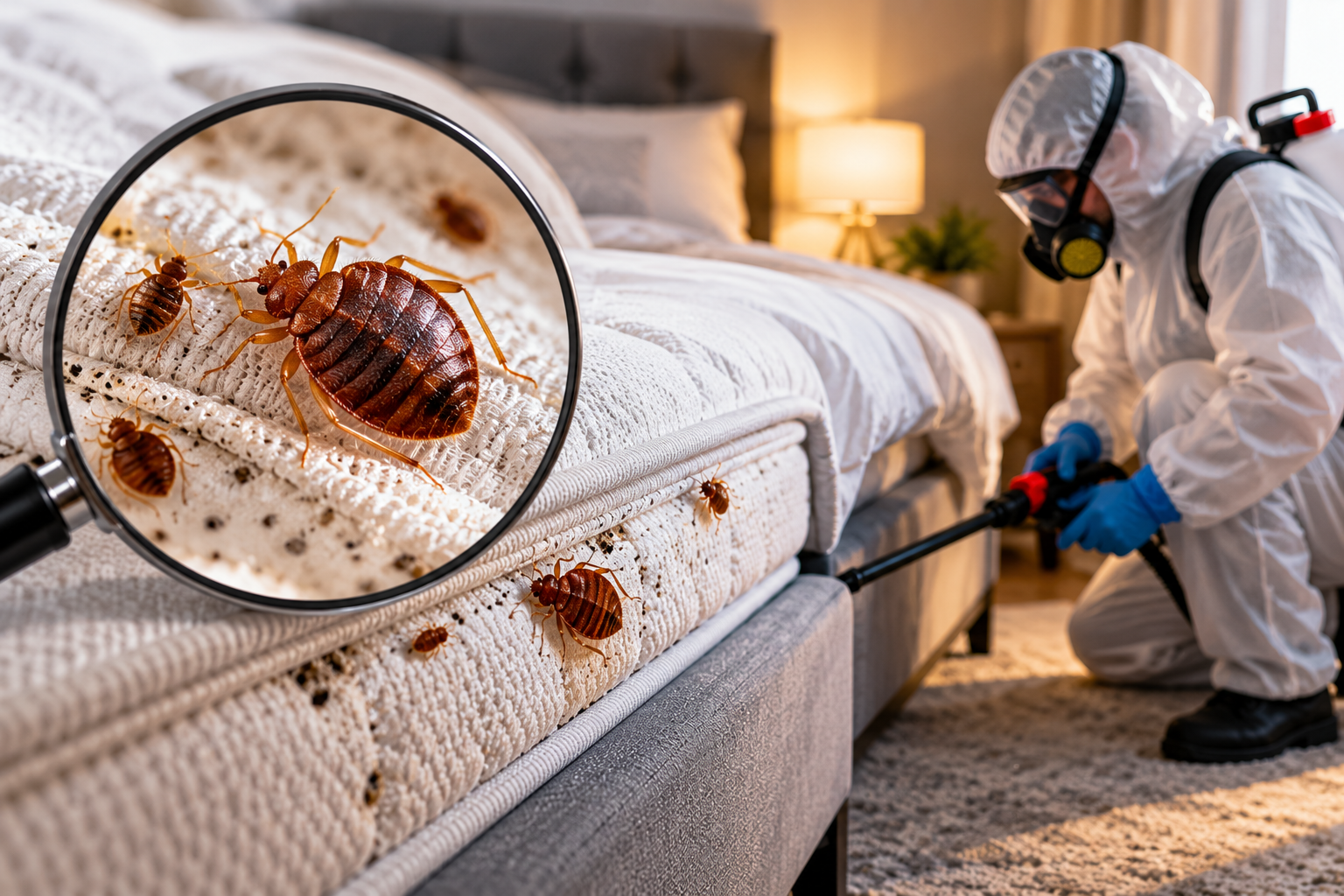
Before comparing look-alikes, it helps to know the real thing. An adult bed bug (Cimex lectularius) has these features:
- Size: about 5 mm long, roughly the size of an apple seed. Young bed bugs (nymphs) start as small as a poppy seed.
- Shape: flat and oval when unfed, then swollen and longer after a meal.
- Colour: reddish-brown. Nymphs are pale or almost see-through until they feed.
- Legs and wings: six legs and no working wings. Bed bugs can't fly or jump. They crawl.
- Head: short, four-part antennae and a beak tucked under the body.
- Where they live: close to where people sleep or sit for long periods: mattress seams, box springs, bed frames, headboards and couch seams.
Bed bugs also leave evidence behind: black fecal spots that smear like ink, empty shed skins, and tiny white eggs in seams and cracks. A single bug with none of these signs nearby is more likely to be something else, although it's not proof.
1. Bat Bugs and Bird Bugs
Bat bugs are the closest match. They belong to the same family as bed bugs and look nearly identical to the naked eye. Entomologists tell them apart by the fringe of hairs just behind the head: on a bat bug, those hairs are longer than the width of its eye. On a bed bug they're shorter. You'll need a magnifying glass or a clear close-up photo to see it.
The bigger clue is location. Bats are the bat bug's host, so bat bugs usually point to bats roosting in an attic, wall void or chimney. They often show up on upper floors or near ceilings, and they bite people mainly when the bats have left or been removed. Swallow bugs work the same way with bird nests on eaves and overhangs.See How to Get Rid of Bed Bugs
Why it matters: treating the bedroom for bed bugs won't solve a bat bug problem. The bats have to be removed humanely and the entry points sealed, or the bugs keep coming back.
2. Carpet Beetles
Carpet beetles are one of the most common reasons people think they have bed bugs, and the confusion starts with the larvae.
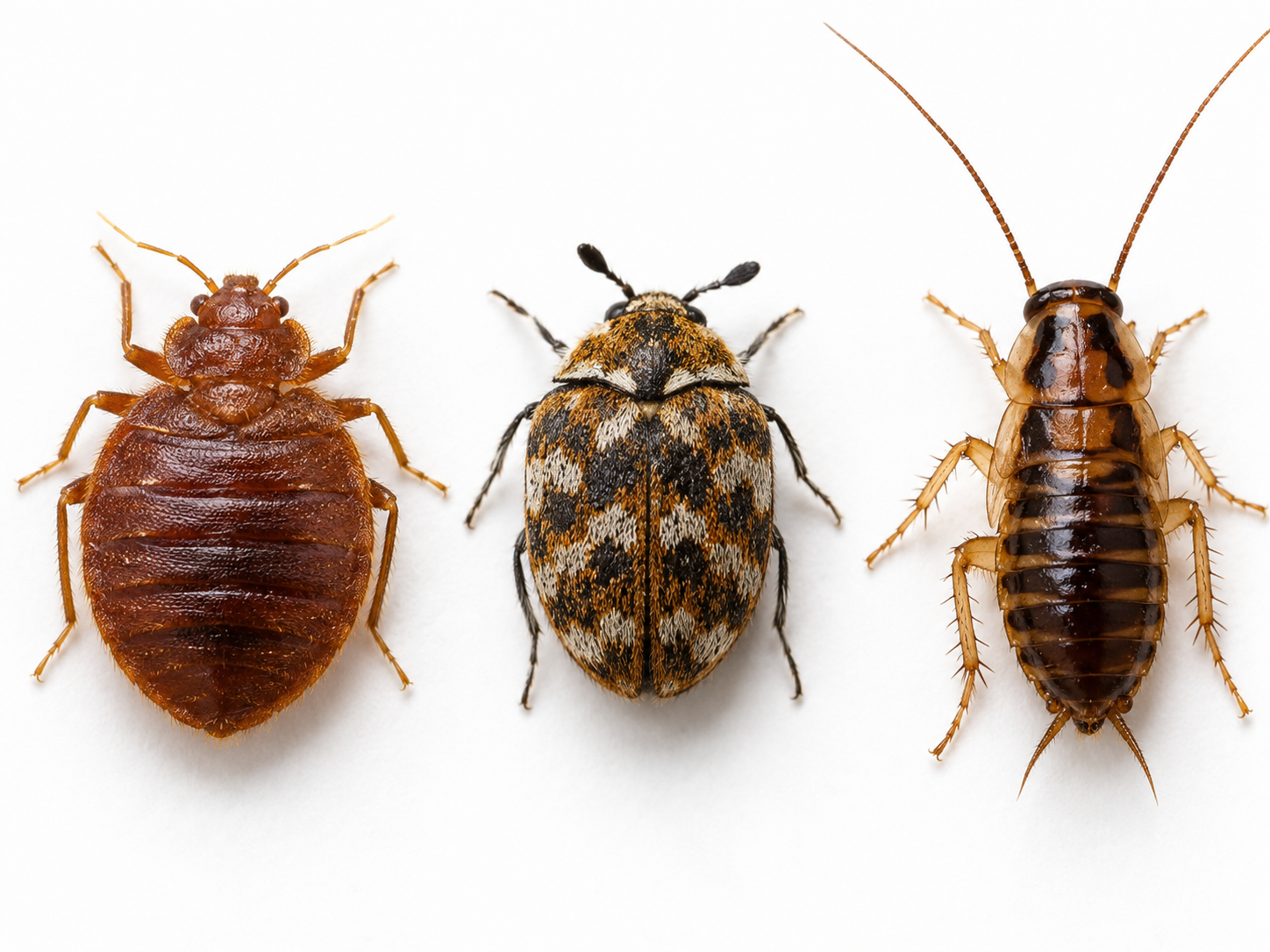
- Adults are small (about 2–4 mm), round and hard-shelled, often with a mottled pattern of black, white and yellow-brown scales. They have wings, fly well and collect on windowsills because they're drawn to light.
- Larvae are carrot-shaped, brown and covered in bristly hairs. They feed on wool, fur, feathers, carpet and pet hair, and they shed hairy skins that people mistake for bed bug casings.
Carpet beetles don't bite. Their larvae's barbed hairs can still cause itchy red bumps, mostly under clothing, that look a lot like bites. A report in the CDC's Emerging Infectious Diseases journal notes that this rash is often confused with bed bug or flea bites, which leads to unnecessary insecticide use.
How to tell: a rounder, hard-shelled bug that flies, sits on windowsills or crawls on wool and stored clothing is likely a carpet beetle. Bed bugs are flat, wingless and stay near the bed.
3. Cockroach Nymphs
A young German cockroach is small, brown to almost black, and wingless, which is why "bed bug or roach?" is such a common question. Look at three things:
- Antennae: cockroaches have long, thread-like antennae, often as long as the body. Bed bug antennae are short.
- Speed: cockroach nymphs run quickly when disturbed. Bed bugs move slowly.
- Location: cockroaches stay near food and moisture: kitchens, bathrooms, behind appliances. German cockroach nymphs often have a pale stripe down the back.
Cockroaches don't feed on people. If you're finding small, fast bugs in the kitchen at night, you're more likely dealing with roaches than bed bugs.
4. Spider Beetles
Spider beetles have a round, shiny, reddish-brown body and long legs, so they look like a tiny spider or a fed bed bug. They're usually 2–4 mm long and live in stored food such as flour, cereal, spices and pet food. They don't bite. Finding them in or near the pantry, rather than the bed, is the giveaway.
5. Booklice
Booklice are very small (about 1–2 mm), soft-bodied and pale cream to light brown. People spot them on books, papers, windowsills and in damp basements or bathrooms. They feed on microscopic mould, so they point to a humidity problem rather than a pest that feeds on people. Booklice don't bite. Reducing moisture with a dehumidifier and better ventilation usually takes care of them.
6. Fleas
Fleas are dark reddish-brown and about the same size as a small bed bug, but they're built differently. A flea is flattened from side to side, so it looks thin from above, while a bed bug is flattened top to bottom and looks wide and oval. Fleas also jump, sometimes many times their body length, and bed bugs can't.
Flea bites tend to show up around the ankles and lower legs, and an infestation is usually linked to a dog or cat. If your pet is scratching and you're seeing tiny jumping insects on carpets or pet bedding, think fleas first.
7. Ticks
Unfed ticks are flat, oval and reddish-brown, and an engorged tick swells up the way a fed bed bug does. The easy difference is the legs: adult ticks have eight legs, and bed bugs have six. Ticks are picked up outdoors, in long grass and wooded areas, and you usually find one attached to skin rather than hiding in a mattress. Ticks in Ontario can carry Lyme disease, so remove an attached tick carefully with fine-tipped tweezers and watch the area for changes.
8. Flour and Grain Beetles
Flour beetles and other pantry beetles are small (about 3 mm), reddish-brown and hard-shelled, which is why people mix them up with bed bugs.
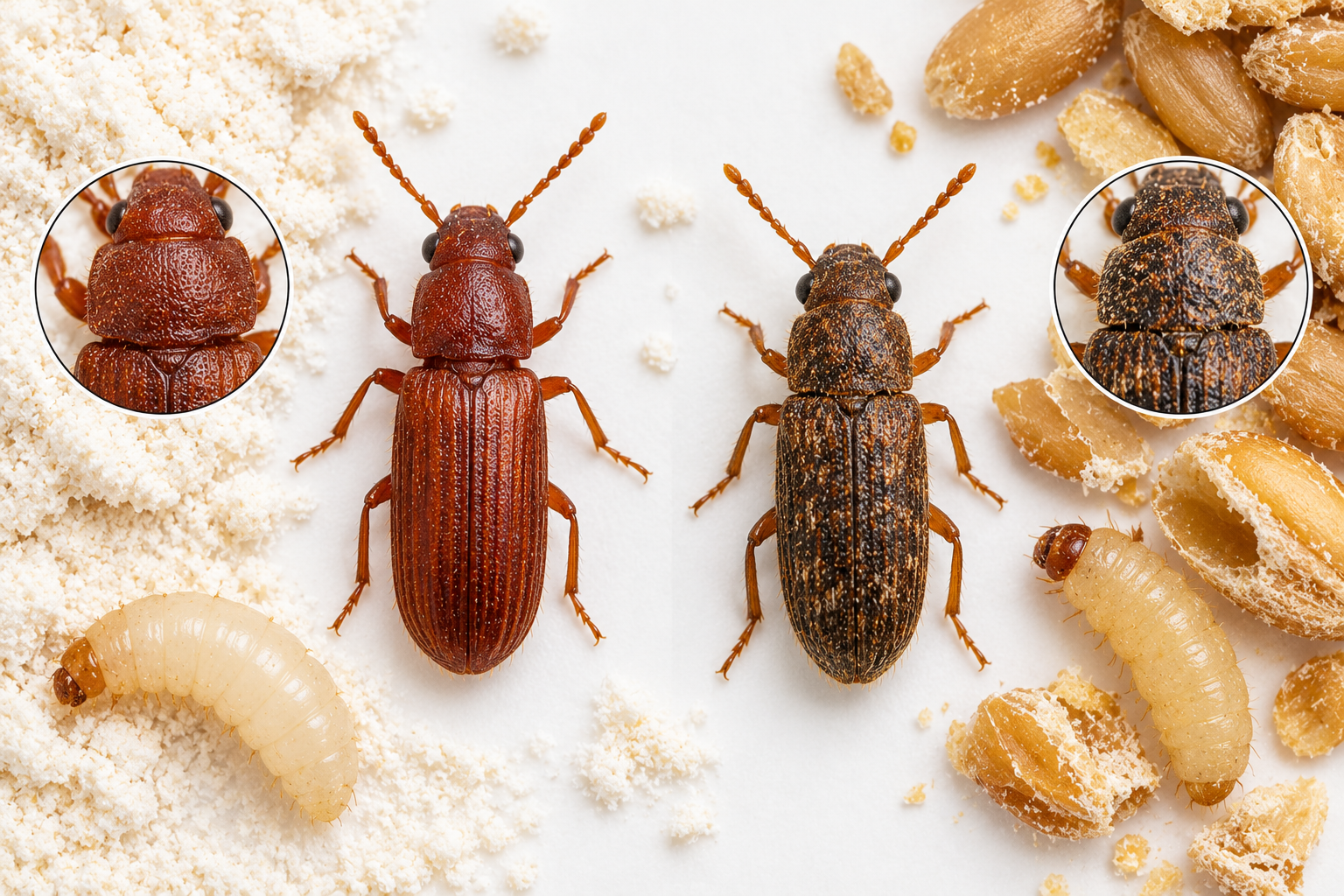
They're long and narrow rather than oval, and they live in flour, cereal, pasta and other dry goods. If you find them, check your pantry for infested packages. You don't need to treat the bedroom.
Side-by-Side Comparison
| Insect | Shape | Wings / jumps | Where you find it | Bites people? |
| Bed bug | Flat, oval, reddish-brown | No wings, doesn't jump | Beds, couches, headboards | Yes |
| Bat bug | Nearly identical to bed bug | No wings, doesn't jump | Near bat roosts, upper floors | Sometimes |
| Carpet beetle (adult) | Round, hard shell, mottled | Flies | Windowsills, closets, rugs | No (larvae hairs can irritate skin) |
| Cockroach nymph | Oval, long antennae | No wings yet, runs fast | Kitchens, bathrooms | No |
| Spider beetle | Round, shiny, long legs | No | Pantry, stored food | No |
| Booklouse | Tiny, soft, pale | No | Books, damp areas | No |
| Flea | Thin, flattened side to side | Jumps | Pets, carpets, pet beds | Yes |
| Tick | Flat oval, eight legs | No | Attached to skin after time outdoors | Yes |
| Flour beetle | Long, narrow, hard shell | Some fly | Pantry, dry goods | No |
How to Identify the Bug You Found
A good sample or photo makes identification much easier, whether you're comparing it yourself or showing a professional.
- Capture it. Pick the bug up with clear packing tape, or put it in a small sealed container or zip-top bag.
- Photograph it next to something for scale, like a coin or ruler. Take a close-up from above and one from the side if you can.
- Note where you found it: the bed, a windowsill, the kitchen, near a pet bed, or on your skin. Location narrows the list more than anything else.
- Look for other signs. Check the mattress seams and bed frame for black spots, shed skins and eggs. If you find them, you're very likely dealing with bed bugs.
- Count the legs and watch it move. Six legs and slow crawling point to bed bugs. Eight legs means a tick. Jumping means fleas. A fast runner with long antennae is a cockroach.
Why Getting the ID Right Saves Money
Bed bug treatment is targeted at beds, furniture and sleeping areas. If the real problem is carpet beetles in a closet, bat bugs from the attic or cockroaches in the kitchen, that treatment misses the source completely. You end up paying for the wrong job and still have the pest.
The reverse is also true. Writing off a bed bug as "just a beetle" gives a small infestation weeks to grow, and bed bugs are much easier to deal with early. If you're not sure, have it checked.
When to Call a Professional
- You can't confidently identify the bug from the features above
- You've found the bug in or near your bed, especially more than once
- You've spotted black fecal spots, shed skins or eggs in mattress seams
- You're waking up with new itchy bumps and can't find the cause
- You suspect bat bugs, which means bats may be in the attic or walls
- You live in an apartment or condo, where bed bugs can spread between units
How Nomore Pest Can Help
Our licensed technicians identify the insect first, then recommend the right treatment for what you actually have. That covers bed bugs, cockroaches, beetles, spiders and other occasional invaders in homes and businesses across Toronto, Mississauga, Vaughan, Scarborough, North York and Etobicoke.
If you think it's bed bugs, book a free bed bug inspection. We'll confirm what you're dealing with before recommending any treatment. For a wider look at the small crawling bugs found in GTA homes, see our guide to crawling insects in Toronto homes.
Conclusion
Most small brown bugs aren't bed bugs. Bed bugs are flat, oval, wingless, slow-moving and found near where people sleep, usually with fecal spots, shed skins or eggs nearby. Carpet beetles fly and live in fabrics, cockroach nymphs run fast in kitchens, fleas jump, ticks have eight legs, and bat bugs point to bats in the building. When the signs point to the bed, or you just can't tell, get a professional identification before you spend money on treatment.
Not sure what you found? Call Nomore Pest at 800-461-1827 or 437-922-2705, or email info@nomorepest.ca to book a free inspection anywhere in Toronto and the GTA.
Frequently asked questions
What bug looks exactly like a bed bug?
The bat bug. It's in the same family as the bed bug and looks almost identical without magnification. The difference is the fringe of hairs behind the head, which is longer than the eye's width on a bat bug and shorter on a bed bug. Bat bugs usually mean bats are roosting somewhere in the building.
What beetles look like bed bugs?
Carpet beetles, spider beetles and flour or grain beetles are the most common. All three have a hard shell, while bed bugs have a soft, flat body. Carpet beetles are round and mottled and gather on windowsills, spider beetles are round and shiny with long legs, and flour beetles are long and narrow and live in the pantry.
How can I tell a bed bug from a baby cockroach?
Check the antennae and the speed. Cockroach nymphs have long antennae and run fast, and they stay near kitchens and bathrooms. Bed bugs have short antennae, crawl slowly and hide near beds and couches.
Are there small black bugs that look like bed bugs?
Yes. Adult carpet beetles, German cockroach nymphs and some pantry beetles can look black or very dark brown. Bed bugs are reddish-brown, although a bug that has just fed can look darker.
Can I have bites but no bed bugs?
Yes. Fleas, mosquitoes and mites can all cause bites, and carpet beetle larvae can cause an itchy rash that looks like bites without biting at all. Skin conditions can look similar too. If you can't find bugs, fecal spots or shed skins near the bed, have the bug or the bites checked before treating for bed bugs.
Do bed bugs fly or jump?
No. Bed bugs have no working wings and can't jump. They crawl. A bug that flies is more likely a carpet beetle or another beetle, and one that jumps is more likely a flea.
Got a pest problem? Don't wait.
Book a professional inspection across Toronto & the GTA and get peace of mind, backed by a licensed & insured local team.
Or email us at info@nomorepest.ca · Toronto & the GTA