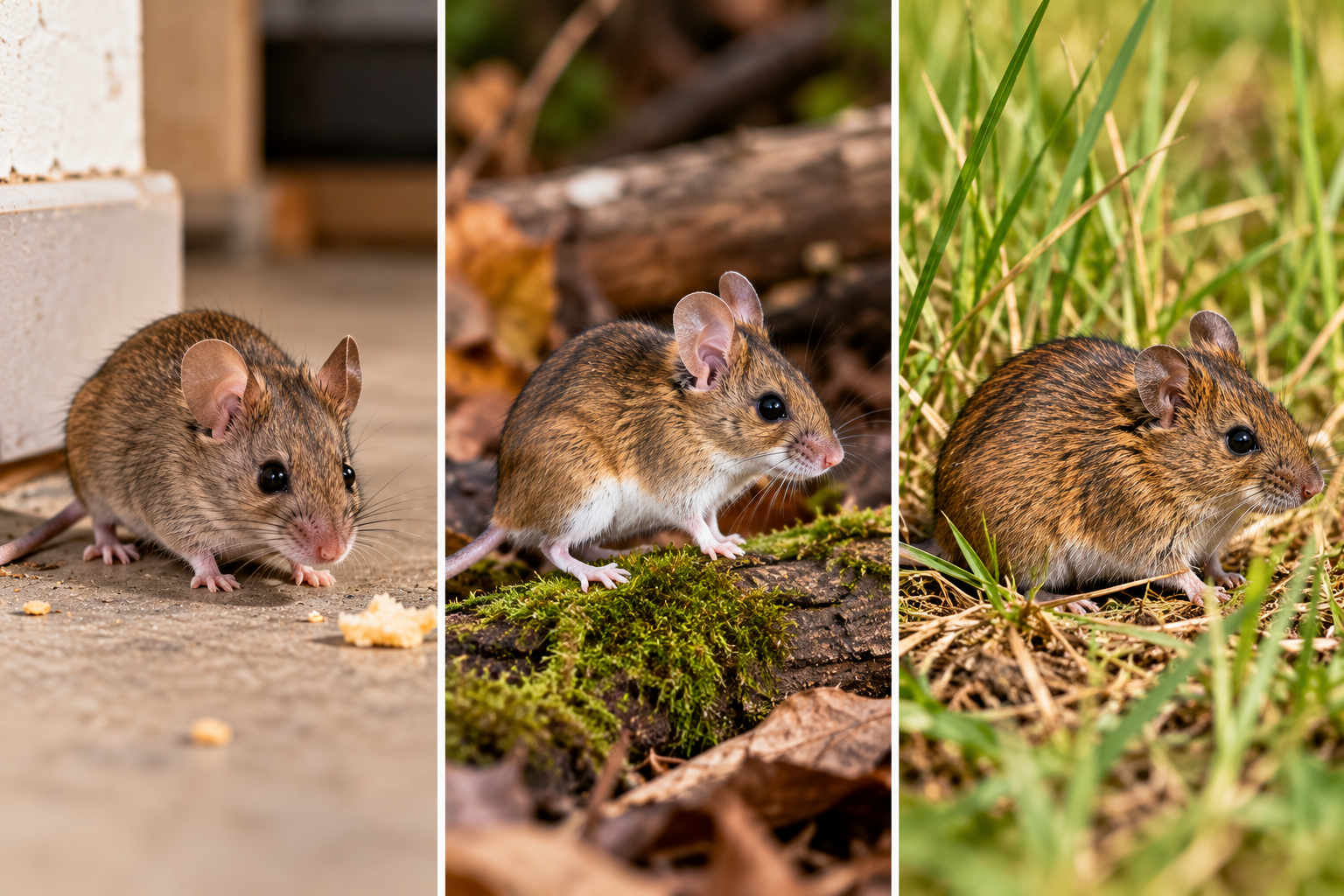
You saw one mouse. That's probably not the whole story.
House mice breed faster than almost any pest you'll find in a Toronto home. A female is pregnant for about three weeks, has five or six young at a time, and can be pregnant again within a day of giving birth. Her daughters can start breeding at about six weeks old.
That's why pest professionals treat a single mouse sighting in the fall as the start of a problem rather than the whole of it. Here are the numbers, and what they mean for your home.
Mouse Breeding Quick Overview
| Question | Answer |
| How long is a mouse pregnant? | About 19–21 days |
| How many babies in a litter? | Usually 5–6, sometimes as many as 10–12 |
| How many litters a year? | Around 5–10 indoors, where it's warm and food is steady |
| When can young mice breed? | From about 6–8 weeks old |
| How soon can a female breed again? | Within about a day of giving birth |
| Do they breed in winter? | Yes, if they're living indoors |
How Fast Do Mice Reproduce?
Three things make mice multiply so quickly:
- A short pregnancy. About three weeks from mating to birth.
- Back-to-back litters. A female can mate again within roughly 24 hours of giving birth, so the next litter is already on the way while she's feeding the current one.
- Early maturity. Young mice are ready to breed at about six to eight weeks — so the first litter born in your home can be producing litters of its own before the end of the season.
Put together, that means a mouse population doesn't grow in a straight line. It compounds.
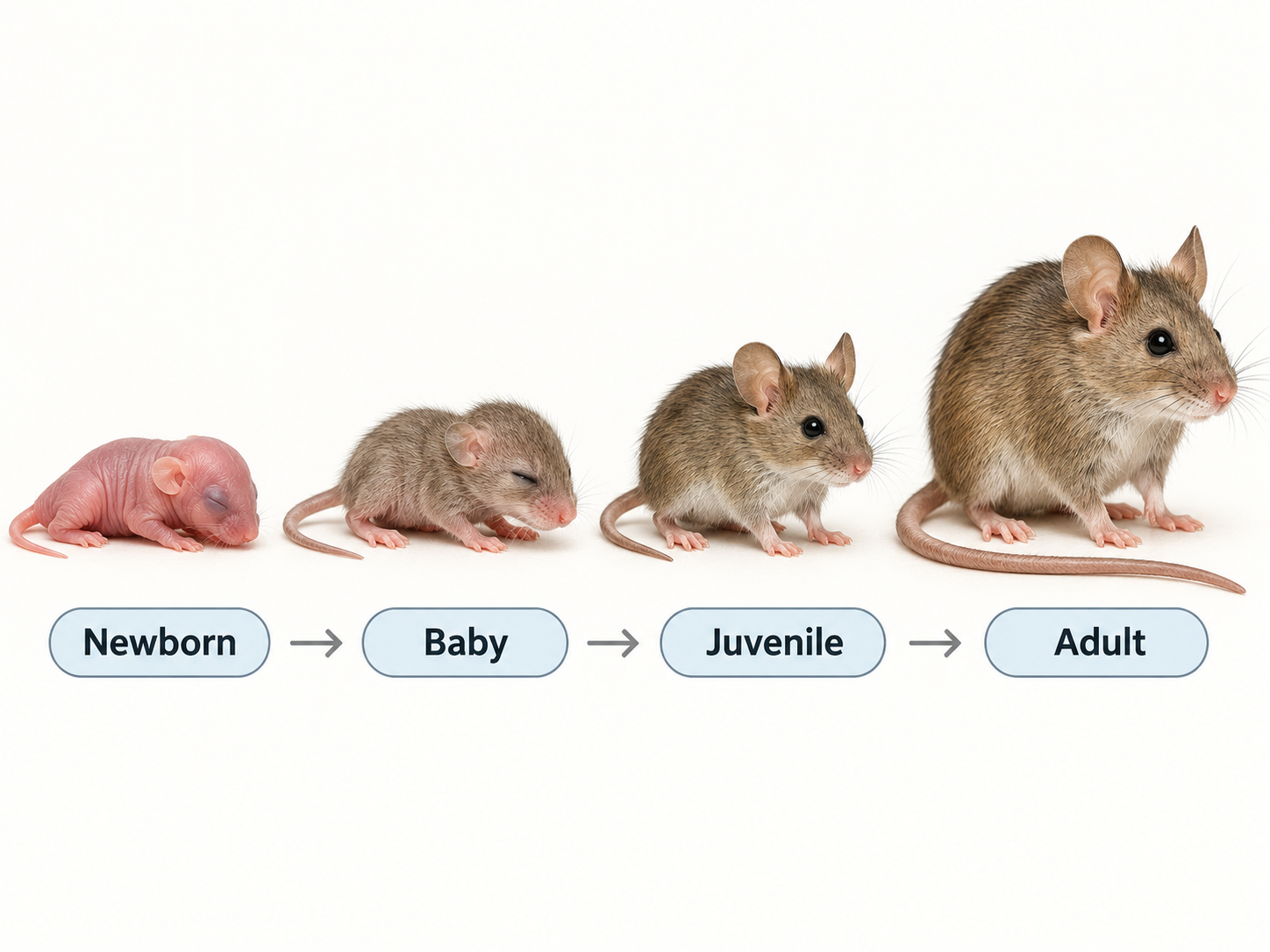
The Life Stages of a Mouse
| Age | What's happening |
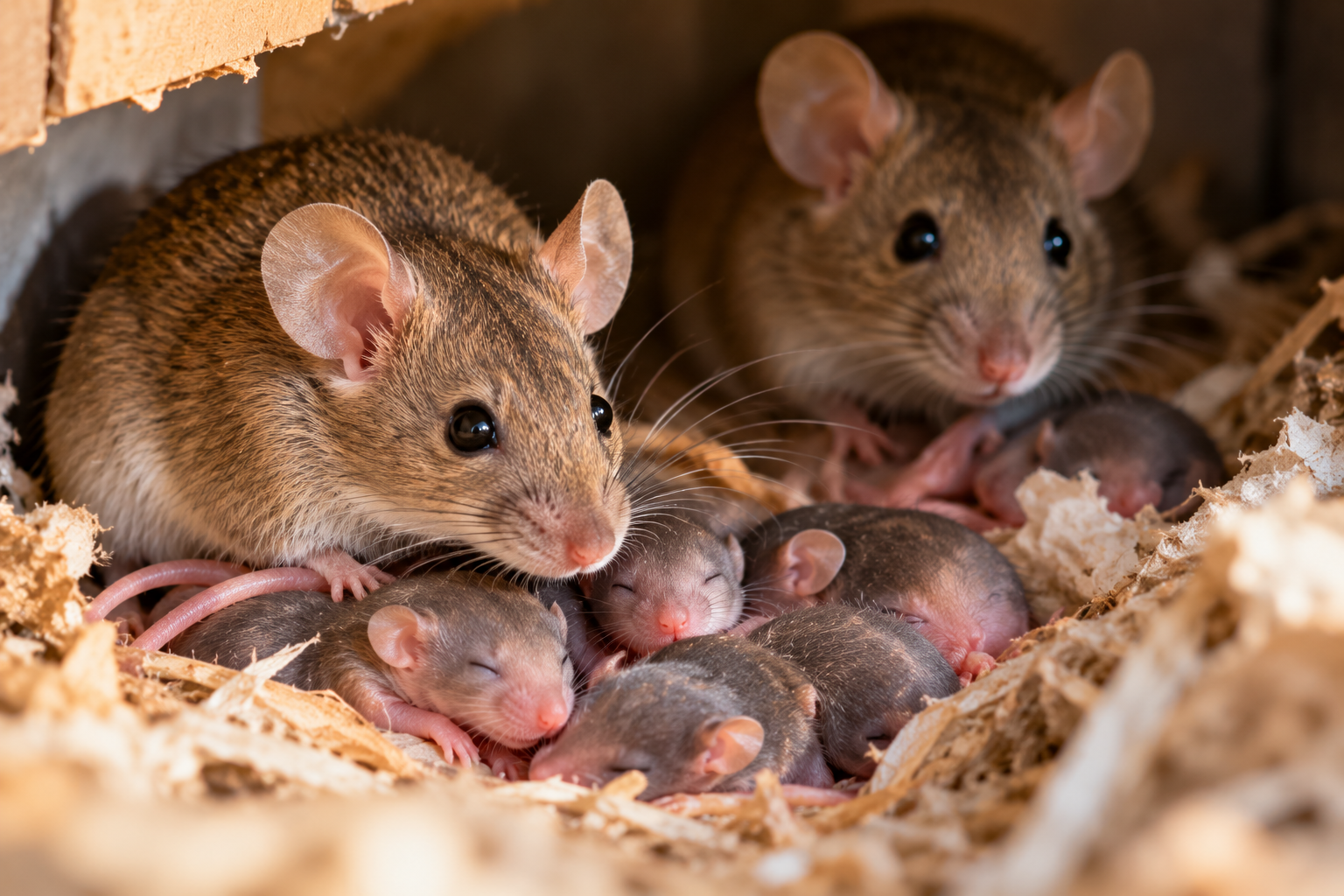
| Birth | Born hairless, blind and deaf, about the size of a thumbnail |
| About 1 week | Fur starts to appear |
| About 2 weeks | Eyes open; the young start moving around the nest |
| About 3 weeks | Weaned and eating solid food; starting to leave the nest |
| About 6–8 weeks | Old enough to breed |
| Several months | Fully grown adults |
This is why you can go from "I think I heard something" to droppings in three rooms in a matter of weeks.
How Many Mice Could One Pair Become?
You'll see some dramatic numbers online. Here's a realistic way to think about it.
A single female producing around 5–10 litters a year, with 5–6 young each time, can have roughly 30–60 young in a year. Her female offspring begin breeding at about six to eight weeks, so they add litters of their own within the same year.
In a real home the numbers come in lower than the theoretical maximum — food runs short, some young don't survive, and space is limited. But the direction is clear: a pair of mice that gets into your home in October can easily be a dozen or more by late winter, and that's before you count the ones still coming in from outside.
The practical takeaway: the cost of acting early is very low, and the cost of waiting is high.
Do Mice Breed in Winter?
Outdoors, cold weather and scarce food slow breeding down. Indoors, it doesn't stop at all. A heated house with food in the cupboards gives mice everything they need to keep breeding right through a Canadian winter.
This is also why mouse problems feel like they appear suddenly in January. The mice came in during the fall, bred quietly in a wall or attic, and you only notice when the population is large enough to show up in your kitchen.
Signs You Have a Breeding Population, Not Just One Mouse
- Droppings in several rooms or on more than one floor
- Droppings of noticeably different sizes — smaller ones suggest young mice see what mouse poop looks like
- Fresh droppings reappearing within a day of cleaning
- Squeaking or scratching sounds from a wall or ceiling, sometimes in the day
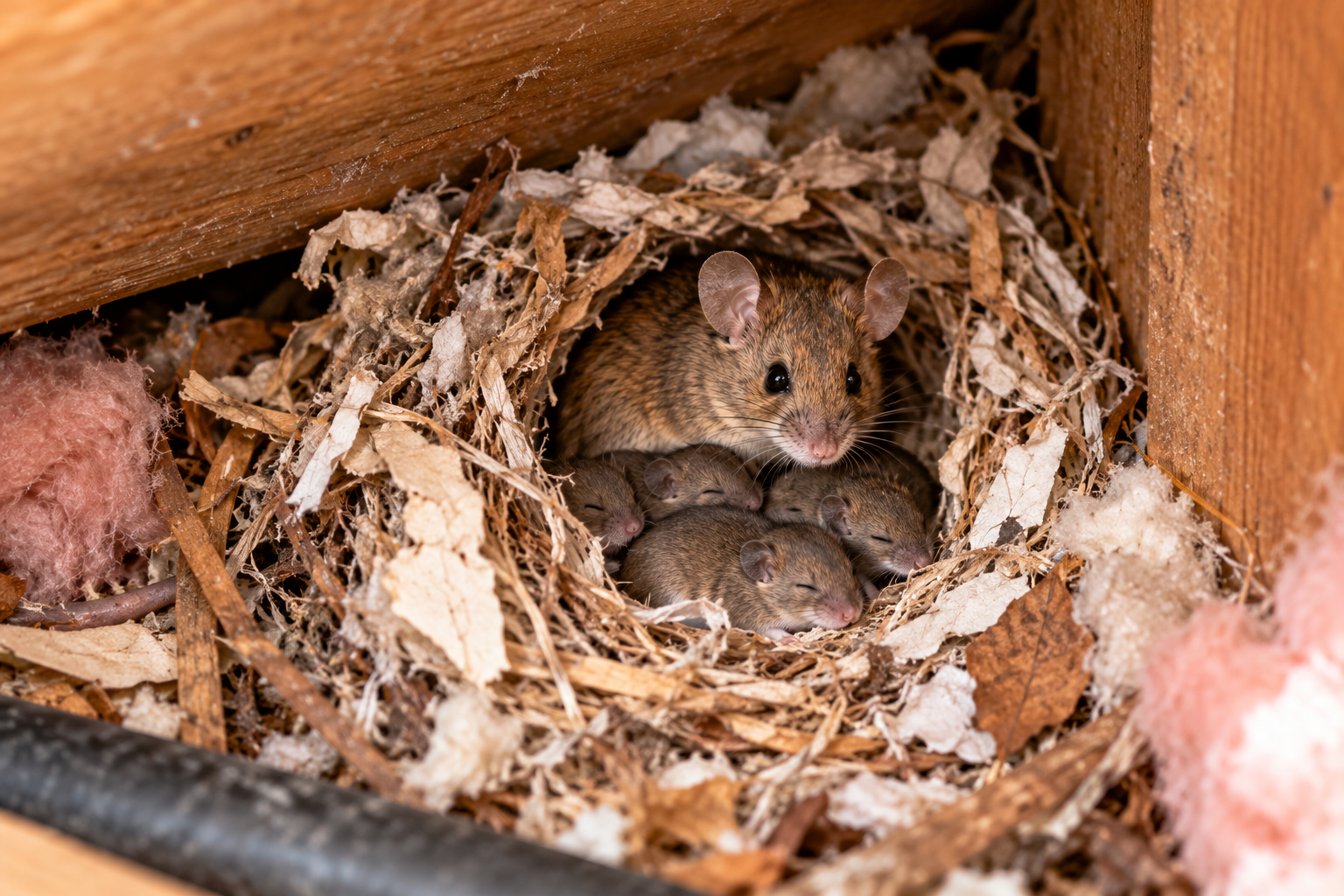
- Shredded paper, fabric or insulation gathered in a hidden spot a nest see what a mouse nest looks like
- Mice seen during the daytime, which often means the population has grown enough that they're competing for food
- A musty, ammonia-like smell building up in a cupboard or room
Found Baby Mice in Your House?
If you've found pink, hairless young, you've found a nest and the mother is almost certainly nearby.
- Don't handle them with bare hands. Wear gloves if you need to deal with them at all.
- There will be more mice than you can see. A nest means a breeding population, not a visitor.
- Deal with the nest and the adults together. Removing a nest without trapping the adults just means a new nest somewhere else.
- Clean up safely afterwards — never sweep or vacuum droppings or nesting material. See how to clean up mouse droppings safely.
If you've found an orphaned wild mouse outdoors and want to help it, contact a local wildlife rehabilitator for advice. Hand-rearing wild newborn mice rarely works, and cow's milk is not suitable for them.
Why Breeding Speed Changes How You Treat Mice
Because mice multiply this fast, two things matter more than anything else:
- Seal the entry points. If you only trap, new mice keep arriving through the same gaps and start breeding again. Sealing is what makes the result last see how mice get into your house.
- Use enough traps, early. One or two traps won't keep up with a breeding population. Set several at once, along walls near droppings see the best mouse traps and bait.
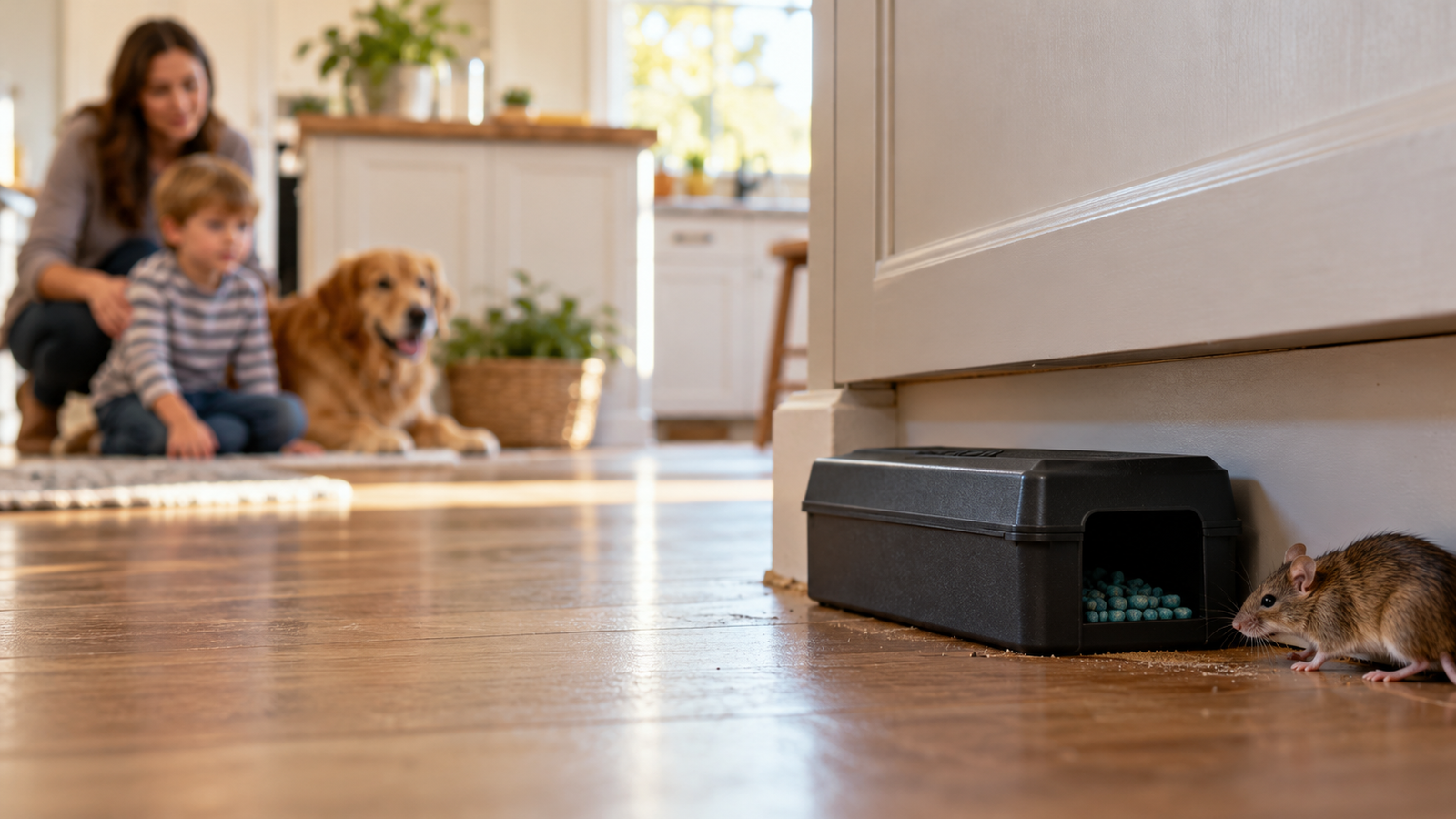
It's also why poison is a poor choice for a breeding population indoors: it works slowly, mice die in walls, and you're left with odour problems on top of the infestation (see is mouse poison safe?.
The full plan is in our complete guide to getting rid of mice humanely.
When to Call a Professional
Get help if:
- You've found a nest or young mice
- Droppings are in more than one room or on more than one floor
- You're still catching mice after about two weeks
- You can hear activity in walls, ceilings or the attic
- You're seeing mice during the day
How Nomore Pest Handles a Breeding Population
Nomore Pest is a licensed and insured pest control company serving Toronto, Mississauga, Vaughan, Scarborough, North York and Etobicoke. For an established population, the job isn't one trap — it's finding where they're nesting, removing them at scale, and sealing the entry points so the cycle doesn't restart. Learn more about our mouse control services.
Think it's more than one mouse? Book an inspection or call 800-461-1827 / 437-922-2705. You can also email info@nomorepest.ca.
Conclusion
Mice are pregnant for about three weeks, have five or six young at a time, can breed again within a day of giving birth, and their young are breeding by six to eight weeks old. Indoors, that continues all winter. It's the single best reason to act on the first signs rather than waiting to see what happens set several traps, seal the entry points, and deal with it while it's still small. If you've already found a nest or droppings in more than one room, Nomore Pest's rodent team can deal with the whole population rather than the few you've seen.
Frequently asked questions
How many babies do mice have?
A house mouse usually has five or six young in a litter, though litters can be as small as three or as large as ten to twelve.
How long is a mouse pregnant for?
About 19 to 21 days roughly three weeks. A female can also mate again within about a day of giving birth.
How fast do mice reproduce?
Very fast. With a three-week pregnancy, back-to-back litters and young that can breed from about six to eight weeks old, a single female can produce roughly 30 to 60 young in a year indoors.
How many litters do mice have in a year?
Indoors, where it's warm and food is available, a female typically has around five to ten litters a year. Outdoors the number is lower because breeding slows in cold weather.
At what age can mice start breeding?
Young mice can begin breeding at about six to eight weeks old, which is why a population grows so quickly once mice are established in a home.
Do mice breed in winter?
Indoors, yes. A heated home with food available lets mice breed all winter. Outdoor breeding slows down in cold weather.
Does finding one mouse mean there are more?
Usually. Mice breed quickly and the gap that let one in will let others in too. Treat a single mouse as a reason to check for droppings, set several traps and look for entry points.
Got a pest problem? Don't wait.
Book a professional inspection across Toronto & the GTA and get peace of mind, backed by a licensed & insured local team.
Or email us at info@nomorepest.ca · Toronto & the GTA