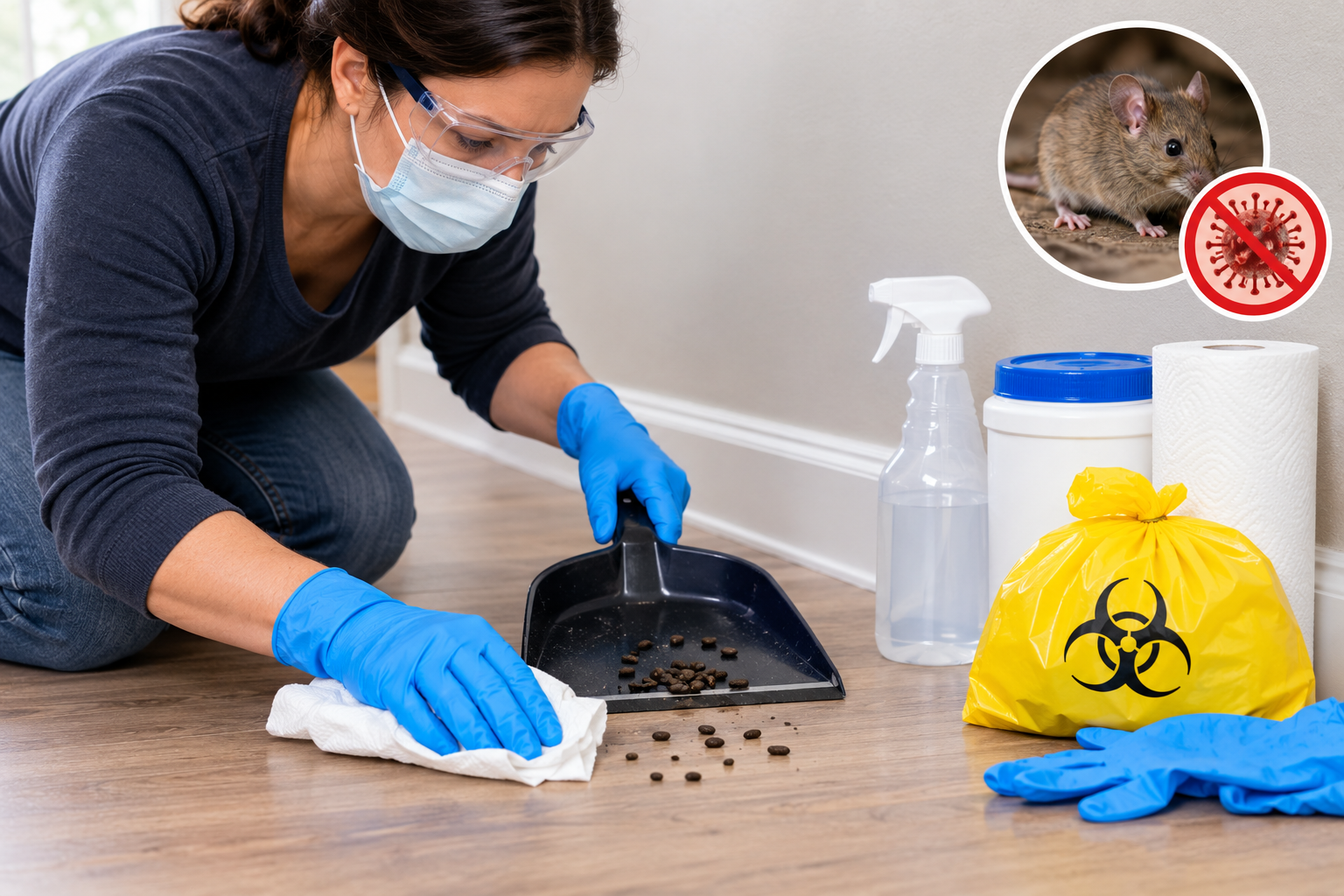
Finding mouse droppings in a cupboard or drawer is unpleasant, and the first instinct is usually to grab the vacuum or a brush. Don't. Sweeping and vacuuming are the two things health agencies specifically warn against, because they push particles from dried droppings into the air where they can be breathed in.
The safe method is simple: air the room out, wet everything down with disinfectant, wipe it up with paper towel and bag it. Here's how to do it properly, step by step.
The three rules: never sweep or vacuum droppings · always wet them with disinfectant before touching them · always wear gloves.
Why You Must Never Sweep or Vacuum Mouse Droppings
Dried droppings, urine and nesting material can break into tiny particles. Sweeping, vacuuming or dry-wiping sends those particles into the air, where they can be inhaled.
In Canada, the main concern is hantavirus, which is carried by deer mice and can cause a rare but serious lung illness. Deer mice are common in garages, sheds, cottages, cabins and rural properties, and they're very hard to tell apart from house mice by their droppings alone so the safe approach is to treat all rodent droppings the same way.
Rodent droppings and urine can also carry bacteria such as Salmonella, which contaminates food and surfaces. For more on the risks,
This is why every step below is built around one idea: keep the dust down.
What You'll Need
| Item | Why |
| Rubber or disposable gloves | Never handle droppings, urine or nests with bare hands |
| Disinfectant or bleach solution | To wet and disinfect droppings before you touch them |
| Spray bottle | To soak droppings without disturbing them |
| Paper towels | Disposable — don't use a cloth you'll reuse |
| Plastic garbage bags | Double-bag everything and put it in the outdoor bin |
| A well-fitting mask (N95 or similar) | For large amounts, or enclosed spaces like attics and crawl spaces |
| Goggles and coveralls | For heavy contamination in enclosed spaces |
What disinfectant should you use?
- A bleach solution — about 1 part household bleach to 9 parts water, mixed fresh. Never mix bleach with ammonia or other cleaners.
- A commercial household disinfectant — used exactly as the label says, including the contact time (how long the surface must stay wet).
- Enzyme cleaners help afterwards with lingering odour and stains, but use a disinfectant first.
Whatever you use, the important part is that the droppings are wet before you touch them and stay wet for several minutes.
Step-by-Step: How to Clean Up Mouse Droppings
- Air out the area first. Open windows and doors and leave the room for at least 30 minutes. For a space that's been closed up — an attic, crawl space, cottage or shed — air it out before you start working in it.
- Keep children and pets away from the area until you've finished.
- Put on gloves, plus a well-fitting mask if the area is enclosed or there are a lot of droppings.
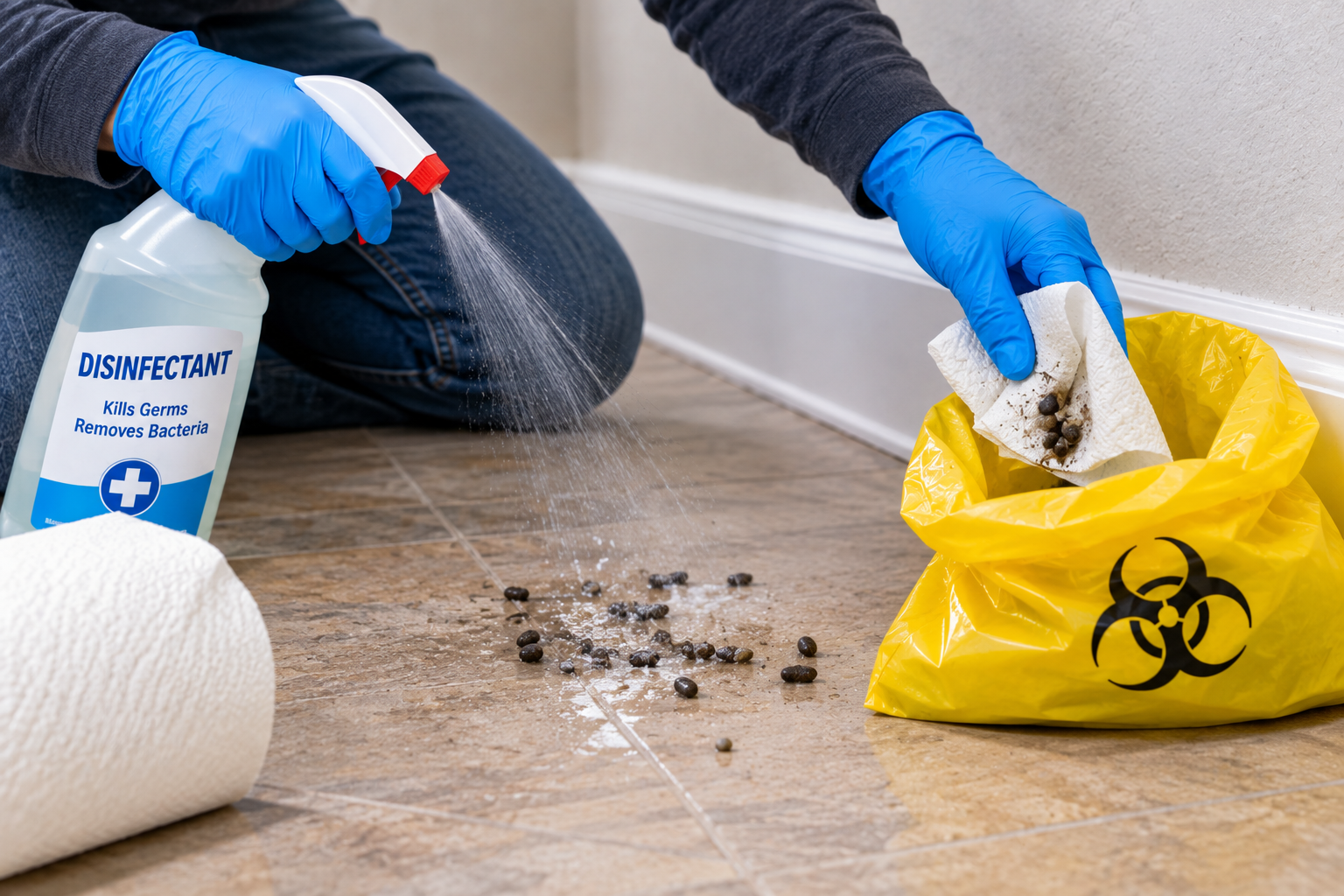
- Spray the droppings, urine stains and nesting material thoroughly with disinfectant or bleach solution until they're soaked. Don't skip this — it's what keeps particles out of the air.
- Let it soak for at least five minutes (or the contact time on the product label).
- Wipe everything up with paper towels, working from the outside in, and place the used towels straight into a plastic bag.
- Double-bag the waste, seal it and put it in your outdoor garbage bin.
- Disinfect the whole surface again, not just where the droppings were. Mice leave urine trails as they walk.
- Mop hard floors with disinfectant. Don't dry-sweep.
- Wash your gloved hands with soap and water, remove the gloves, then wash your hands thoroughly again.
Cleaning Specific Areas
Kitchen cupboards, drawers and the pantry
Empty the cupboard first. Throw out any food in packaging that's been chewed or that droppings have touched — including boxes, bags and anything not in a sealed container. Clean and disinfect shelves, then wash dishes, cutlery and containers that were stored there in hot soapy water before putting them back.
Mouse droppings in a bed or on bedding
Droppings in a bed mean mice have been in the bedroom — deal with the mice as well as the mess.
- Bedding, sheets and pillowcases: wash in hot water with detergent and dry thoroughly.
- The mattress: don't vacuum it. Wet the affected area with a disinfectant that's safe for fabric, wipe with paper towel, and let it dry completely with the windows open. Steam cleaning afterwards helps.
- Pillows and duvets: launder if the care label allows; replace anything heavily soiled.
- Check underneath and behind the bed for droppings, nests and gaps in baseboards.
Carpets, rugs and upholstery
Don't vacuum first. Wet the area with a suitable disinfectant, blot with paper towel, then steam clean. Let everything dry fully.
Clothes and soft items in storage
Launder in hot water with detergent. Items that can't be washed can be wiped with disinfectant where possible, or dry-cleaned.
Attics, crawl spaces and garages
These are the highest-risk areas because they're enclosed and often have a lot of droppings, urine and nesting material. Air the space out first, wear a mask and goggles, and take breaks in fresh air. If insulation is soiled, it usually needs to be removed and replaced rather than cleaned that's a job worth getting help with.
Cottages and buildings closed up for the season
A building that's been shut for months is the classic higher-risk situation. Open all doors and windows and leave the building for at least 30 minutes before you start cleaning, then follow the same wet-clean method.
Can Alcohol Kill Hantavirus?
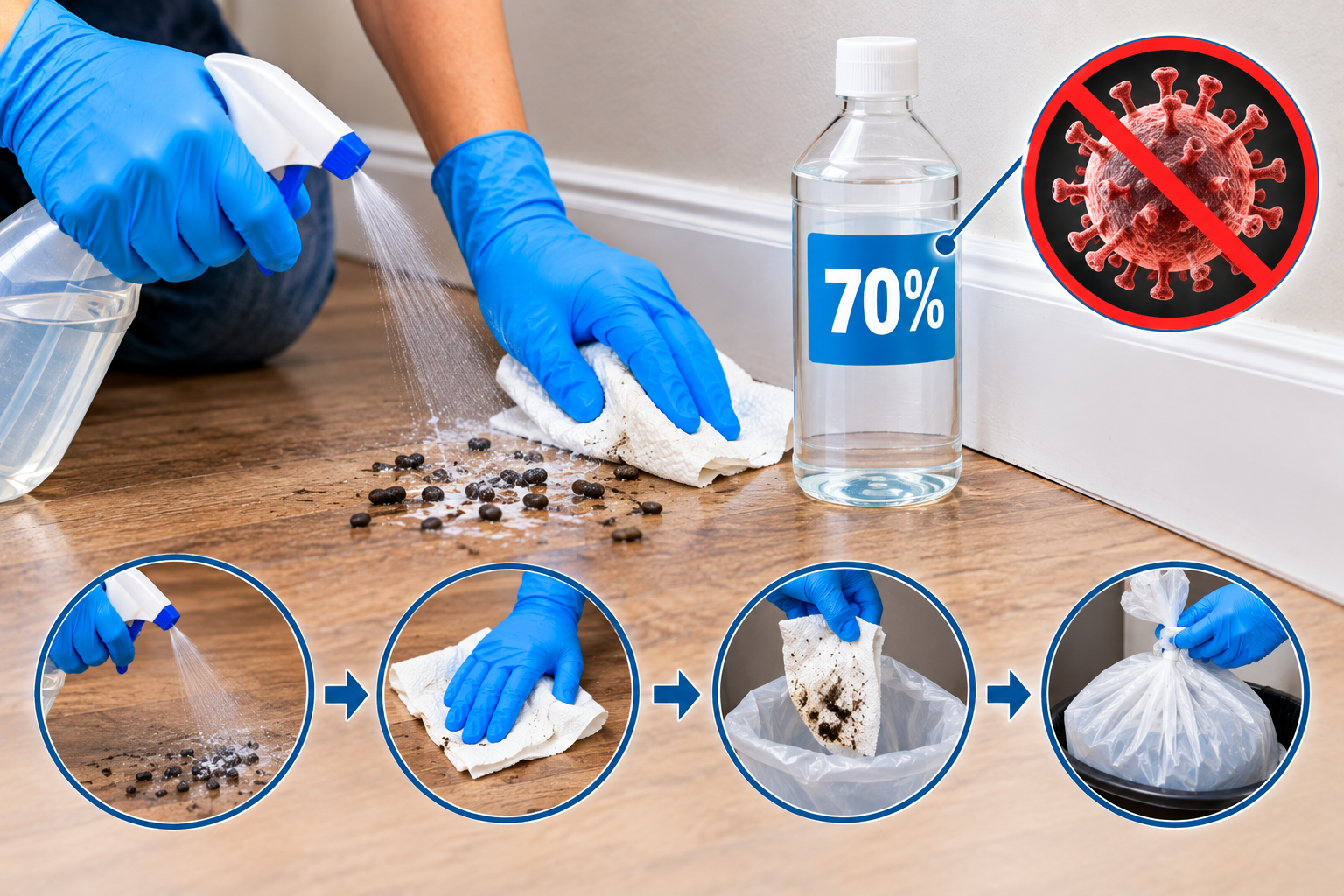
Hantaviruses have a fatty outer layer, which makes them sensitive to ordinary disinfectants including alcohol-based products, bleach solutions and regular household disinfectants. So alcohol isn't useless.
But for cleaning up after rodents, health agencies recommend a bleach solution or a registered household disinfectant, not rubbing alcohol. There are practical reasons:
- Alcohol evaporates quickly, so it's hard to keep a surface wet for the contact time needed
- It's flammable and not suited to spraying over large areas
- Bleach solutions and disinfectants are cheaper for the volume you need
The most important part isn't which product kills the virus in a lab — it's that you soak the droppings before touching them so nothing becomes airborne, and that you never sweep or vacuum. Follow the label on whatever product you use.
What Not to Do
| Don't | Why |
| Sweep or dry-brush droppings | Sends particles into the air |
| Vacuum, even with a filter | Same problem — and it can contaminate the vacuum |
| Dry-wipe with a cloth | Stirs up dust and spreads it around |
| Handle droppings, nests or dead mice bare-handed | Rodents can carry germs |
| Mix bleach with ammonia or other cleaners | Produces dangerous fumes |
| Leave the waste in an indoor bin | Keep it sealed and put it in the outdoor garbage |
| Clean an attic or crawl space without ventilating first | Enclosed spaces carry the highest risk |
After the Clean-Up
Cleaning removes the evidence, not the mice.
- Check again in a day or two. New droppings mean mice are still active see what mouse poop looks like.
- Set traps along walls near where you found droppings see the best mouse traps and bait.
- Seal the entry points so new mice can't replace the ones you remove see how mice get into your house.
- Store food in sealed containers and keep surfaces crumb-free.
For the full plan, read our complete guide to getting rid of mice humanely.
Health note: Hantavirus illness is rare, but it is serious. Symptoms usually start one to six weeks after exposure and can begin with fever, muscle aches, headache and fatigue, followed by shortness of breath. If you feel unwell after cleaning up after rodents, contact a healthcare provider and tell them about the rodent exposure.
When to Call a Professional
Get professional help if:
- There are large amounts of droppings, or droppings across several rooms
- The contamination is in an attic, crawl space or wall cavity
- Insulation is soiled and needs removing
- The building has been closed up for a long period
- It's a food premises, rental property or workplace with health and safety obligations
- You have a health condition that makes this work risky for you, or you simply don't want to do it yourself
How Nomore Pest Can Help
Nomore Pest is a licensed and insured pest control company serving Toronto, Mississauga, Vaughan, Scarborough, North York and Etobicoke.Our technicians clean and sanitise contaminated areas with the right protective equipment, then find where the mice are getting in and seal it so the droppings don't come back. Learn more about our mouse control services.
Found droppings you'd rather not clean yourself? Book an inspection or call 800-461-1827 / 437-922-2705. You can also email info@nomorepest.ca.
Conclusion
The safe way to clean mouse droppings is the opposite of your first instinct: don't sweep, don't vacuum. Ventilate the room, wear gloves, soak everything in disinfectant, wipe it up with paper towel and double-bag it for the outdoor bin. Take extra care in attics, crawl spaces and buildings that have been closed up.
Then deal with the mice themselves — otherwise you'll be cleaning again next week. If the contamination is widespread or in a hard-to-reach space, Nomore Pest team can handle the clean-up and seal your home.
Frequently asked questions
How do I clean up mouse droppings safely?
Air out the room for at least 30 minutes, put on gloves, spray the droppings with disinfectant or a bleach solution and let them soak for five minutes, then wipe them up with paper towels. Double-bag the waste for the outdoor bin, disinfect the whole surface and wash your hands thoroughly.
Can I vacuum mouse droppings?
No. Vacuuming or sweeping can send particles from dried droppings into the air where they can be breathed in, and it can contaminate the vacuum. Always wet droppings with disinfectant and wipe them up with paper towel instead.
What disinfectant kills germs in mouse droppings?
A fresh bleach solution of about 1 part household bleach to 9 parts water, or a commercial household disinfectant used according to its label. The key is soaking the droppings and keeping the surface wet for the full contact time.
Can alcohol kill hantavirus?
Hantaviruses are sensitive to common disinfectants, including alcohol-based products. However, health agencies recommend a bleach solution or a registered household disinfectant for rodent clean-up, because alcohol evaporates too quickly to keep surfaces wet and isn't practical for large areas.
How dangerous are mouse droppings?
For most people cleaning a small amount correctly, the risk is low. The concern is hantavirus, carried by deer mice in Canada, along with bacteria such as Salmonella. Risk goes up with large amounts of droppings and enclosed spaces like attics and crawl spaces.
What should I do about mouse droppings in my bed?
Wash all bedding in hot water with detergent. Don't vacuum the mattress — wet the affected area with a fabric-safe disinfectant, wipe with paper towel and let it dry with the windows open. Then check behind and under the bed for droppings, nests and gaps, because mice have been in the bedroom.
Do I need to throw out food that mice have been near?
Throw out anything in packaging that's been chewed, and anything droppings have touched or that wasn't in a sealed container. Food in sealed glass, metal or thick plastic containers is fine once you've disinfected the outside.
Got a pest problem? Don't wait.
Book a professional inspection across Toronto & the GTA and get peace of mind, backed by a licensed & insured local team.
Or email us at info@nomorepest.ca · Toronto & the GTA