You've kept the kitchen clean, the doors are shut, and there's still a mouse in the house. How did it get in?
Mice don't need an open door. They get into homes through small gaps most people never notice — around pipes, under garage doors, through vents, and along the roofline. Every one of those gaps can be found and sealed. This guide shows you where mice get in, how to find the exact entry points in your home, and how to seal them so they stay out.
Quick answer: how do mice get into a house?
| Entry point | Why mice use it |
| Gaps around pipes, cables and gas lines | Openings are often left unsealed where utilities pass through walls |
| Under garage and exterior doors | Worn or missing weatherstripping leaves a gap at the corners |
| Dryer vents and exhaust vents | Flaps that don't close fully, or vents with no rodent guard |
| Foundation cracks and basement windows | Gaps at ground level are the easiest way in |
| Weep holes in brick walls | Small openings at the bottom of brick walls lead into the wall cavity |
| Soffits, roof vents and roof returns | Mice climb brick and siding to reach gaps near the roof |
How Small a Hole Can a Mouse Fit Through?
A house mouse can squeeze through a gap about 6 mm wide — roughly the width of a pencil. Their skulls are small and their bodies are flexible, so if a mouse can fit its head through an opening, the rest of its body can usually follow.
That's why "the house is sealed" rarely means much when it comes to mice. A gap that looks far too small is often big enough. When you inspect your home, look for any opening you could slide a pencil into.
Mice are also good climbers. They can climb rough brick, stucco, siding and downspouts, and they can jump up onto ledges. Gaps near the roof are just as important as gaps at ground level — see can mice climb walls?.
Why Mice Try to Get Inside
Mice come indoors for three reasons: warmth, food and shelter. They don't hibernate, so when temperatures drop in the fall, homes become the best place to spend the winter. In the Greater Toronto Area, most homeowners notice mice between September and November, when the first cold nights arrive (read why mice move indoors in the fall).
A clean house doesn't keep mice out. Crumbs make a home more attractive, but warmth and shelter are enough on their own. Sealing the way in is the only thing that reliably stops them.
The 10 Most Common Mouse Entry Points in GTA Homes
Every home is different, but after enough inspections the same entry points keep coming up. Here's where to look, starting at ground level.
1. Gaps around pipes, cables and utility lines
Where gas lines, water pipes, air conditioner lines, cable and phone wires pass through the exterior wall, the hole is often bigger than the pipe. Builders don't always seal these properly, and old sealant cracks over time. These are some of the most common entry points we see.
2. Garage doors
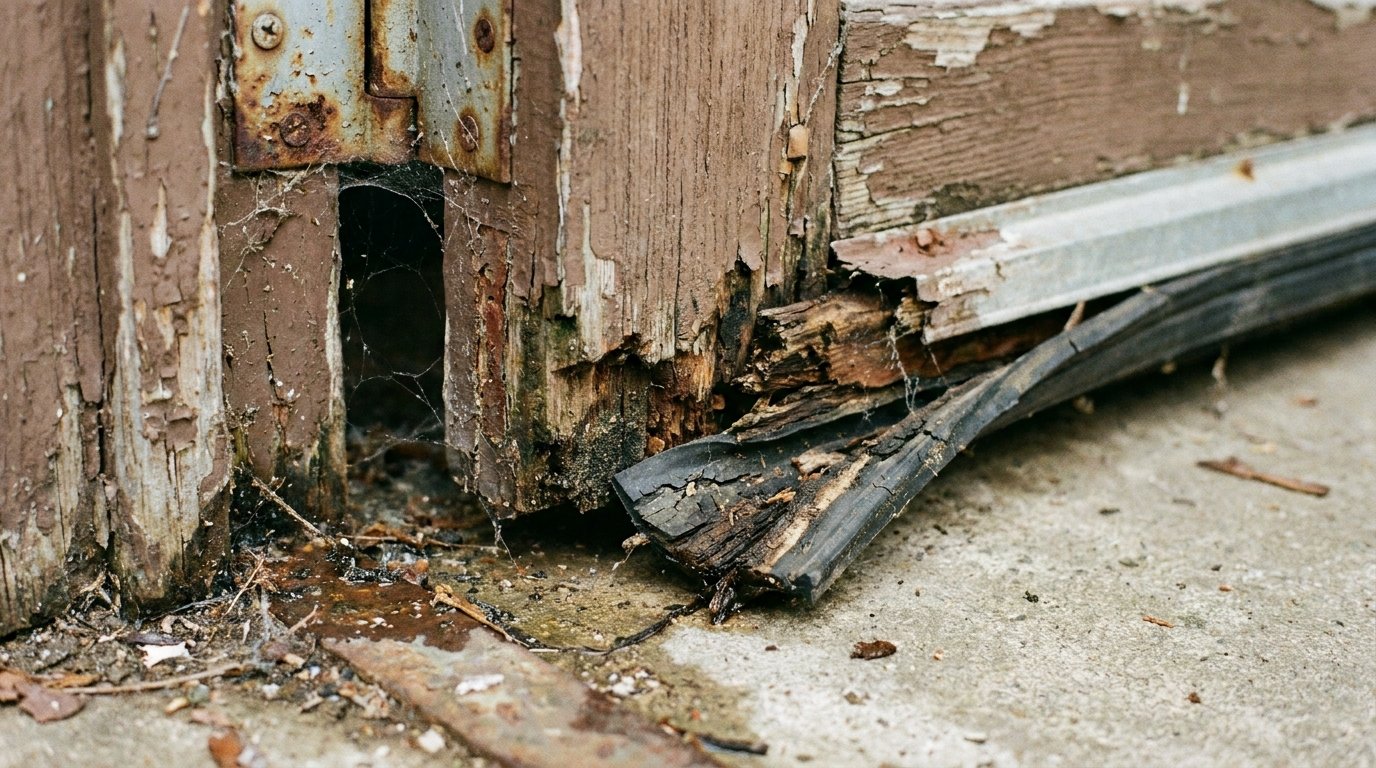
The bottom corners of a garage door are a favourite entry point. Weatherstripping wears out, gets chewed, or doesn't sit flat on an uneven floor. Once mice are in the garage, the gap under the door into the house is their next step — see mice in garages and storage units.
3. Exterior doors and thresholds
Look for daylight under front, back and patio doors. A missing door sweep or a worn threshold can leave a gap large enough for a mouse.
4. Dryer vents and exhaust vents
Dryer vents, bathroom fans and kitchen exhaust vents lead straight inside. Flaps that stick open, broken louvres or vents without a guard give mice an easy route.
5. Foundation cracks and the sill plate
Cracks in the foundation, and the gap where the foundation meets the wood framing or siding (the sill plate), are common ground-level entry points, especially in older homes.
6. Basement windows and window wells
Poorly fitted basement windows, damaged frames and window wells full of leaves give mice a sheltered place to look for a way in.
7. Weep holes in brick walls
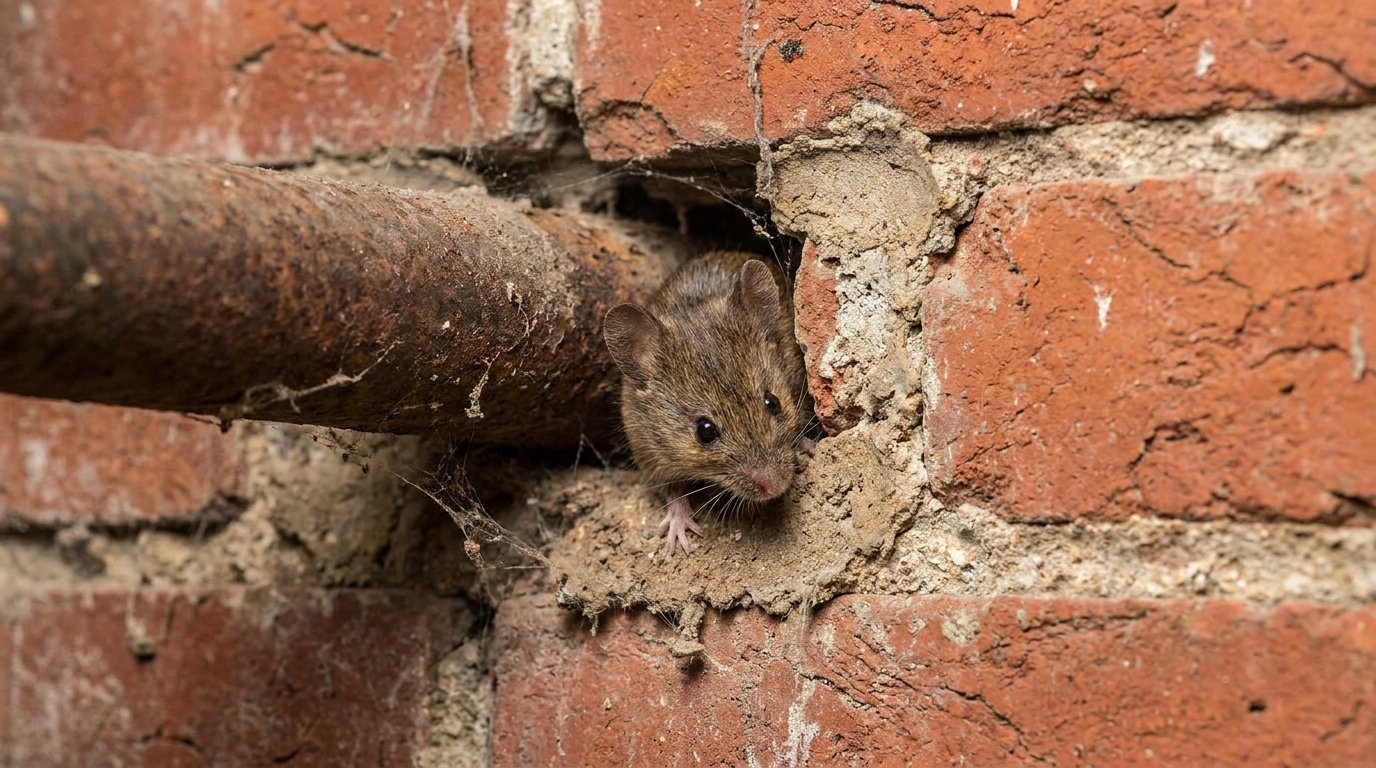
Many GTA homes have brick walls with small weep holes near the bottom. These let moisture drain out of the wall, but they can also let mice into the wall cavity. They must stay open for drainage, so they should be fitted with weep-hole guards — not filled with mortar or foam.
8. Soffits, roof returns and roof vents
Where the roof meets the wall, gaps in soffits, damaged fascia and unscreened roof or attic vents let mice into the attic. Mice often climb to these spots using brick, downspouts or nearby trees. Read more about mice in the attic.
9. Chimneys
An uncapped chimney or a gap around the chimney flashing can let mice (and other animals) into the attic or down into the house.
10. Decks, porches and additions
Where a deck, porch or addition joins the main house, there are often gaps in the framing that mice can use to get under the house or into a wall.
Don't forget the inside of your home
If mice are already inside, they move between rooms and floors through interior gaps too. Check around pipes under sinks, behind the stove, dishwasher and fridge, around heating ducts, and anywhere baseboards have pulled away from the wall. In condos and apartments, mice often travel between units along shared pipes — see mice in Toronto apartments.
How to Find Where Mice Are Getting In
You'll often find entry points by following the evidence mice leave behind. Work through these steps.
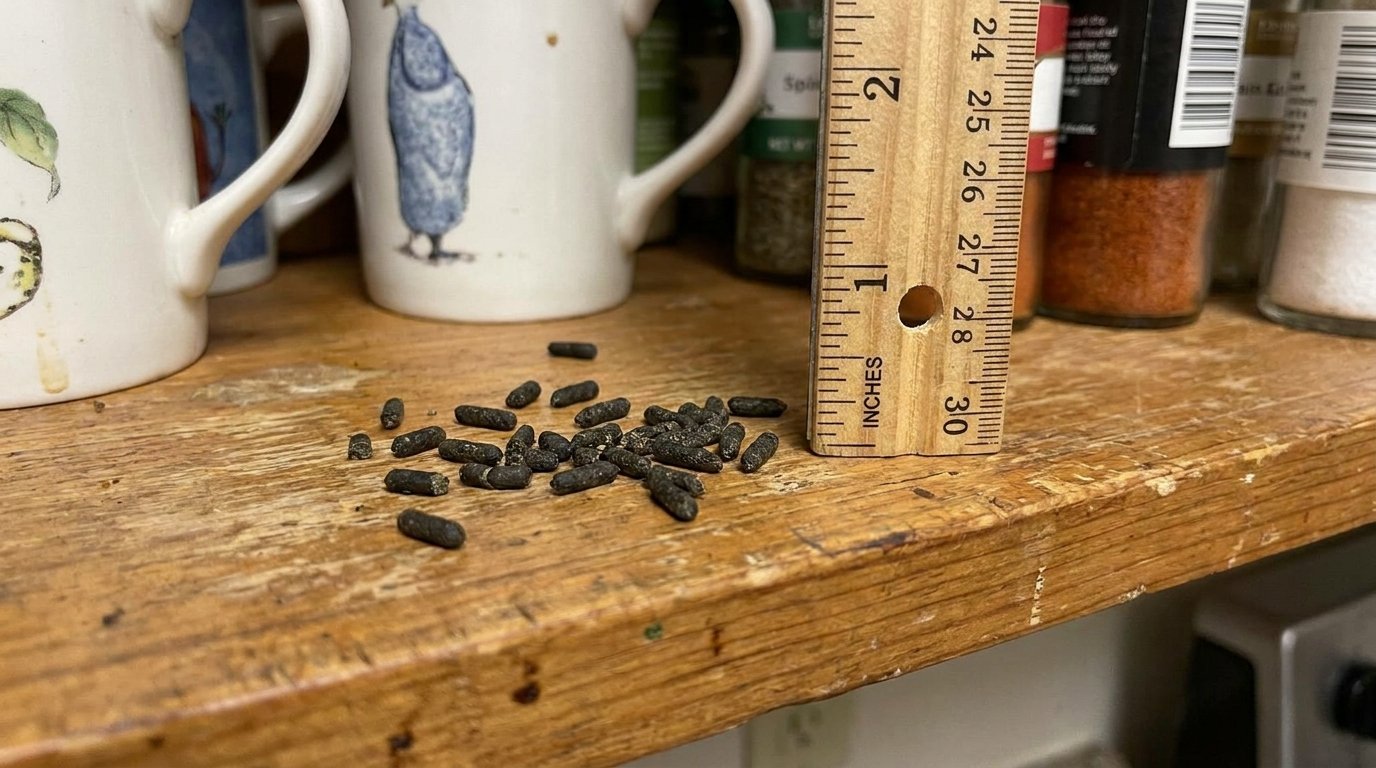
- Follow the droppings. The heaviest concentration of droppings is usually close to where mice enter or nest. If you're not sure what you're looking at, see what mouse poop looks like.
- Look for rub marks. Mice travel the same routes over and over, leaving dark, greasy smudges along walls and around holes they use.
- Check for gnaw marks and debris. Fresh chewing, wood shavings or bits of insulation near a gap are strong signs it's in use.
- Walk the outside of the house. Go around the whole house in three passes: ground level (foundation, doors, vents), mid level (windows, pipes, siding) and roofline (soffits, vents, chimney). Use binoculars for the roofline rather than a ladder if you aren't comfortable at height.
- Try the light test. In a dark basement, garage or attic, look for daylight coming through gaps. At night, have someone shine a flashlight along the outside walls while you watch from inside.
- Do a tracking test. Sprinkle a thin layer of flour or baby powder in front of a suspected gap and check it the next morning for tiny footprints or tail marks.
- Listen. Scratching in one particular wall or ceiling, especially at night, can point you to the area mice are using (see mice in walls).
Found one entry point? Keep looking. Most homes with mice have more than one.
How to Seal Mouse Entry Points
Sealing works when it's done with the right materials and in the right order.
Use materials mice can't chew through
Mice can chew through plastic, rubber, wood, caulk and expanding foam. Foam or caulk on its own won't stop them for long. Use chew-resistant materials, and use sealant to hold them in place.
- Copper mesh — packs tightly into gaps around pipes and cables and doesn't rust
- Steel wool — works for small gaps, but rusts in damp areas, so cover it with sealant
- Hardware cloth (metal mesh, 6 mm or smaller) — for vents and larger openings
- Metal flashing or sheet metal — for larger holes, corners and gaps in siding
- Mortar or concrete patch — for foundation cracks
- Rodent-resistant door sweeps and garage door seals — for gaps under doors
For a closer look at which materials hold up best, read steel wool vs copper mesh for mice.
How to seal each type of entry point
| Entry point | How to seal it |
| Gaps around pipes and cables | Pack tightly with copper mesh, then seal over it with exterior-grade sealant |
| Garage door corners | Replace worn weatherstripping and add a rodent-resistant seal or corner guards |
| Exterior doors | Install a metal-backed door sweep and repair the threshold |
| Dryer and exhaust vents | Fit a vent guard or a flap that closes fully — never block the vent |
| Weep holes | Fit weep-hole guards so water can still drain — never fill with mortar or foam |
| Foundation cracks | Patch with mortar or a concrete repair product |
| Attic and roof vents | Cover with securely fastened metal mesh |
| Soffits and roof returns | Repair damaged soffit and fascia, and seal gaps with metal flashing or mesh |
| Chimney | Install a chimney cap with a mesh screen |
Seal in the right order
Timing matters. If you seal every gap while mice are still inside, they can end up trapped in walls or the attic, where they die and cause odour problems (see dead mouse smell). The better approach:
- Seal the obvious secondary gaps first.
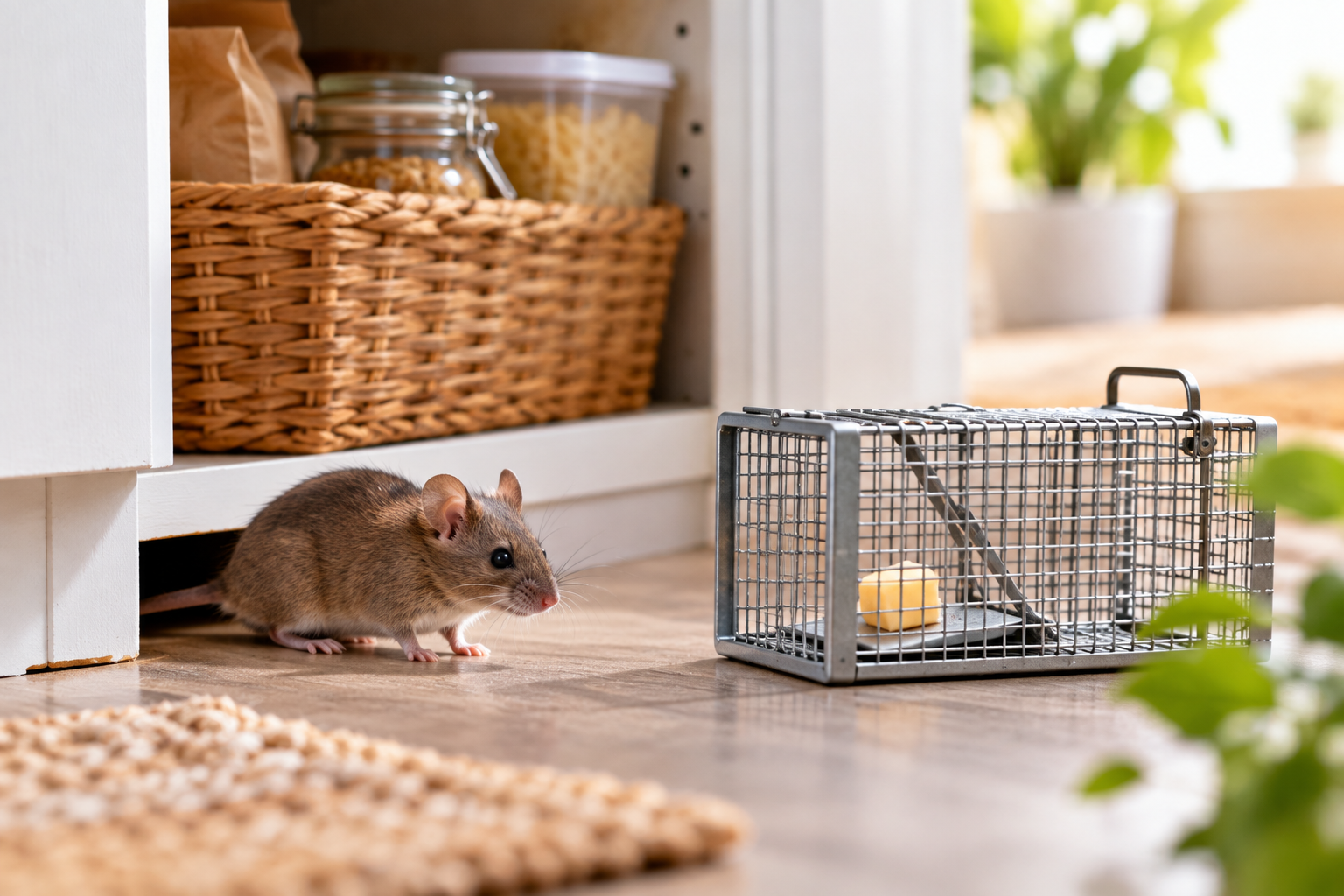
- Trap the mice that are already inside, with traps placed along walls near their routes (see the best mouse traps and bait).
- Seal the remaining main entry points once activity has stopped.
- Keep checking for new droppings for one to two weeks.
Don't block what needs to breathe
Some openings are there for a reason. Dryer vents, furnace and water-heater intakes, attic vents and weep holes all need airflow or drainage. Cover them with the right guard or screen — never seal them shut. Blocking combustion or dryer vents can create a fire or carbon monoxide risk.
Can You Mouse-Proof Your House Yourself?
Many homeowners can handle the basics:
- Door sweeps and weatherstripping
- Sealing gaps around pipes under sinks and in the basement
- Copper mesh and sealant around exterior pipes you can reach from the ground
- Clearing leaves out of window wells and moving firewood away from the walls
Some jobs are better left to a professional:
- Anything at the roofline, soffits or chimney that needs a tall ladder
- Entry points you can't find, even though mice keep coming back
- Mice inside walls, ceilings or the attic
- Gaps in brick, stucco or siding that need the right materials to seal without causing moisture problems
After you've sealed the entry points, the next step is keeping mice from being drawn to your home in the first place — our fall mouse prevention checklist covers that.
How Nomore Pest Seals Mice Out
Nomore Pest is a licensed and insured pest control company serving Toronto, Mississauga, Vaughan, Scarborough, North York and Etobicoke. Our mouse control and exclusion service focuses on the part most DIY efforts miss: finding every way in.
- Full inspection of the inside and outside of your home, from the foundation to the roofline.
- Entry-point map showing where mice are getting in and where they're active.
- Removal of the mice already inside.
- Exclusion — sealing entry points with rodent-resistant materials, while keeping vents and weep holes working.
- Follow-up to make sure activity has stopped.
Hearing mice but can't find how they're getting in? Book a mouse inspection or call 800-461-1827 / 437-922-2705. You can also email info@nomorepest.ca.
Conclusion
Mice get into houses through small gaps — around pipes, under doors, through vents and weep holes, and along the roofline. Find those gaps by following droppings, rub marks and gnawing, then seal them with materials mice can't chew, in the right order, without blocking vents that need to breathe. For the full removal plan, see our complete guide to getting rid of mice humanely. If you can't find the way in, or the entry points are out of reach, Nomore Pest's rodent team can inspect your home and seal it properly.
Frequently asked questions
How do mice get into a house?
Mice get in through small gaps — around pipes and cables, under garage and exterior doors, through vents, foundation cracks, weep holes in brick walls, and gaps near the roof. They only need an opening about 6 mm wide.
How small a hole can a mouse fit through?
A house mouse can squeeze through a gap about 6 mm wide, roughly the width of a pencil. If a mouse can fit its head through, it can usually get the rest of its body through too.
How do I find where mice are getting into my house?
Follow the droppings, look for greasy rub marks and fresh gnawing, and walk around the outside of your home checking the foundation, doors, vents, pipes and roofline. A flashlight test at night and a light layer of flour in front of suspected gaps can help confirm the entry point.
Can mice get in through the roof?
Yes. Mice climb brick, siding, downspouts and trees, and get into attics through gaps in soffits, roof vents, roof returns and around chimneys.
Can mice chew through expanding foam or caulk?
Yes. Mice can chew through foam, caulk, plastic, rubber and wood. Use copper mesh, steel wool, metal mesh or metal flashing, held in place with sealant.
Why do I have mice if my house is clean?
Mice come in for warmth and shelter as much as food. A clean home is less attractive, but it won't keep mice out if there are gaps they can get through.
When do mice try to get into houses?
Mice can get in at any time of year, but in the GTA most activity starts in the fall, from about September to November, when temperatures drop. Sealing entry points in late summer or early fall is the best way to get ahead of them.
Got a pest problem? Don't wait.
Book a professional inspection across Toronto & the GTA and get peace of mind, backed by a licensed & insured local team.
Or email us at info@nomorepest.ca · Toronto & the GTA