You heard scratching in the wall last night. This morning there were tiny dark droppings behind the toaster. Now you want the mice gone — without cruel methods, and without poison spread around a home you share with kids and pets.
The good news: you can get rid of mice humanely. The not-so-good news: no single trick does it. Mice leave for good only when you take away the way in, the food, and the hiding spots, and then deal with the ones already inside. This guide walks through that plan step by step, explains what works (and what doesn't), and shows you when it's time to call a professional.
Quick answer: how to get rid of mice humanely in 5 steps
| Step | What to do | Why it matters |
| 1. Confirm the signs | Look for droppings, gnaw marks, nests and night-time scratching to find where mice are active | Shows you where to focus sealing and trapping |
| 2. Seal entry points | Find and close every gap larger than about 6 mm with copper mesh, sealant or metal mesh | Stops new mice from replacing the ones you remove |
| 3. Remove food, water and nesting material | Store food in sealed containers, fix leaks and clear clutter | Makes your home less attractive to mice |
| 4. Catch the mice still inside | Use live-catch or quick-kill traps placed along walls — never glue traps or poison | Removes the current mice quickly and humanely |
| 5. Clean up safely | Air out the area, wet droppings with disinfectant and wipe them up with gloves on | Reduces the health risk from droppings and urine |
If you still see signs of mice after two weeks, the problem is bigger than DIY see when to call a professional.
There's a Mouse in My House What Should I Do First?
Seeing one mouse is stressful, but acting in the right order saves time. Before you buy anything:
- Don't panic-buy poison. It's the least humane option and often creates a bigger problem — a dead mouse inside a wall you can't reach.
- Store food in sealed containers today. Cereal, pet food, birdseed and flour in bags are easy targets.
- Look for signs. Check under the sink, behind the stove and fridge, inside lower cabinets and along basement walls. Droppings and gnaw marks tell you where the mice travel.
- Note where you saw it. Mice usually stay within a small area near their nest, so a sighting points you to the right room.
- Plan to seal entry points, not just trap. Trapping without sealing only makes room for the next mouse.
Signs of a Mouse Infestation
Mice are active mostly at night, so you'll often notice what they leave behind before you see one. Common signs of a rodent infestation include:
| Sign | What to look for |
| Droppings | Small, dark, rice-shaped pellets about 3–6 mm long, often along walls, in drawers or under sinks |
| Urine odour | A sharp, musty, ammonia-like smell in cupboards or enclosed spaces |
| Gnaw marks | Small chew marks on food packaging, baseboards, wiring or cardboard |
| Nests | Balls of shredded paper, insulation or fabric in hidden, warm spots |
| Sounds | Scratching or scurrying in walls or ceilings, especially at night |
| Grease marks | Dark smudges along walls and around holes where mice rub as they travel |
If the droppings are much larger — closer to 1–2 cm — you may be dealing with rats, not mice. Our guide on how to tell a mouse from a rat explains the difference, and what mouse poop looks like includes a size comparison to help you identify droppings with confidence.
Other signs worth reading about: mouse urine and odour, what a mouse nest looks like, and the noises mice make at night.
How Many Mice Are in Your House?
Unfortunately, one mouse rarely means only one mouse. House mice breed quickly: a female can become pregnant again soon after giving birth and can produce several litters a year, usually with about five or six young each time. Those young mice can breed themselves within roughly two months.
A few clues suggest a larger population:
- Droppings in more than one room or on more than one floor
- Fresh droppings reappearing within a day of cleaning
- Mice seen during the daytime (often a sign of crowding)
- Several nests or a strong, persistent odour
Read more in how fast mice breed. If several of these apply, skip ahead to when to call a professional.
Why Humane Mouse Control Starts With Exclusion
Most people think of getting rid of mice as trapping. Trapping matters, but the most humane and lasting step is exclusion physically stopping mice from getting inside. If the gaps stay open, new mice move in to replace the ones you removed, and the cycle continues all winter. Exclusion means fewer mice ever need to be trapped at all.
Step 1: Find How Mice Are Getting In
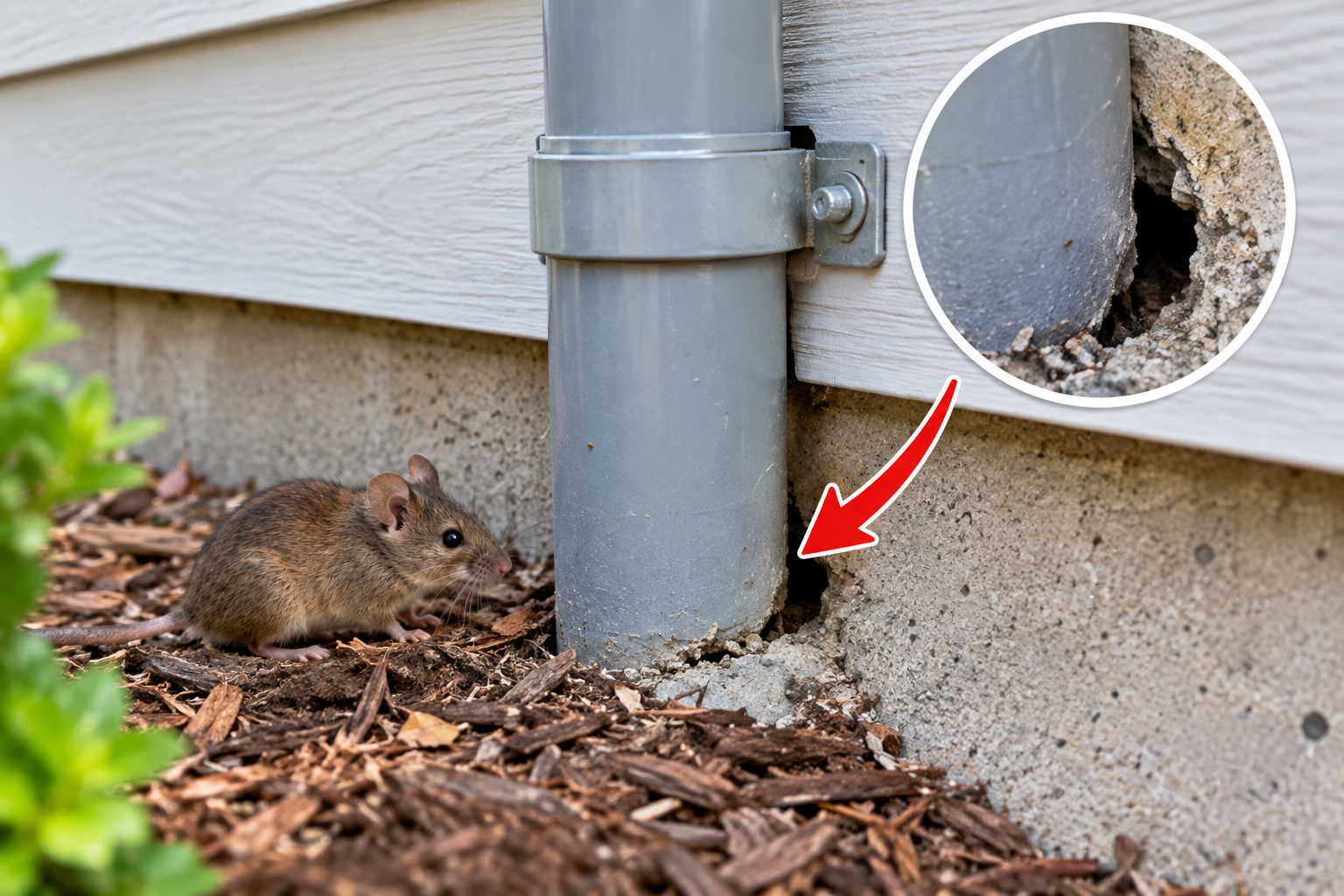
A house mouse can squeeze through a gap about 6 mm wide — roughly the width of a pencil. Walk around your home inside and out and look for openings at that size or larger. Common entry points in GTA homes include:
- Gaps where pipes, cables and dryer vents pass through exterior walls
- Worn or missing weatherstripping under exterior and garage doors
- Cracks in the foundation and around basement windows
- Openings around the gas meter, air conditioner lines and hose bibs
- Gaps in soffits, roof vents and where the roof meets the wall (mice are good climbers)
- Unscreened chimney or attic vents
Grease marks and droppings near a gap are a strong sign it's being used. For a room-by-room checklist, see how mice get into your house. Mice also climb rough brick and siding easily, so don't skip higher openings — our post on whether mice can climb walls explains why.
Step 2: Seal Entry Points With the Right Materials
Mice chew through soft materials such as foam, plastic, rubber and wood, so the material you choose matters.
| Material | Best for | Notes |
| Copper mesh | Gaps around pipes and cables | Packs tightly and doesn't rust; combine with sealant to hold it in place |
| Steel wool | Small gaps indoors | Works well short-term but rusts in damp areas; cover with sealant |
| Hardware cloth (metal mesh) | Vents and larger openings | Use a fine mesh (6 mm or smaller) and fasten it securely |
| Door sweeps and weatherstripping | Gaps under doors | Choose durable, rodent-resistant sweeps for garage and exterior doors |
| Mortar or concrete patch | Foundation cracks | A permanent fix for masonry gaps |
Seal gaps before or at the same time as you trap. If you seal first, trap the mice already inside right away so they aren't stuck in walls. For a closer look at materials, read steel wool vs copper mesh for mice.
Step 3: Remove Food, Water and Nesting Spots
Mice stay where life is easy. Make your home less comfortable for them:
- Store dry goods, pet food and birdseed in glass, metal or thick plastic containers with tight lids
- Wipe crumbs from counters, toasters and floors daily, and don't leave pet bowls out overnight
- Fix dripping taps and leaky pipes under sinks
- Take garbage and recycling out regularly and use bins with lids
- Declutter basements, garages and storage areas — cardboard boxes make ideal nests
- Keep firewood, compost and stored items away from the house walls
Curious about what draws them in? See what mice eat.
Step 4: Catch the Mice Already Inside Humanely
Once the gaps are closed and food is locked away, it's time to remove the mice that remain. Humane trapping has two goals: remove mice quickly and avoid unnecessary suffering.
Live-catch traps
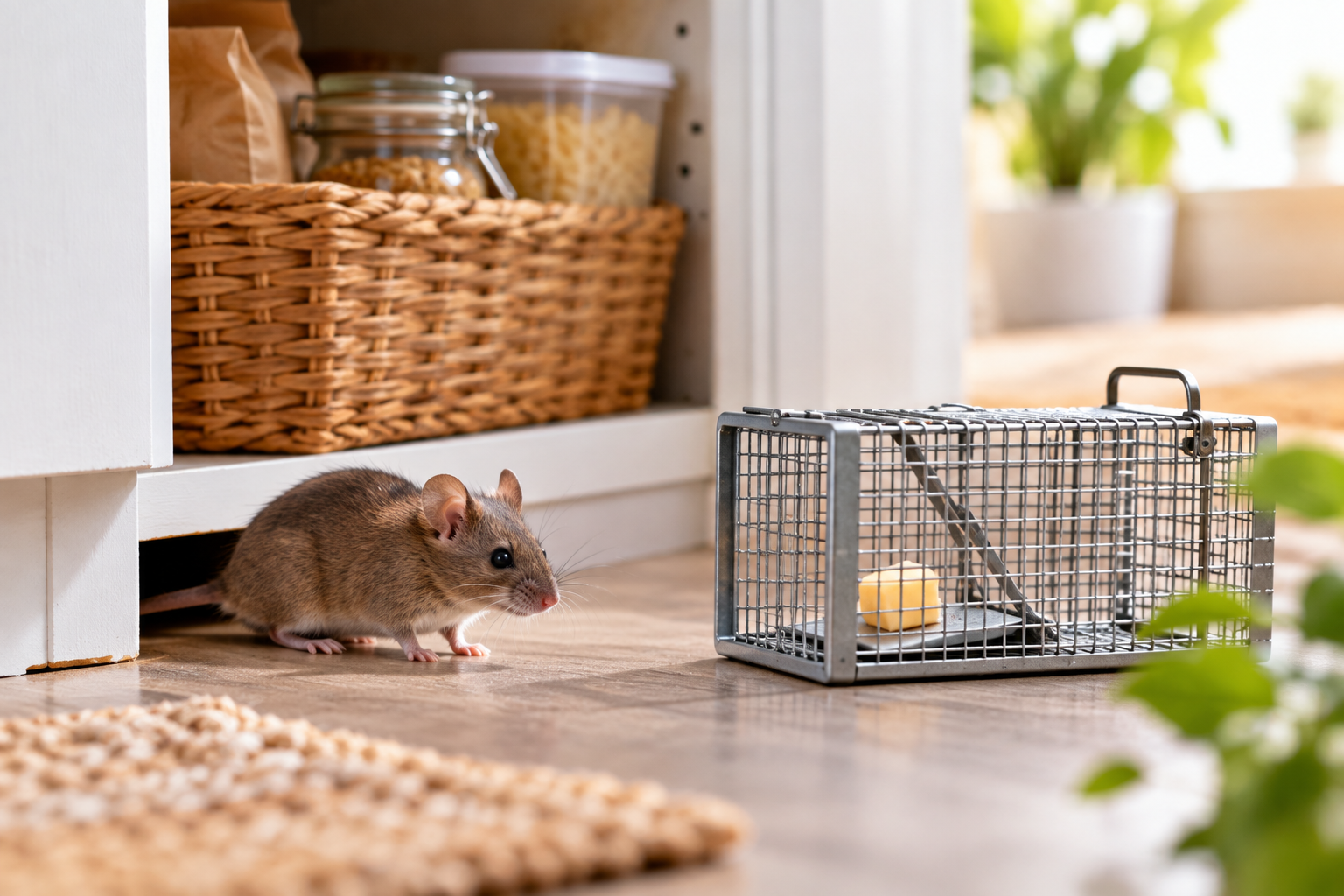
Live-catch (catch-and-release) traps let a mouse walk in and close behind it without harming it. They're the most humane choice if you check them often.
- Check live traps at least twice a day — a trapped mouse can become stressed, dehydrated or cold within hours
- Wear gloves when handling traps
- Clean traps between uses
Quick-kill snap traps
When set correctly, a good snap trap kills instantly. Many wildlife and animal-welfare groups consider a well-placed quick-kill trap more humane than slow methods like poison or glue.
Avoid glue traps
Glue boards cause prolonged suffering and can catch pets, birds and other animals by accident. We don't recommend them.
Where and how to place traps
- Place traps along walls, behind appliances and near droppings — mice travel along edges, not across open floors
- Set the trigger end facing the wall
- Use a small amount of peanut butter or a bit of nesting material (cotton ball) as bait
- Use several traps at once; one trap for a whole kitchen is rarely enough
- Keep traps out of reach of children and pets, or use a covered trap box
For bait and trap choices, see the best mouse traps and bait, and for a step-by-step method, read how to catch a mouse in your house.
What to Do With a Mouse You've Caught
If you've used a live trap, release matters as much as the catch:
- Release it quickly so the mouse isn't left in the trap for hours.
- Know the rules. Ontario generally requires captured wildlife to be released within 1 km of where it was caught. Deer mice are native wildlife; check current provincial guidance before relocating any animal.
- Expect some to return. A mouse released near your home may try to get back in — which is why sealing entry points first is so important.
- Think about the weather. In the middle of a Canadian winter, a house mouse released outdoors has a poor chance of survival, so exclusion before the cold arrives is the kindest long-term approach.
Always wear gloves, and wash your hands after handling traps.
Do Natural Mouse Repellents Work?
Many "humane" products promise to drive mice away without trapping. Here's an honest look:
- Peppermint oil and other scents: Strong smells may discourage mice briefly, but scent fades fast and there's little evidence it removes an established infestation. See what smells mice hate.
- Mothballs: They aren't made or labelled for mice, and the fumes aren't safe to breathe in living spaces. Read why mothballs aren't a good idea.
- Ultrasonic plug-in repellers: Results are inconsistent, and mice may get used to the sound. Our honest look at ultrasonic repellers covers what to expect.
Use repellents as a small add-on, not a replacement for sealing and trapping.
Why Poison Isn't a Humane or Simple Solution
Rodenticides can seem like the easy route, but they come with real downsides:
- Slow death. Many poisons work over several days, which is far from humane.
- Dead mice in walls. Poisoned mice often die in hidden spaces, leaving a strong odour that can last for weeks. See how to deal with dead mouse smell.
- Risk to pets and wildlife. Pets can eat bait, and predators can be harmed by eating poisoned rodents.
- Rules for homeowners. In Canada, the rodenticides sold to consumers are limited and must be used in tamper-resistant bait stations. Stronger products are restricted to licensed professionals.
If you're weighing it up anyway, our post on mouse poison safety explains the risks in detail.
How to Clean Up Safely After Mice
Mouse droppings and urine can carry germs, and in Canada deer mice can carry hantavirus. Clean carefully:
- Open windows and doors and let the area air out for at least 30 minutes before you start.
- Put on rubber or disposable gloves (and a well-fitting mask for heavy contamination).
- Don't sweep or vacuum droppings — this can send particles into the air.
- Spray droppings, urine and nesting material with a household disinfectant or diluted bleach solution, following the product label, and let it soak.
- Wipe up with paper towels and seal everything in a plastic bag for the garbage.
- Disinfect the area, then remove gloves and wash your hands thoroughly.
For attics, crawl spaces or large contaminated areas, professional clean-up is safer. Full details are in how to clean up mouse droppings safely and do mice carry diseases.
Health note: If you develop fever, muscle aches or breathing problems after cleaning up after rodents, contact a healthcare provider and mention the rodent exposure.
Problem Areas: Walls, Attics, Garages and Apartments
Some infestations are harder to reach with DIY methods:
- Mice in walls: You may hear scratching but never see a mouse. Traps need to go near access points, and sealing must be done carefully so mice aren't trapped inside. Read how to get mice out of walls.
- Mice in the attic: Attics offer insulation for nesting and are hard to inspect safely. See mice in the attic.
- Garages and storage units: Garages are often the gateway into the house. See mice in garages and storage units.
- Apartments and condos: Mice travel between units through shared walls and pipes, so building-wide action usually works best. See mice in Toronto apartments.
Keep Mice Out Year Round in the GTA
Mice don't hibernate. As temperatures drop in the fall, they look for warm shelter — and your home is ideal. In the Greater Toronto Area, the busiest time for mice moving indoors is usually from September to November.
| Season | What to do |
| Late summer | Walk the exterior, seal gaps and install door sweeps before the weather turns |
| Fall (Sept–Nov) | Watch for first signs, store food securely, move firewood and clutter away from walls |
| Winter | Check basements, attics and storage areas for droppings; keep traps set in problem spots |
| Spring | Inspect for winter damage to vents, siding and weatherstripping, then repair |
For a full seasonal checklist, read how to keep mice out of your house and why mice move indoors in the fall.
When to Call a Professional
DIY works well for a mouse or two caught early. It's time to get help if:
- You still see fresh droppings or activity after about two weeks of trapping
- You find signs in several rooms or on more than one floor
- Mice are in walls, ceilings or the attic
- You can't find or safely reach the entry points
- You're dealing with a dead-mouse smell you can't locate
- You have young children, pets or health concerns that make DIY risky
How Nomore Pest Handles Mice
Nomore Pest is a licensed and insured pest control company serving Toronto, Mississauga, Vaughan, Scarborough, North York and Etobicoke. Our professional mouse control in Toronto focuses on long-term results, not just catching the mice you can see:
- Inspection: We find where mice are active, where they're nesting and how they're getting in.
- Treatment plan: We explain the options for your home, including safer, targeted methods around children and pets.
- Exclusion: We identify and seal entry points with rodent-resistant materials.
- Follow-up: We check results and adjust until the activity stops.
Want to know what a visit looks like? Read what an exterminator does for mice, or see how much mouse control costs in Toronto.
Seeing signs of mice? Book a mouse inspection or call 800-461-1827 / 437-922-2705. You can also email info@nomorepest.ca.
Conclusion:
Getting rid of mice humanely comes down to a simple order: find the signs, seal the way in, remove what attracts them, catch the ones inside, and clean up safely. Most homeowners can handle a small, early problem this way. If the mice keep coming back, or they're in places you can't reach, Nomore Pest rodent team can inspect your home and put a lasting plan in place.
Frequently asked questions
What is the most humane way to get rid of mice?
The most humane approach is to seal entry points so fewer mice get in, remove food and shelter, and use live-catch traps that you check often or quick-kill traps that act instantly. Avoid glue traps and poison, which cause prolonged suffering.
What should I do if I see one mouse in my house?
Store food in sealed containers, look for droppings to find where it's active, set several traps along walls in that area, and start checking for entry points. One sighting often means more mice are nearby.
How do I know how many mice are in my house?
You can't count them directly, but droppings in several rooms, fresh droppings soon after cleaning, and daytime sightings all suggest a larger population. If you're unsure, a professional inspection can confirm the extent of the problem.
How long does it take to get rid of mice?
A small problem caught early can be resolved within one to two weeks once entry points are sealed and traps are set. Larger infestations, or mice in walls and attics, usually take longer and benefit from professional help.
Will mice leave on their own?
Rarely. As long as your home offers food, water, warmth and a way in, mice have no reason to leave — and they breed quickly.
Do home remedies like peppermint oil get rid of mice?
They may discourage mice briefly, but they don't remove an existing infestation. Use them only alongside sealing, sanitation and trapping.
Is it safe to vacuum mouse droppings?
No. Vacuuming or sweeping can spread particles into the air. Air out the area, wet droppings with disinfectant, wipe them up with gloves on, and bag them for the garbage.
Got a pest problem? Don't wait.
Book a professional inspection across Toronto & the GTA and get peace of mind, backed by a licensed & insured local team.
Or email us at info@nomorepest.ca · Toronto & the GTA