It starts after dark. A light scratching behind the bedroom wall, a quick scurry across the ceiling, then silence. You check the room and there's nothing there.
Those sounds usually mean mice are living inside the wall itself — in the hollow space between the drywall and the exterior wall. It's one of the most common mouse problems in Toronto-area homes, and one of the trickiest, because you can't reach the mice directly. This guide explains how to confirm you have mice in the walls, what the different sounds mean, and how to get them out without making the problem worse.
Quick answer: How To Get Rid of Mice in Walls
| Step | What to do |
| 1. Confirm it's mice | Listen for light scratching and scurrying at night, and look for droppings near baseboards, under sinks and behind appliances |
| 2. Find where they come out | Look for gaps around pipes, behind appliances and along baseboards where mice leave the wall |
| 3. Trap at those exit points | Place traps along the wall next to the exits — not inside the wall |
| 4. Seal the outside entry points | Close the gaps mice use to get into the wall from outside, once activity drops |
| 5. Seal the inside gaps and monitor | Close interior holes and check for new droppings or sounds for one to two weeks |
Avoid poison, and don't seal the wall while mice are still inside it. Both can leave dead mice in the wall and a smell that lasts for weeks.
Signs of Mice in Your Walls
You may never see a mouse, but mice in walls leave plenty of clues:
- Scratching, scurrying or squeaking sounds, mostly at night and early in the morning
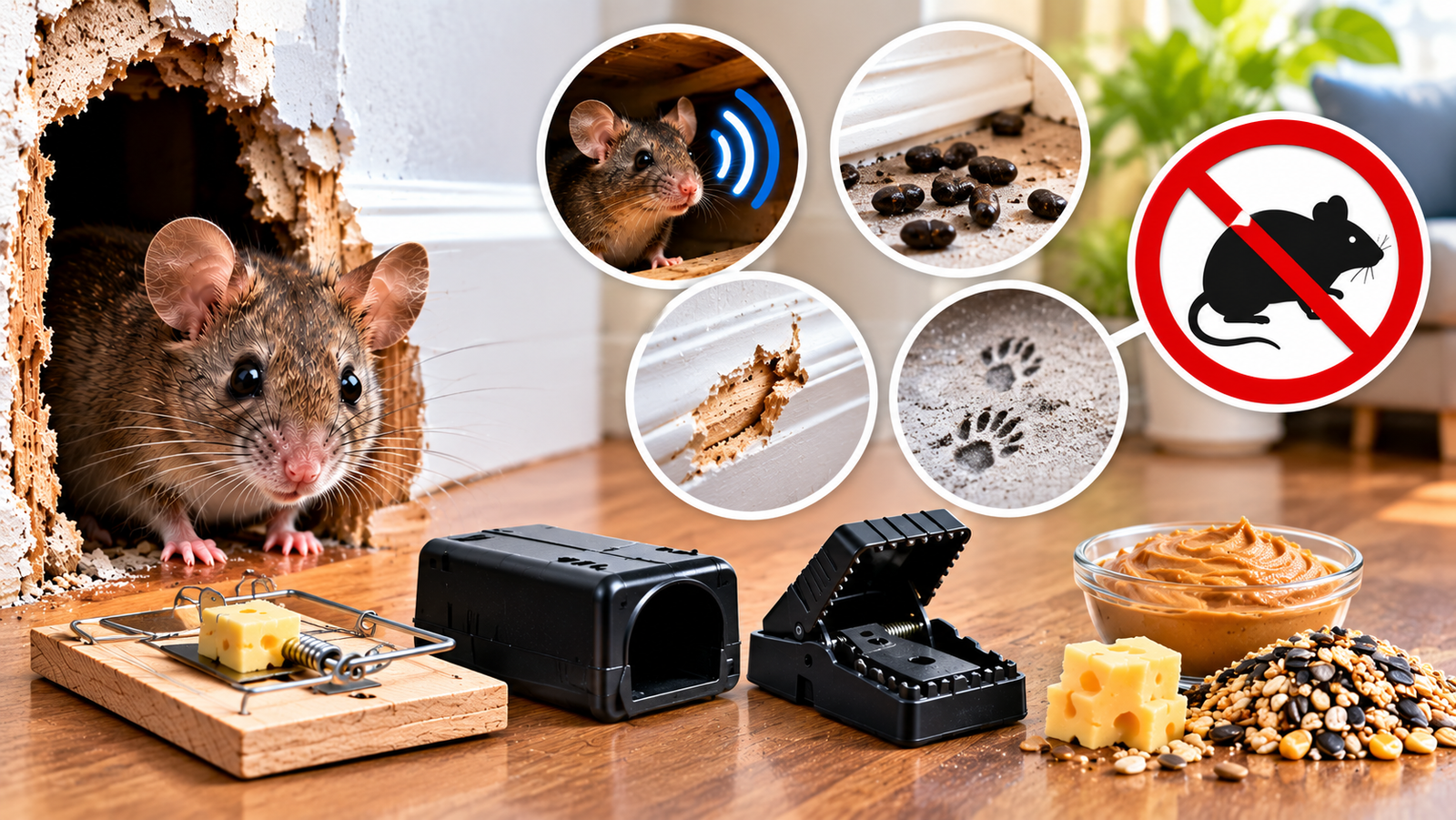
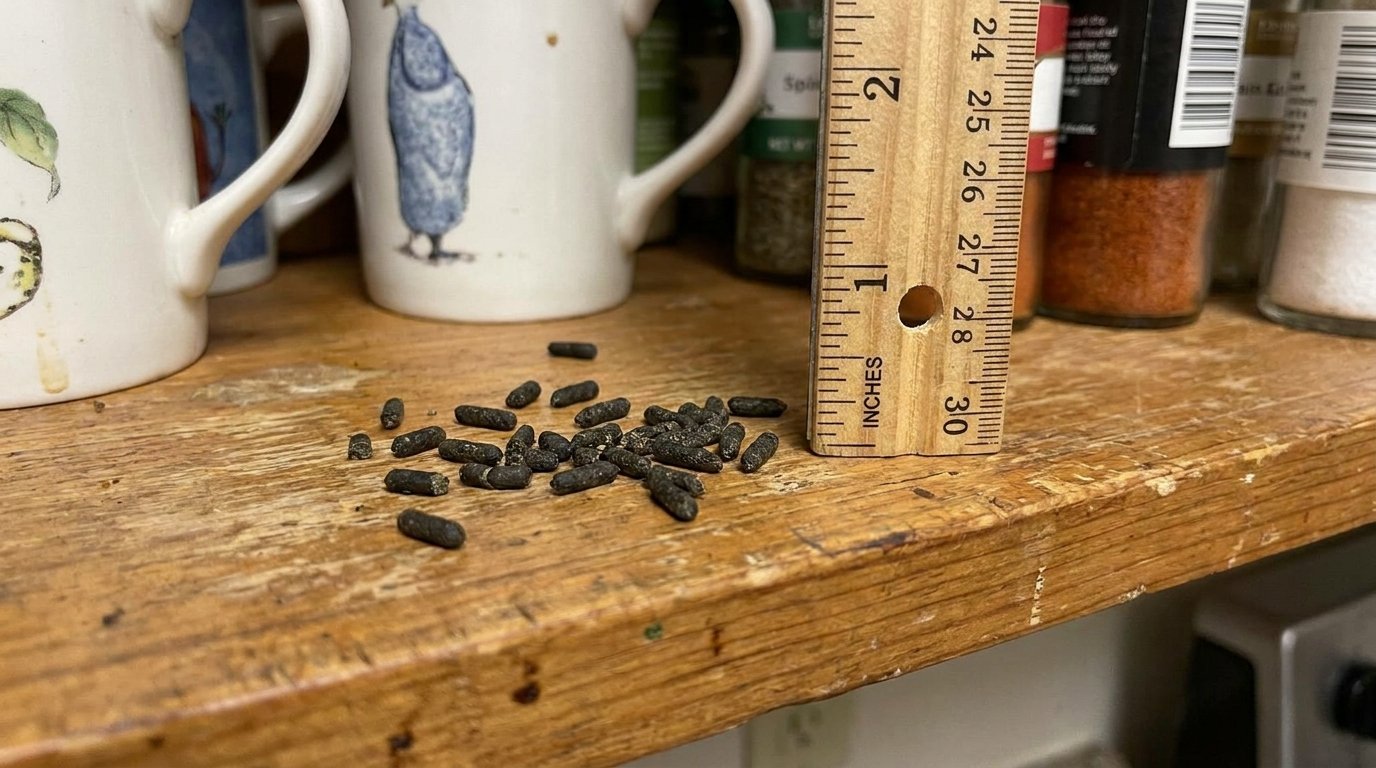
- Droppings along baseboards, under sinks, behind the stove or fridge, or near outlets and heating vents see what mouse poop looks like
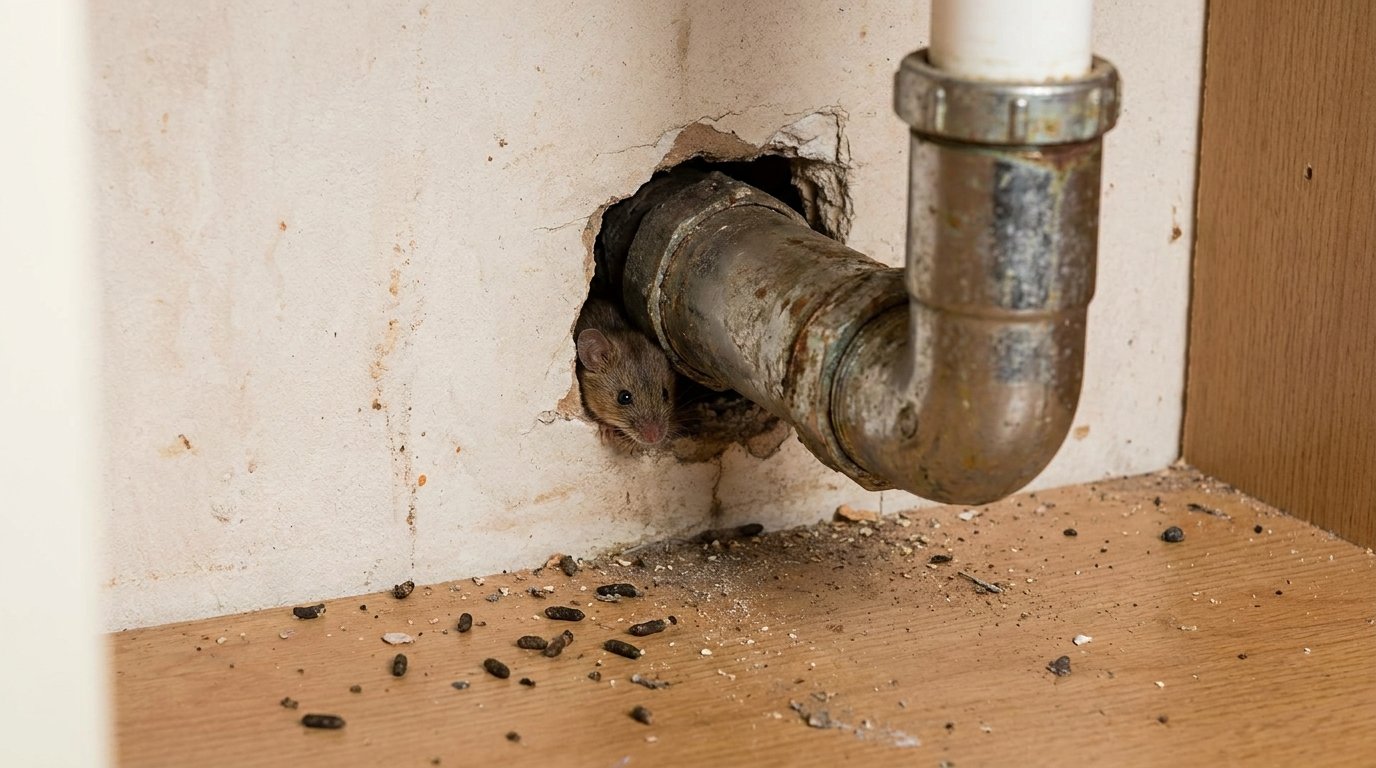
- Small holes about the size of a dime near the bottom of walls, often with smooth, chewed edges and grease marks around them
- A musty, ammonia-like smell coming from one wall or cupboard
- Pets staring at, sniffing or pawing at one spot on a wall
- Gnawed wiring, insulation or wood in the basement or attic near that wall
- A strong rotting smell that appears suddenly, which can mean a mouse has died inside the wall
What Do Mice in Walls Sound Like?
Not every noise in a wall is a mouse. The type of sound, and when you hear it, helps narrow it down.
| What you hear | When | Likely cause |
| Light scratching, fast scurrying, faint squeaks | Mostly at night | Mice |
| Gnawing or chewing | Night, in short bursts | Mice (or rats) chewing wood, wiring or insulation |
| Heavier thumping or running, louder scratching | Night | Rats |
| Loud running and rolling in the ceiling or attic | Early morning and dusk | Squirrels |
| Rustling or high-pitched chirps near the roof | Dusk and night | Bats |
| Constant buzzing or humming from one spot | Daytime, warm weather | Wasps or bees nesting in the wall |
| Ticking, knocking or creaking | When the heat comes on or temperatures change | Pipes, ducts or wood expanding — not animals |
Mice are most active at night, so they're easiest to hear when the house is quiet.
If you're hearing heavy sounds in the attic during the day, you may be dealing with squirrels rather than mice.
Mice in Walls But Not in the House?
It's common to hear mice in the walls but find no sign of them in your living space. That's because the wall cavity gives mice everything they need: shelter, insulation for nesting, and a hidden route between floors. They may get in from outside, live and nest inside the wall, and only come out at night to find food — or not come into your rooms at all.
That doesn't mean you can ignore them:
- Mice breed quickly, so a few mice can become a much bigger colony within weeks.
- They chew on wood, insulation and electrical wiring. Rodents gnawing on wiring is a known fire risk.
- Their droppings and urine build up inside the wall and can cause odours.
- Sooner or later, they usually find a way into the house.
Scratching in the walls but no droppings?
If you hear scratching but can't find any droppings, a few things may be going on:
- The mice are staying inside the wall void, so their droppings are hidden there too.
- They're using a route through the basement ceiling or attic, where you haven't looked yet.
- The noise is from another animal, such as squirrels, bats or birds, or from insects nesting in the wall.
- It's not an animal at all — heating ducts and pipes often tick and creak as they warm up and cool down.
Check the basement ceiling, the attic, under sinks and behind appliances along the same wall. If you still can't find anything, a professional inspection can confirm what's in there.
How Do Mice Get Into Walls?
Mice usually get into walls from outside, through small gaps at ground level or near the roof. Common routes include:
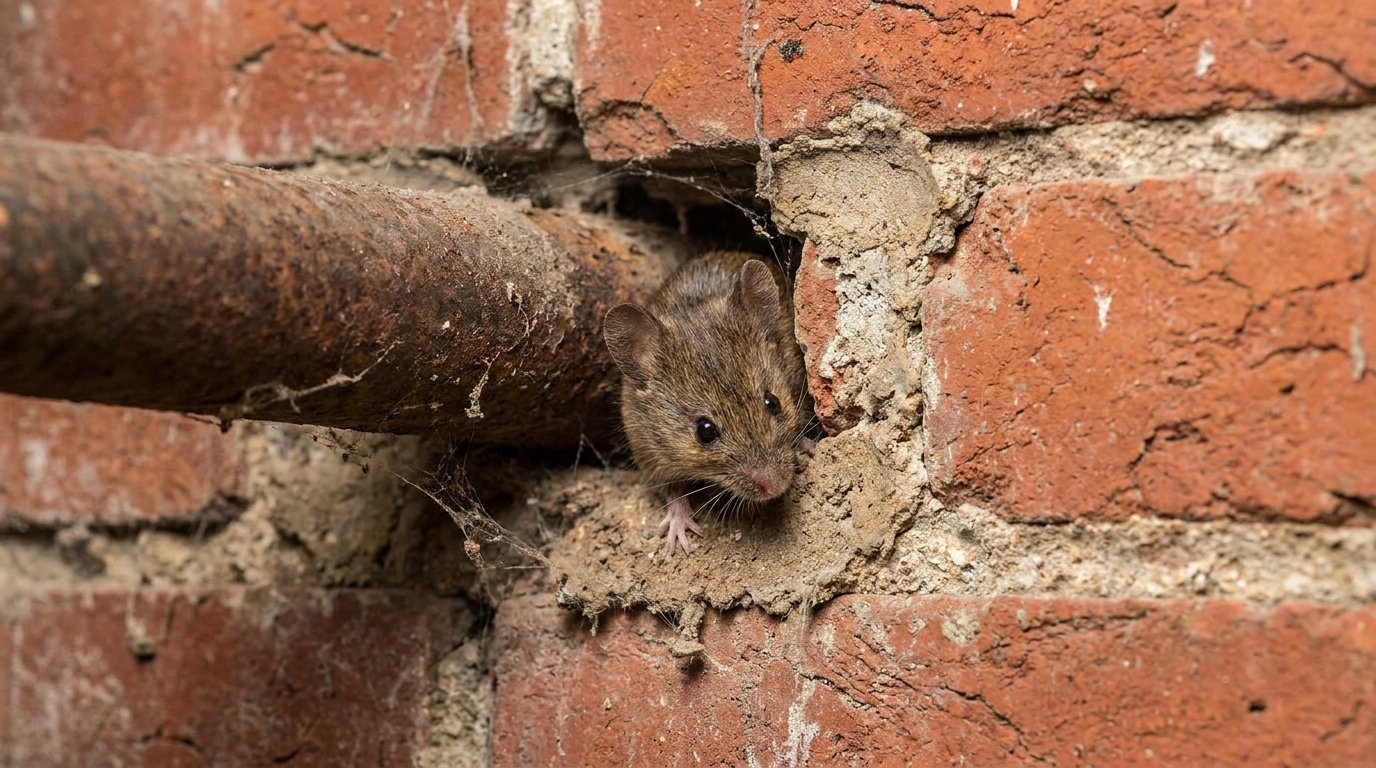
- Weep holes at the bottom of brick walls, which lead straight into the wall cavity
- Gaps around pipes, cables and gas lines where they pass through the exterior wall
- The gap between the foundation and the wall framing (the sill plate)
- Gaps near the roofline, from where mice move down inside the walls
- Openings around plumbing and wiring that run between floors
A house mouse can squeeze through a gap about 6 mm wide, so these openings don't need to be big. Our guide to how mice get into your house covers every common entry point and how to seal it.
How to Get Mice Out of Walls
The goal is simple: catch the mice when they come out of the wall, then close the way in. Here's how to do it step by step.
Step 1: Pinpoint where the mice are
Listen at night and note which wall and which part of it the noise comes from. Check both sides of that wall, the basement ceiling below it and the attic above it for droppings, gnaw marks and nesting material. This tells you where to focus.
Step 2: Find where mice leave the wall
Mice come out of the wall to look for food and water. Look for their exit points on the inside of the house:
- Gaps around pipes under kitchen and bathroom sinks
- Openings behind the stove, dishwasher and fridge
- Gaps where baseboards have pulled away from the wall
- Holes around heating vents, ducts and pipes in the basement
- Small chewed holes near the floor, often with dark grease marks around them
Droppings and rub marks near a gap are a strong sign it's in use.
Step 3: Set traps at the exit points
Place traps on the floor, along the wall, right next to the gaps you found. Mice run along walls rather than across open floors, so traps placed against the wall with the trigger end facing it work best. Use several traps rather than one, and check them every day. For trap types and bait.
Don't put traps inside the wall. You won't be able to check them, and a trapped mouse inside a wall will cause a smell.
Step 4: Seal the outside entry points
Once trapping starts to slow down, close the gaps mice use to get into the wall from outside — weep holes (with weep-hole guards, not mortar), gaps around pipes, the sill plate and the roofline. Use materials mice can't chew, such as copper mesh held in place with sealant, metal mesh or metal flashing.
Step 5: Seal the inside gaps and keep checking
When you've gone several days with no new catches, droppings or sounds, seal the interior gaps too. Then keep an ear out and check for fresh droppings for another one to two weeks. If the noises come back, there's another entry point you haven't found yet.
What Not to Do About Mice in Walls
Some quick fixes make the problem worse.
| Mistake | Why it backfires |
| Using poison | Poisoned mice often die inside the wall, where you can't reach them, leaving a strong smell for weeks |
| Sealing every gap straight away | Mice get trapped inside the wall and die there — or chew a new way out into your home |
| Spraying or pouring products into the wall | Unlikely to reach the mice and can create fumes or damage inside the wall |
| Cutting open drywall to look for mice | Usually unnecessary, and the mice will just move to another part of the wall |
| Relying on ultrasonic plug-ins | Sound doesn't travel well through walls, and mice often get used to it |
| Banging on the wall | The mice go quiet for a few minutes, then carry on |
What If a Mouse Dies in the Wall?
A dead mouse in a wall produces a strong, rotten smell that usually peaks within a few days and can linger for a couple of weeks or longer. You may also notice flies in the room. The smell is strongest near where the mouse is, which helps you find it.
Sometimes the mouse can be reached through a vent, an outlet box or from the basement or attic. In other cases, a small access hole in the drywall is the only way to remove it. For how to find it and get rid of the smell.
Mice in the Ceiling
Mice move up and down inside walls, so it's common to hear them in the ceiling too — especially between floors or under the attic. The same approach works: find where they come out, trap along the walls near those points, and seal the entry points outside. If the sounds are coming from the attic itself
When to Call a Professional
Mice in walls are one of the hardest mouse problems to solve on your own, because you can't see or reach them. It's time to call a professional if:
- You can hear mice but can't find where they're coming out of the wall
- Trapping hasn't reduced the noise after about two weeks
- You hear them in several walls, or on more than one floor
- You suspect a mouse has died in the wall
- The entry points are high up or hard to reach
- You're not sure whether the noise is mice, rats, squirrels or bats
How Nomore Pest Gets Mice Out of Walls
Nomore Pest is a licensed and insured pest control company serving Toronto, Mississauga, Vaughan, Scarborough, North York and Etobicoke. Our mouse control service is built for problems like this, where the mice are out of sight:
- Inspection of the wall, the rooms on both sides, the basement and the attic to confirm what's in there and where it's active.
- Entry-point search outside the home, from the foundation and weep holes to the roofline.
- Targeted removal, using methods chosen for your home — for example, traps at exit points, tamper-resistant bait stations placed safely, or one-way exclusion devices that let mice leave the wall but not come back.
- Exclusion, sealing entry points with rodent-resistant materials once activity has dropped.
- Follow-up to make sure the sounds have stopped.
Want to know more about what a visit involves?
Hearing mice in the walls? Book a mouse inspection or call 800-461-1827 / 437-922-2705. You can also email info@nomorepest.ca.
Conclusion
Scratching and scurrying in the walls at night almost always means mice have found a way into the wall cavity. Confirm it, find where they come out, trap them at those exit points, and seal the entry points outside — in that order, and without poison. For the full removal plan, see our complete guide to getting rid of mice humanely. If you can't find where they're getting in, or the noises keep coming back, Nomore Pest rodent team can find the source and seal it.
Frequently asked questions
How do I know if I have mice in my walls?
The most common signs are light scratching, scurrying or squeaking sounds at night, droppings along baseboards or under sinks, small chewed holes near the floor, a musty smell, and pets staring at or sniffing one spot on the wall.
What do mice in the walls sound like?
Mice make light, fast scratching and scurrying sounds, faint squeaks and short bursts of gnawing, mostly at night. Heavier thumping usually points to rats, and loud running in the attic in the early morning often means squirrels.
How do you get mice out of the walls?
Find where the mice come out of the wall, set traps along the wall right next to those exit points, then seal the entry points outside the house once activity drops. Seal the inside gaps last, and keep checking for new droppings or sounds for one to two weeks.
Can mice live in walls without coming into the house?
Yes. Mice can live and nest inside the wall cavity and only come out to find food. They still chew on wiring and insulation and breed quickly, so they should be dealt with.
Will mice in walls leave on their own?
Rarely. The wall cavity is warm and sheltered, and as long as they can get food and a way in and out, mice have no reason to leave especially in the fall and winter.
Should I use poison for mice in walls?
It's not recommended. Poisoned mice often die inside the wall, where they can't be removed easily, and the smell can last for weeks. Trapping at exit points and sealing entry points is more effective.
Should I seal the holes if mice are in the walls?
Yes, but in the right order. Trap the mice first, then seal the outside entry points once activity drops, and seal the inside holes last. Sealing everything straight away can trap mice inside the wall.
Got a pest problem? Don't wait.
Book a professional inspection across Toronto & the GTA and get peace of mind, backed by a licensed & insured local team.
Or email us at info@nomorepest.ca · Toronto & the GTA