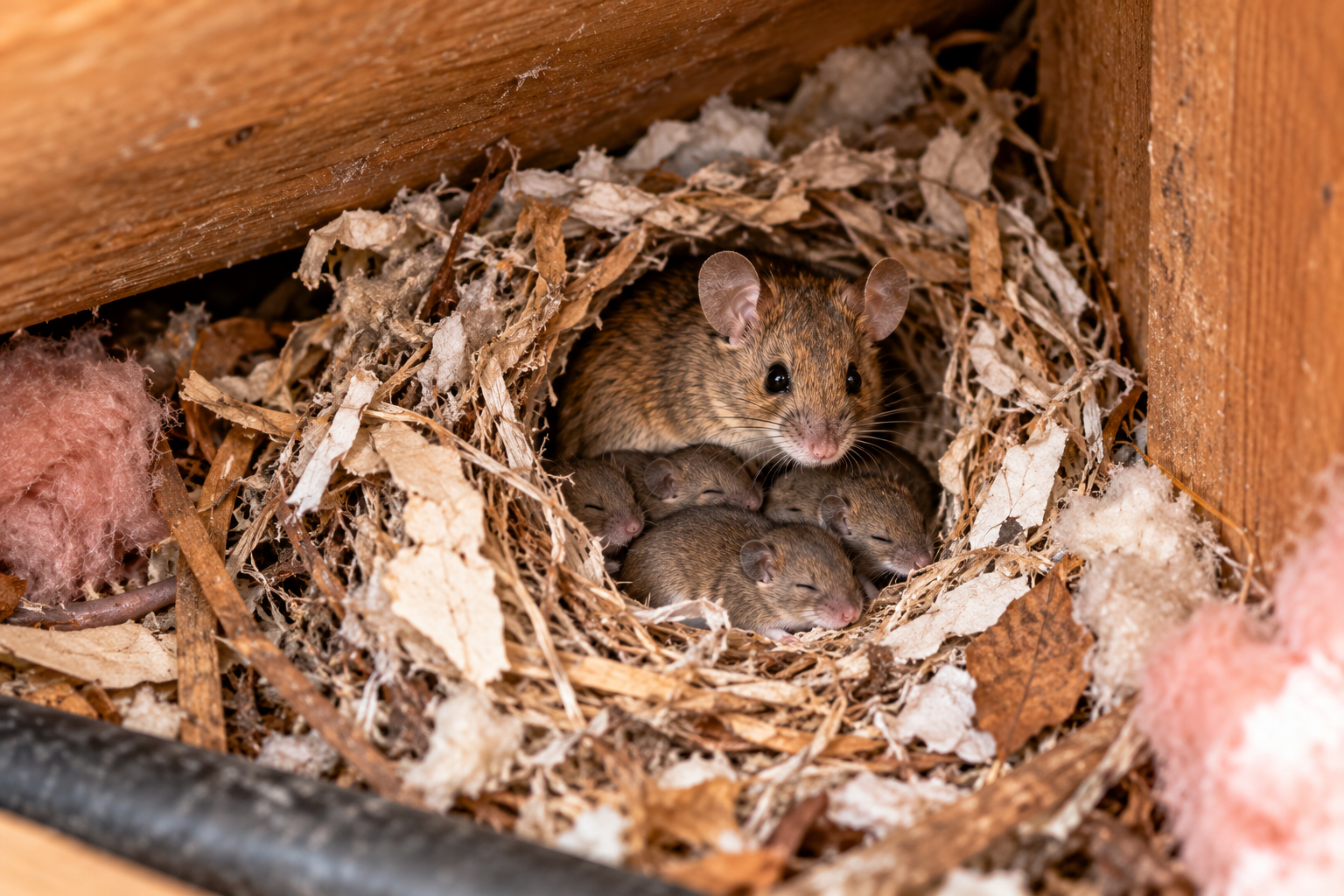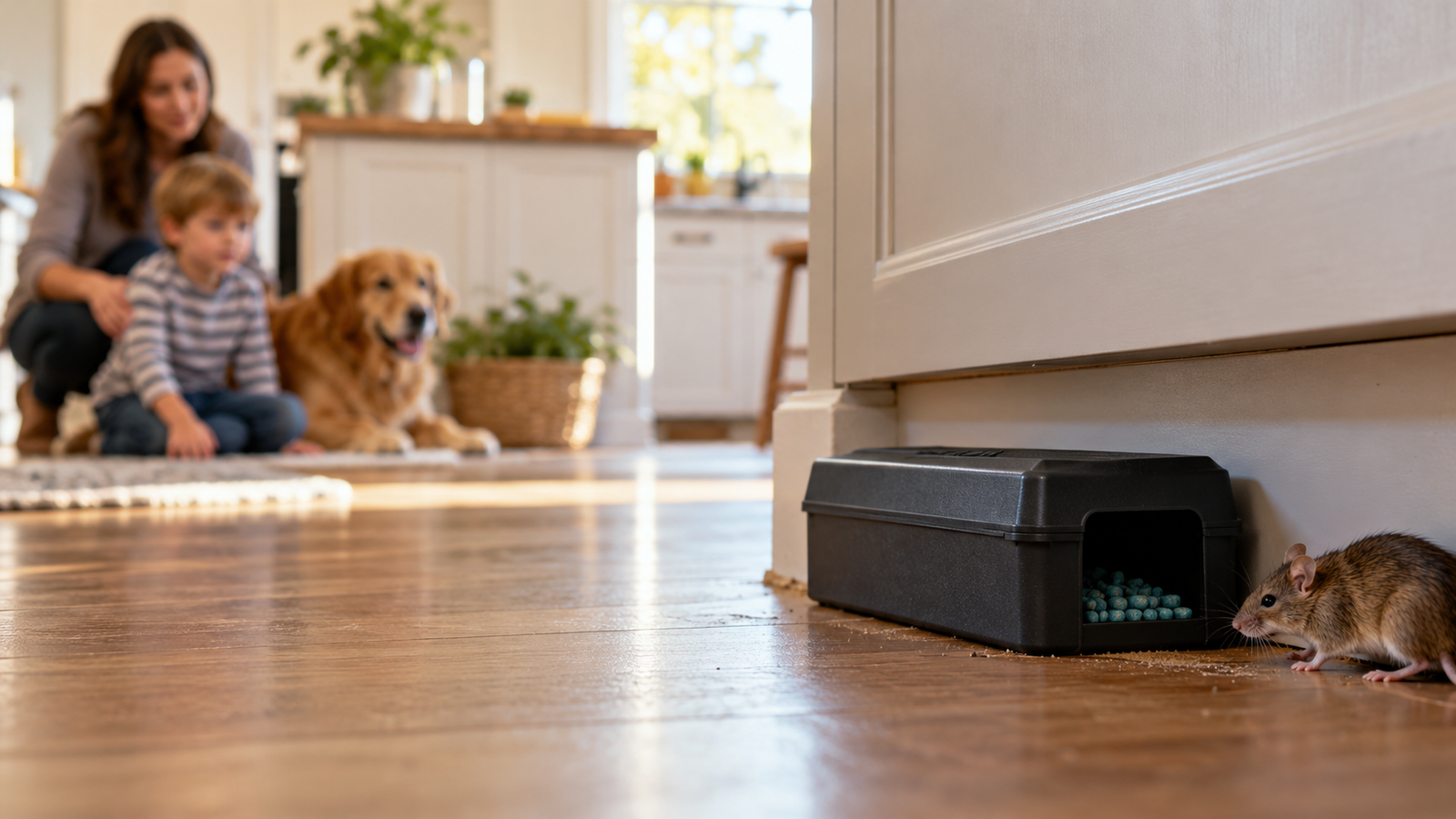
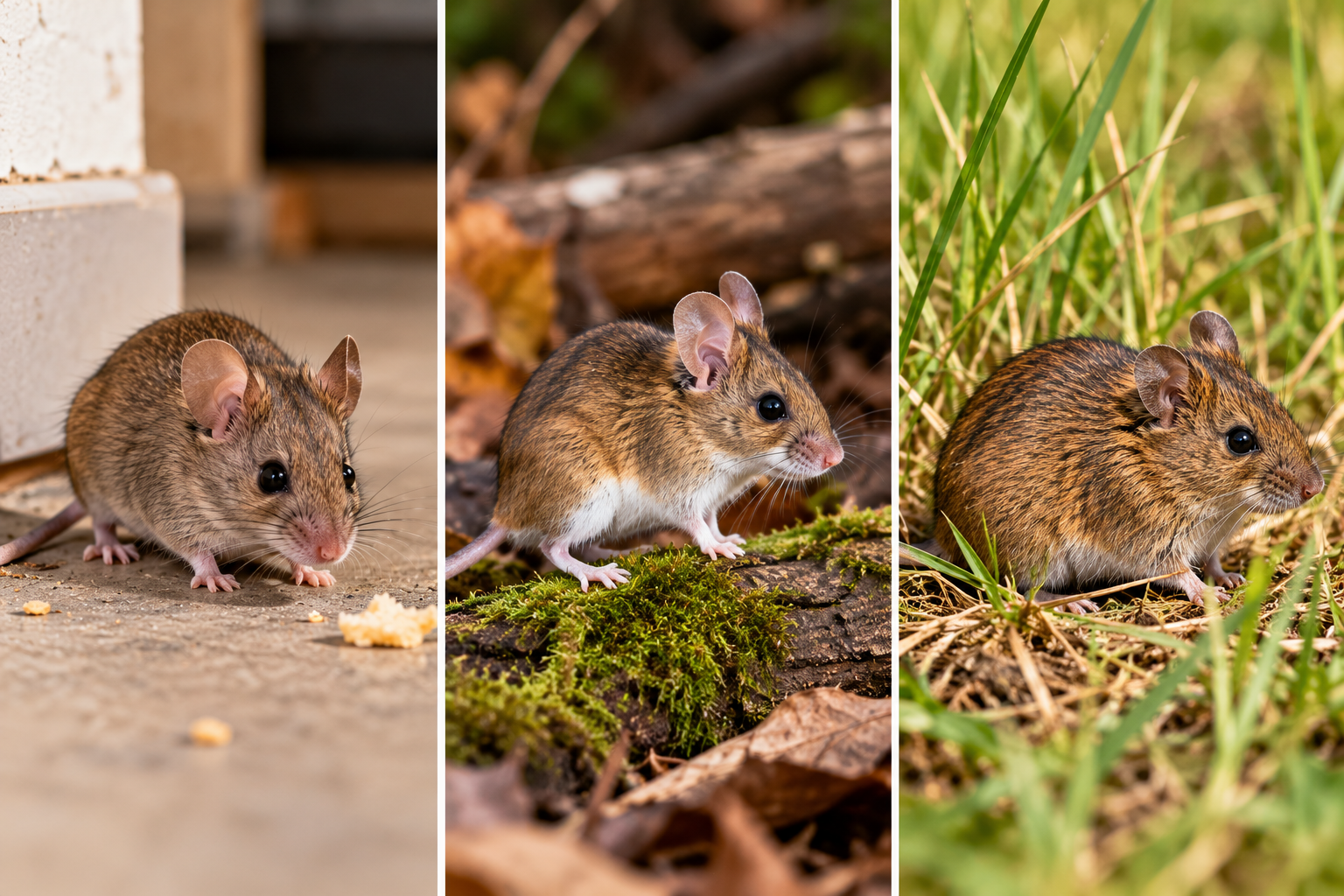
Most people call anything small and brown a "field mouse". In Ontario there are actually several different animals it could be, and the differences matter — one of them lives in your walls year-round, another carries a virus worth taking seriously, and one of them isn't a mouse at all.
Here's how to tell them apart, starting with the two you're most likely to meet.
Quick Identification Guide of Different Type Mice
| Species | Belly | Tail | Where you'll find it |
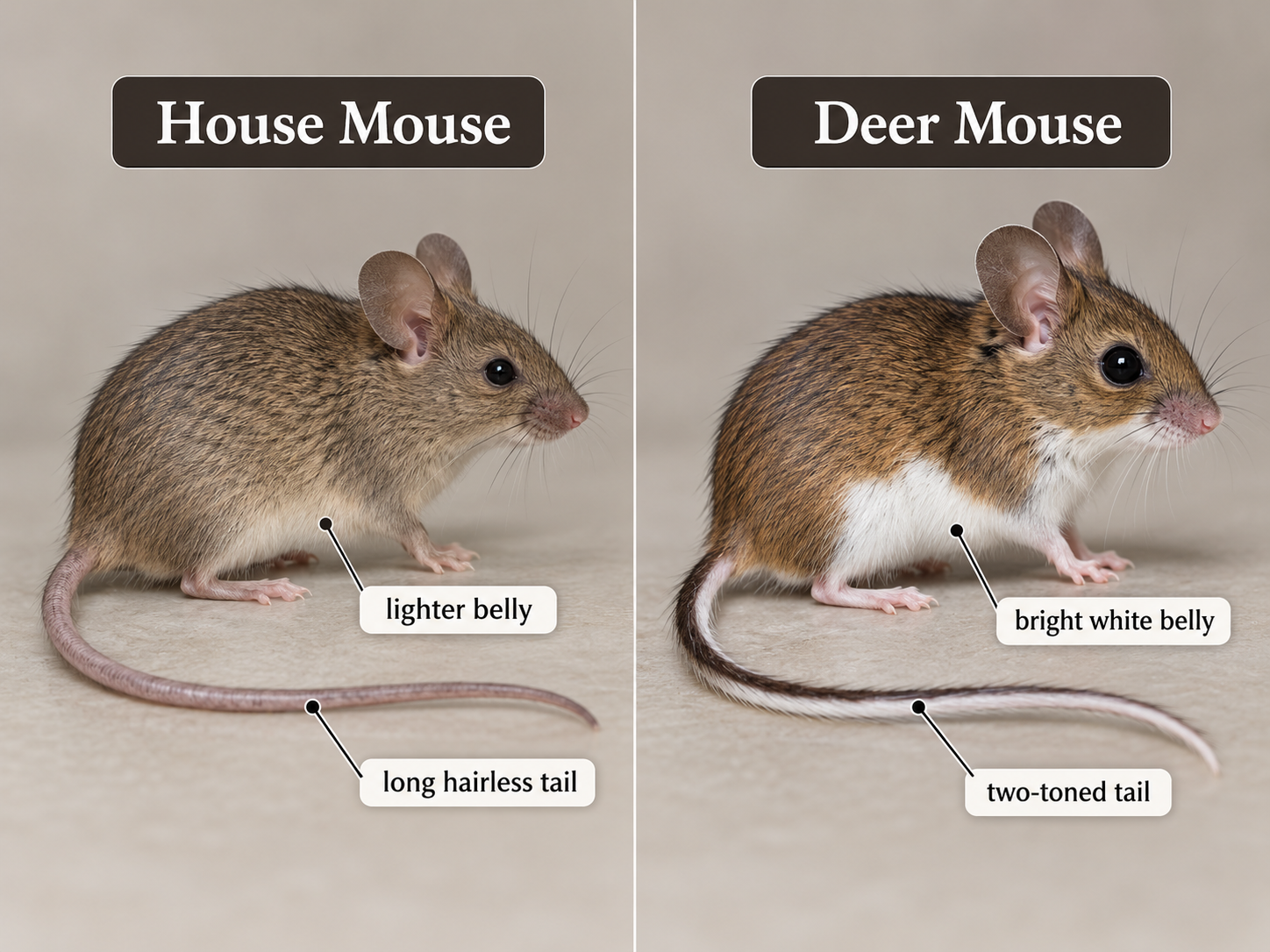
| House mouse | Grey or buff — barely lighter than the back | One colour, nearly hairless, as long as the body | Inside homes, year-round |
| Deer mouse | Bright white | Two-tone — dark on top, white underneath | Garages, sheds, cottages, rural homes |
| White-footed mouse | White | Two-tone, less sharply divided | Woodland edges and rural southern Ontario |
| Meadow vole | Grey | Short — much shorter than the body | Lawns and gardens; rarely indoors |
| Shrew | Grey-brown | Short | Outdoors; not a rodent at all |
House Mouse
The house mouse is the one pest control companies deal with most in Toronto and the GTA. If you have mice in your kitchen in January, this is almost certainly what you have.
- Size: body about 7–10 cm, plus a tail about the same length
- Colour: grey to light brown, with a belly only slightly paler than the back
- Tail: nearly hairless, scaly, a single colour all the way round
- Ears: large for the head; eyes small and dark
- Smell: an established population leaves a distinct musty, ammonia-like odour
- Where: indoors all year — walls, attics, basements, kitchens, garages
House mice live alongside people rather than visiting. They nest indoors, breed indoors through the winter, and rarely go outside once they're established. That's why a house mouse problem doesn't fix itself when the weather warms up.
Deer Mouse
The deer mouse is the one to be able to recognise, because of its link to hantavirus in Canada.
- Size: similar to a house mouse, body about 7–10 cm
- Colour: brown to greyish above with a clean white belly — the clearest difference from a house mouse
- Tail: two-tone, dark on top and white underneath, usually with fine hair
- Ears and eyes: noticeably larger than a house mouse's
- Where: garages, sheds, barns, cottages, cabins, woodpiles and rural properties, moving into buildings in the fall
Deer mice are common across Ontario, including around GTA properties with garages, sheds or nearby green space. They are the main carrier of hantavirus in Canada, which is why droppings should never be swept or vacuumed see how to clean up mouse droppings safely and do mice carry diseases?
Because house mouse and deer mouse droppings look the same, treat all droppings with the same precautions see what mouse poop looks lik
White-Footed Mouse
The white-footed mouse looks very like a deer mouse — white belly, white feet, two-tone tail — and the two overlap across southern Ontario. Even specialists often can't tell them apart by sight alone.
For a homeowner, the practical advice is the same for both: treat them as deer mice, take the same precautions with droppings, and focus on sealing the building.
What Is a "Field Mouse"?
"Field mouse" isn't a species. It's a catch-all name people use for any mouse found outdoors, and in Ontario it usually means one of three animals:
- A deer mouse or white-footed mouse (most often)
- A meadow vole, which isn't really a mouse at all
So if someone tells you that you have field mice, what they probably mean is that the mice came in from outside rather than living in the building all year.
Also Read:What Does a Mouse Nest Look Like? Where to Find One
Meadow Vole: Not a Mouse
Voles are mistaken for mice constantly, so they're worth knowing:
- Stocky, rounded body with a blunt face
- Short tail — much shorter than the body, unlike a mouse
- Small ears and small eyes, often partly hidden in fur
- Lives outdoors in lawns, gardens, fields and under snow
- Signs: shallow surface runways in grass, chewed plant stems, and damage to lawns that shows up when the snow melts
Voles very rarely come into houses. If you're seeing damage in the lawn but nothing indoors, you're probably dealing with voles rather than mice.
Other Lookalikes
| Animal | How to tell |
| Shrew | Very small, long pointed snout, tiny eyes; not a rodent and doesn't gnaw like one |
| Jumping mouse | Very long tail and large hind feet; hibernates and is rarely found in buildings |
| Young rat | Head, feet and tail look oversized for its body; tail thick and scaly see mouse vs rat |
| Chipmunk | Striped back, active during the day, lives outdoors |
Which One Is in Your House?
A quick way to narrow it down:
| What you're seeing | Most likely |
| Mice indoors through the winter, droppings in kitchen cupboards | House mouse |
| Mouse with a bright white belly in the garage, shed or cottage | Deer mouse (or white-footed mouse) |
| Activity that starts in the fall and comes from outside | Deer mouse or white-footed mouse |
| Runways in the lawn, chewed plants, nothing indoors | Meadow vole |
| Something much larger with a thick tail | Rat see mouse vs rat |
Does the species change how you treat it?
The basics are the same: find the entry points, seal them with materials mice can't chew, trap what's inside, and clean up safely. Two differences are worth knowing:
- Deer mice are outdoor animals that come in. They re-invade from the yard, woodpile or shed each fall, so exclusion work and keeping clutter away from walls matters even more see how mice get into your house
- House mice live indoors permanently. They breed in your walls year-round, so the population can be larger than it looks and trapping needs to be more thorough.
In both cases, take the same precautions with droppings and nesting material.
Common Questions About How Mice Look
- Why do some mice look much bigger than others? Young mice are small; adults are 7–10 cm in the body. Anything noticeably larger with a thick tail is likely a rat.
- Are there black mice? House mice range from grey-brown to quite dark. A very dark small rodent indoors is usually just a dark house mouse.
- Do mice have long tails? Yes — a house mouse's tail is about as long as its body. A short tail points to a vole.
- Mice with big ears? Large ears relative to the head are normal for mice, and particularly noticeable on deer mice.
When to Call a Professional
Identification is useful, but what matters is whether they're in your home. Call a professional if:
- You're finding droppings indoors, especially in more than one room
- You hear activity in walls or ceilings
- You're not sure whether you're dealing with mice, voles or rats
- There's a build-up of droppings in a garage, shed, attic or cottage
- Mice return every fall despite trapping
How Nomore Pest Can Help
Nomore Pest is a licensed and insured pest control company serving Toronto, Mississauga, Vaughan, Scarborough, North York and Etobicoke. Our technicians identify which rodent you're dealing with, find where they're nesting and getting in, and seal the building so the next fall doesn't start the cycle again. Learn more about our mouse control services in Toronto.
Not sure what you've seen? Book an inspection or call 800-461-1827 / 437-922-2705. You can also email info@nomorepest.ca.
Conclusion
Check the belly and the tail. A grey-bellied mouse with a plain tail living in your kitchen is a house mouse. A white-bellied mouse with a two-tone tail in the garage or at the cottage is a deer mouse or white-footed mouse. A stocky animal with a short tail in the lawn is a vole, and it belongs outside. Whichever it is, the fix for the indoor ones is the same — seal the way in, remove what's inside and clean up safely. The full plan is in our complete guide to getting rid of mice humanely, or Nomore Pest rodent team can identify it and deal with it.
Frequently asked questions
What types of mice live in Ontario?
The two you're most likely to encounter are the house mouse, which lives indoors year-round, and the deer mouse, which lives outdoors and moves into buildings in the fall. The white-footed mouse is very similar to the deer mouse, and meadow voles are often mistaken for mice but live outdoors.
What's the difference between a house mouse and a deer mouse?
A deer mouse has a bright white belly and a two-tone tail that's dark on top and white underneath, with larger ears and eyes. A house mouse is grey-brown with a belly only slightly paler than its back and a single-coloured, nearly hairless tail.
Is a field mouse the same as a house mouse?
No. "Field mouse" isn't a species it's a general name for mice found outdoors. In Ontario it usually means a deer mouse or white-footed mouse, and sometimes a vole.
How do I tell a mouse from a vole?
Look at the tail and ears. A mouse has a tail about as long as its body and large ears. A vole has a short tail, small ears and a stockier body, and lives outdoors in lawns and gardens rather than in houses.
Which mice carry hantavirus in Canada?
Hantavirus in Canada is associated with deer mice. Because deer mouse and house mouse droppings look alike, treat all rodent droppings the same way — never sweep or vacuum them.
What does a house mouse look like?
A house mouse has a body about 7–10 cm long, grey to light brown fur with a slightly paler belly, large ears, small dark eyes and a nearly hairless tail about as long as its body.
Do different types of mice need different treatment?
The approach is the same — seal entry points, trap, clean up safely. The difference is that deer mice come in from outside each fall, so exclusion and yard tidiness matter more, while house mice live and breed indoors all year.
Got a pest problem? Don't wait.
Book a professional inspection across Toronto & the GTA and get peace of mind, backed by a licensed & insured local team.
Or email us at info@nomorepest.ca · Toronto & the GTA