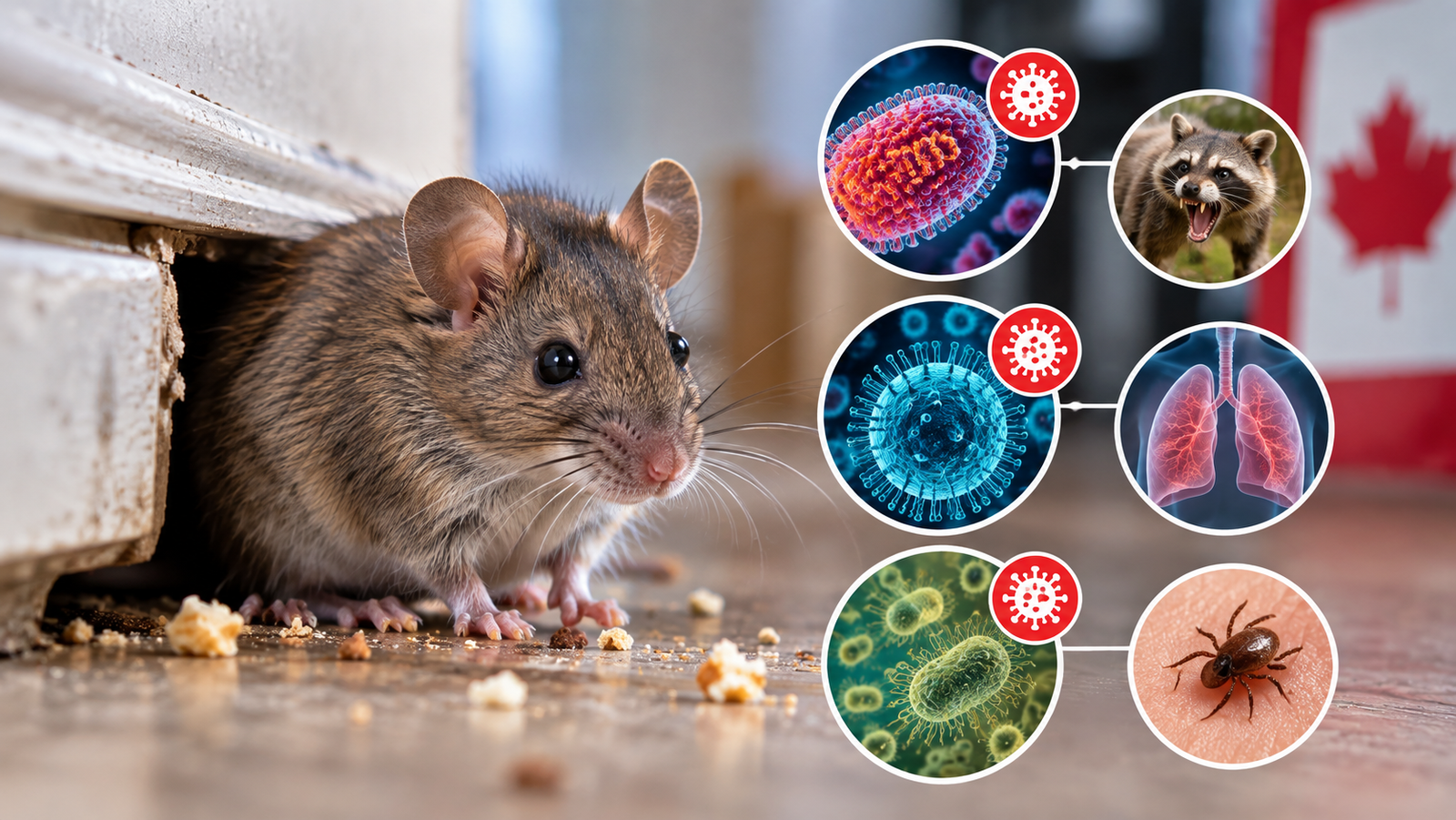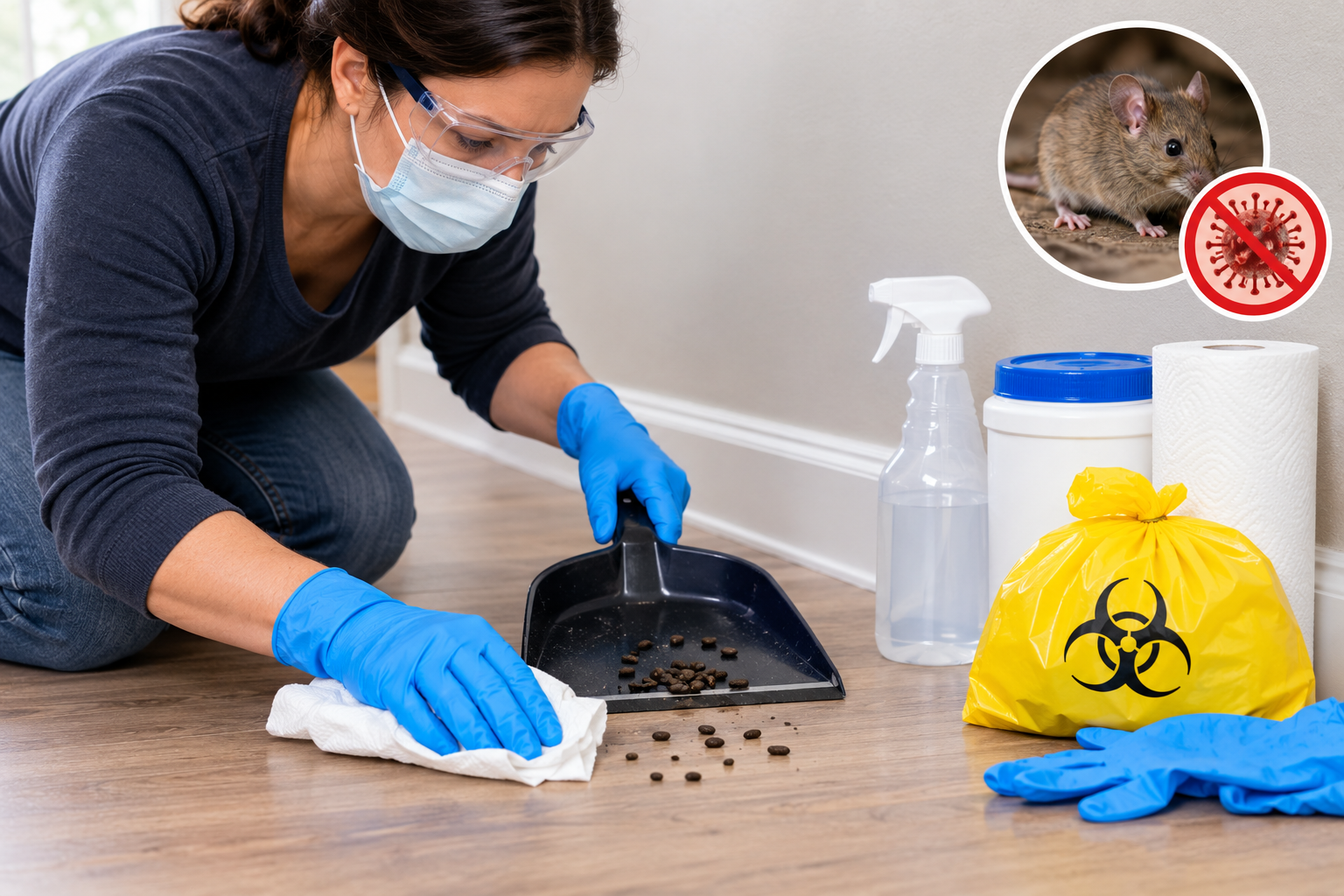
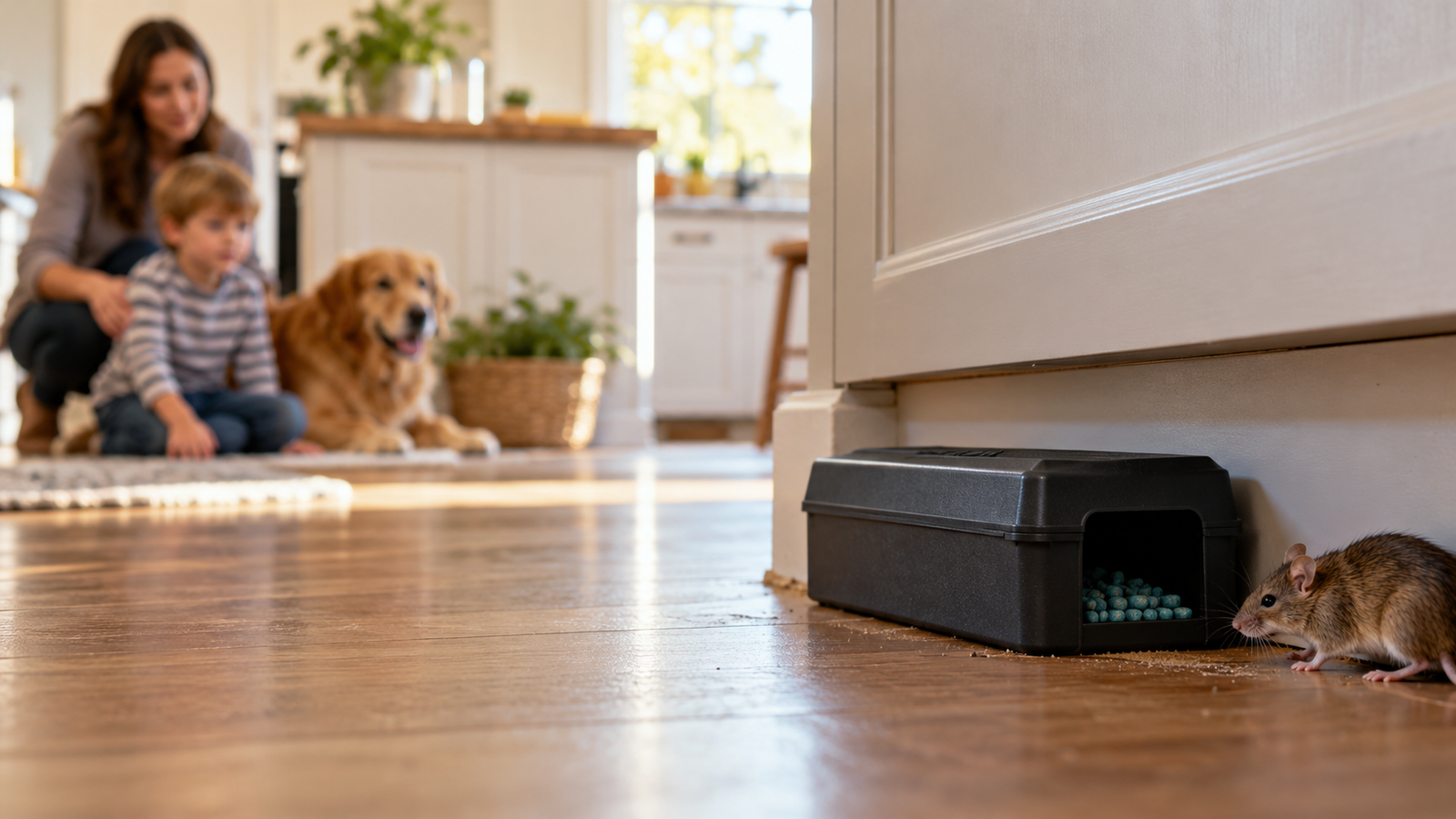
When you hear scratching in the walls at 2 a.m., grabbing a box of mouse poison from the hardware store can feel like the fastest fix. But does mouse poison actually work, and is it safe to use in a home with children and pets? The short answer is that it can kill mice, but it often creates new problems: dead mice inside your walls, accidental poisonings, and an infestation that keeps coming back.
This guide explains how mouse poison works, what the real risks are for your family, what Canadian rules say, and what to do instead.
Does Mouse Poison Work?
Yes, mouse poison can kill mice. But "it kills mice" and "it solves your mouse problem" are two different things.
Most mouse poison is slow-acting by design. A mouse has to find the bait, eat enough of it, and then die somewhere, usually days later. During that time, it keeps moving through your home, leaving droppings and urine and chewing on things. Poison does nothing about the reason mice are in your house in the first place: food, shelter, and unsealed entry points.
That's why homeowners often see activity drop for a week or two, then return. New mice simply move into the same gaps.
How Mouse Poison Works and Why It's Slow
Most products sold in Canada are anticoagulants. They interfere with the blood's ability to clot, so the mouse dies of internal bleeding over several days. Other types work differently, but the common thread is the same: the effect is delayed, not instant.
That delay matters for two reasons:
- Mice keep eating. A mouse that has eaten bait is still alive, still active, and may be carrying poison in its body for days.
- Other animals can be harmed. A poisoned or dying mouse is easy prey for a cat, a dog, an owl, or a hawk.
What Types of Mouse Poison Are on the Shelves?
Walk into any hardware store and you'll see a few common forms:
- Mouse poison blocks and bait blocks: solid blocks, often waxy, designed to be gnawed.
- Mouse poison pellets: loose, grain-like bait.
- Pre-filled bait stations and "mouse poison traps": sealed plastic boxes with bait inside, so the poison isn't sitting in the open.
Is there a "best mouse poison" or a "good mouse poison"? We don't rank products, because the honest answer is that no product is safe or effective in every home. The right choice depends on your pets, your children, where mice are active, and whether the underlying problem has been fixed. Whatever product you consider, the Health Canada-approved label is the authority on how it must be used.
Is Mouse Poison Safe for Kids and Pets?
Not completely, and that's why it's regulated. Rodenticides are designed to be attractive to rodents, which also makes some of them attractive to curious toddlers and dogs.
Risks to children. Bait blocks and pellets can look like candy or pet treats to a small child. Even a small amount can be dangerous. If you suspect a child has touched or swallowed any rodent bait, call your local poison centre or 911 right away. In Ontario, the Ontario Poison Centre is available at 1-800-268-9017, and the national line is 1-844-POISON-X (1-844-764-7669).
Risks to pets. Dogs may eat bait directly. Cats and dogs can also be poisoned secondarily by eating a mouse that has consumed bait. Signs of anticoagulant poisoning in pets can include unusual tiredness, weakness, pale gums, bruising, nosebleeds, or blood in urine or stool. These signs can take days to appear. If you think your pet has been exposed, call your veterinarian or an emergency clinic immediately and bring the product packaging. Don't wait for symptoms.
Risks to wildlife. Owls, hawks, foxes, and other predators can be poisoned after eating affected rodents. This is one reason outdoor use is so tightly controlled.
Is There Such a Thing as "Pet Safe Mouse Poison"?
You'll see "pet safe mouse poison" in search results and on some packaging, but treat that wording carefully. No rodent poison is risk-free. In most cases, "pet safe" refers to the bait station design (a locked or enclosed box that's harder to open) or to a different active ingredient. It doesn't mean a pet can eat the bait without harm, and it doesn't prevent secondary poisoning.
If you have pets or young children, the safest approach is to avoid loose bait entirely and choose non-poison methods first.
What Do Canadian Rules Say About Mouse Poison?
In Canada, rodenticides are regulated by Health Canada's Pest Management Regulatory Agency (PMRA). If you're searching for "mice poison Canada," here is the general picture:
- Rodenticides used by consumers or professional pest control operators in areas accessible to children and pets must be placed in a tamper-proof bait station.
- Rodenticides sold to individual consumers must be packaged together with a pre-baited, ready-to-use bait station.
- Health Canada's stated intent is to prevent accidental exposure of children and non-target animals.
- Stronger "commercial class" products are restricted to trained or licensed users and aren't meant for homeowners.
Rules can differ by province and municipality, and labels change. Always read the label on any product you buy, and ask your municipality about any local restrictions.
Outdoor Mice Poison: Why It's a Bad Idea
Homeowners sometimes consider outdoor mice poison for sheds, garden beds, or around the foundation. This is where non-target harm is most likely: birds, squirrels, pets, and wildlife can all find the bait or the affected rodents. Outdoor use generally requires tamper-resistant stations, and even then it rarely solves an indoor mouse problem. If mice are getting into your home from outside, sealing entry points does far more than scattering bait.
The Biggest Problems With DIY Mouse Poison
1. Dead mice in the walls
A poisoned mouse often retreats to a quiet, hidden spot to die: inside a wall, under flooring, or in the attic. The odour can last for days to weeks. If this has already happened, our guide to finding and getting rid of dead mouse smell explains what to do.
2. It doesn't fix how mice get in
Mice can squeeze through gaps about the size of a dime. Poison does nothing about those gaps. Until they're sealed, new mice will keep arriving. Learn more about how mice get into your house and where to look.
3. Mice may not take the bait
If mice have plenty of other food available, such as crumbs, pet food, birdseed, or pantry items, they may ignore bait. They can also take bait and carry it elsewhere, which means it ends up in places you didn't choose.
4. Risk after the fact
Leftover bait, half-eaten blocks, and poisoned mice can all remain accessible long after you've "finished" treating. That's a real concern in a home with a crawling baby or a curious dog.
Homemade Mouse Poison and "Foods That Kill Mice Instantly"
Online, you'll find countless "homemade mouse poison" recipes and claims about what foods kill mice instantly. Here's the reality: no household food reliably kills mice instantly. These home remedies are unpredictable, often cruel, and can be hazardous to pets and children who find them. We don't recommend them, and we won't share recipes.
So what kills a mouse quickly and reliably? A properly placed snap trap does, which is why traps are the go-to option when poison isn't appropriate.
Safer and More Effective Alternatives to Mouse Poison
For most homes, especially those with kids or pets, this order of attack works best:
- Seal the entry points. This is the single most important step.
- Remove food and shelter. Store pantry food in sealed containers, clean up crumbs, secure garbage, and reduce clutter in basements and garages.
- Use traps. Snap traps and enclosed trap boxes are placed where mice travel, with no poison involved. See which mouse traps and baits actually work and where to put them.
- Monitor and follow up. Check traps daily and keep checking for fresh droppings or noises for a couple of weeks.
For a full step-by-step plan, see our complete guide to getting rid of mice.
When to Call a Professional
Call for help if any of these apply:
- You've already used poison and the activity hasn't stopped.
- You hear noises in the walls or ceiling and can't find the source.
- You have children or pets and aren't comfortable using any bait.
- You've seen mice in more than one room, or you've found a nest.
A licensed technician can find and seal entry points, choose the right method for your situation, and use enclosed, tamper-resistant stations only where it's appropriate and safe. If you're in the Greater Toronto Area, Nomore Pest's rodent team can inspect your home and put a plan in place.
Conclusion
Mouse poison can kill mice, but it's slow, it doesn't fix the cause, and it adds real risks for kids, pets, and wildlife. For most Canadian homes, sealing entry points and using traps is safer and works better. If mice are still a problem after that, bring in a professional from nomore pest.
Frequently asked questions
Does mouse poison work?
It can kill mice, but usually over several days, and it doesn't stop new mice from coming in. It works best as one small part of a larger plan, not as a stand-alone fix.
Is mouse poison safe for dogs, cats, and kids?
No. Even with a bait station, risks remain, including secondary poisoning when a pet eats a poisoned mouse. If exposure is suspected, call your vet, a poison centre, or 911 immediately.
How long does mouse poison take to kill a mouse?
Typically several days, not hours. Always follow the label on the specific product.
What kills a mouse fastest and most reliably?
A correctly placed snap trap is generally the most direct option, with no poison involved.
Can I use mouse poison in my walls or attic?
It's not recommended. Mice that die in wall voids or attics cause odour and are very hard to reach. Sealing and trapping are better choices.
Is mouse poison legal in Canada?
Registered rodenticides are legal when used according to their Health Canada-approved label. Stronger commercial products are restricted to trained or licensed users.
Got a pest problem? Don't wait.
Book a professional inspection across Toronto & the GTA and get peace of mind, backed by a licensed & insured local team.
Or email us at info@nomorepest.ca · Toronto & the GTA