It usually starts small — a faint sour note in one room that you can't place. Two days later it's unmistakable, and it seems to be coming from the wall.
A dead mouse produces a strong, unpleasant smell that can last for weeks if you can't reach it. The good news: the smell does end, and in most cases you can find the mouse and clear the odour yourself. Here's how.
Quick Fact About Dead Mouse Smell
| Question | Short answer |
| What does it smell like? | Sickly sweet and rotten, with a sour, ammonia-like edge |
| How long does it last? | Usually one to three weeks; it peaks in the first week |
| How do I find it? | Follow the smell to its strongest point and look for flies |
| How do I remove it? | Wear gloves, double-bag the mouse and put it in the outdoor bin, then disinfect the area |
| What if it's in a wall? | Ventilate and use odour absorbers, or have a professional locate and remove it |
What Does a Dead Mouse Smell Like?
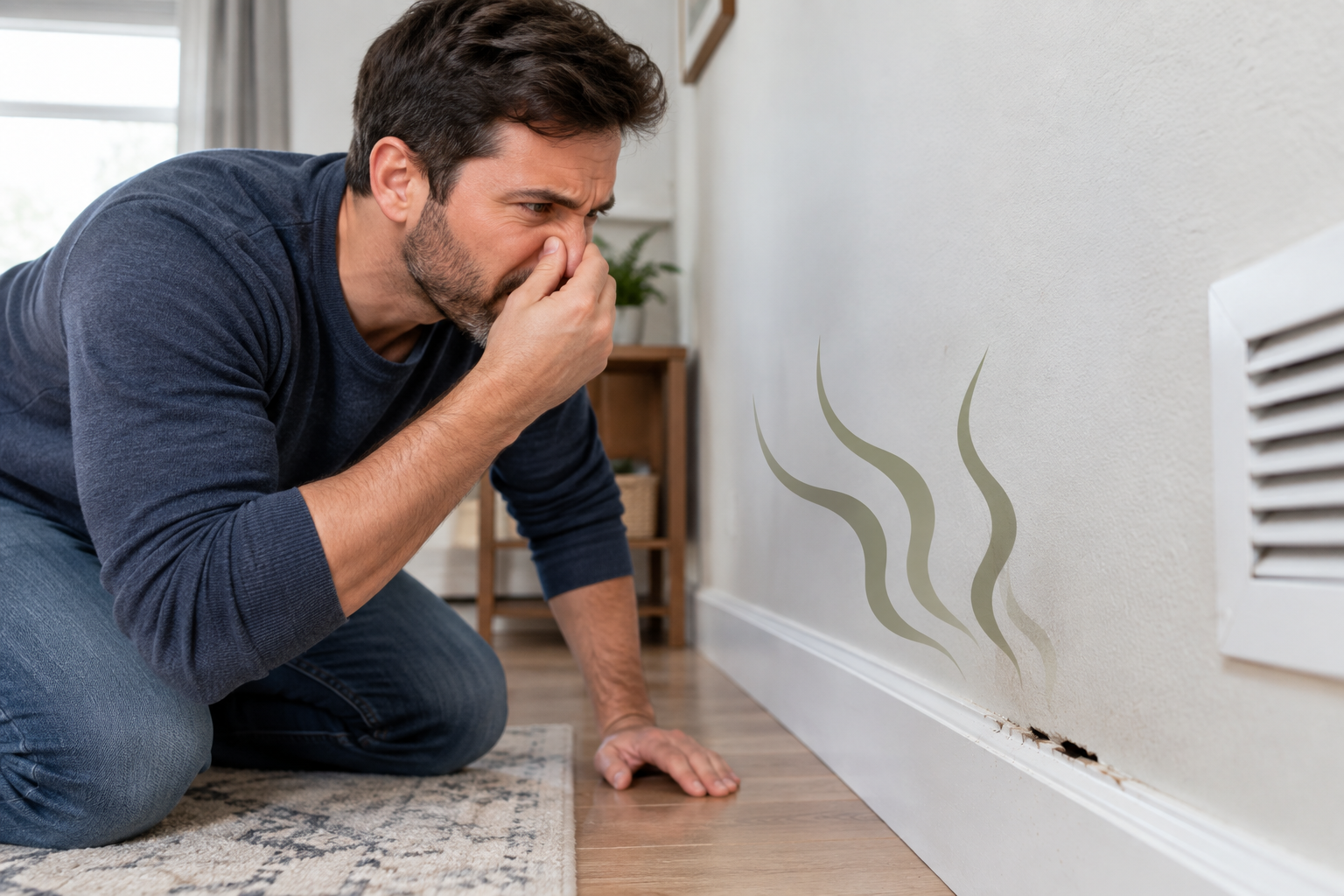
A dead mouse smells sweet and rotten at the same time a heavy, sickly sweetness with a sour, ammonia-like edge to it. Most people describe it as a smell that sticks in the back of the throat and is hard to ignore once you've noticed it.
The smell comes from gases released as the body breaks down, which is why it isn't the same as a musty or mouldy smell. Mould smells damp and earthy. A dead mouse smells organic and sharp.
The smell is strongest close to the source, so it's also your best tool for finding it.
How Long Does the Smell Last?
For a single mouse, the smell usually lasts one to three weeks, and it's strongest in the first week or so. How long depends on:
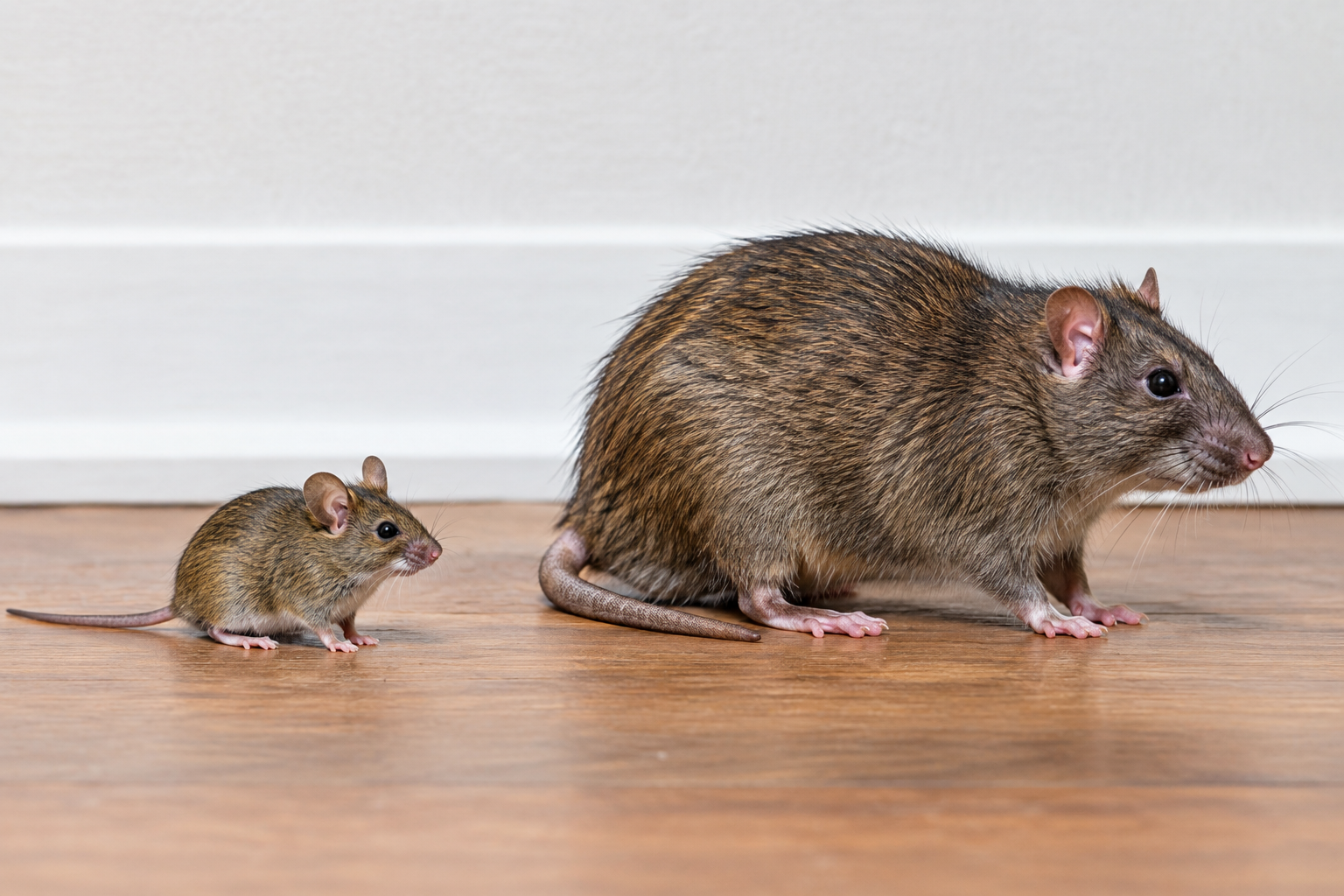
- Size of the animal — a rat takes considerably longer than a mouse
- Temperature — warm weather and heated walls speed decomposition up and make the smell stronger and shorter; cold slows it down and stretches it out
- Humidity and airflow — dry, well-ventilated spaces clear faster
- Where it is — a mouse in insulation or under a floor releases odour more slowly than one in the open
Finding and removing the mouse ends the smell far quicker than waiting it out.
How to Find a Dead Mouse
1. Follow your nose
Move slowly through the room and note where the smell is strongest. Get low to the floor and sniff along baseboards, under cabinets and around outlets and vents. The strongest point is usually within a metre or so of the mouse.
2. Look for flies
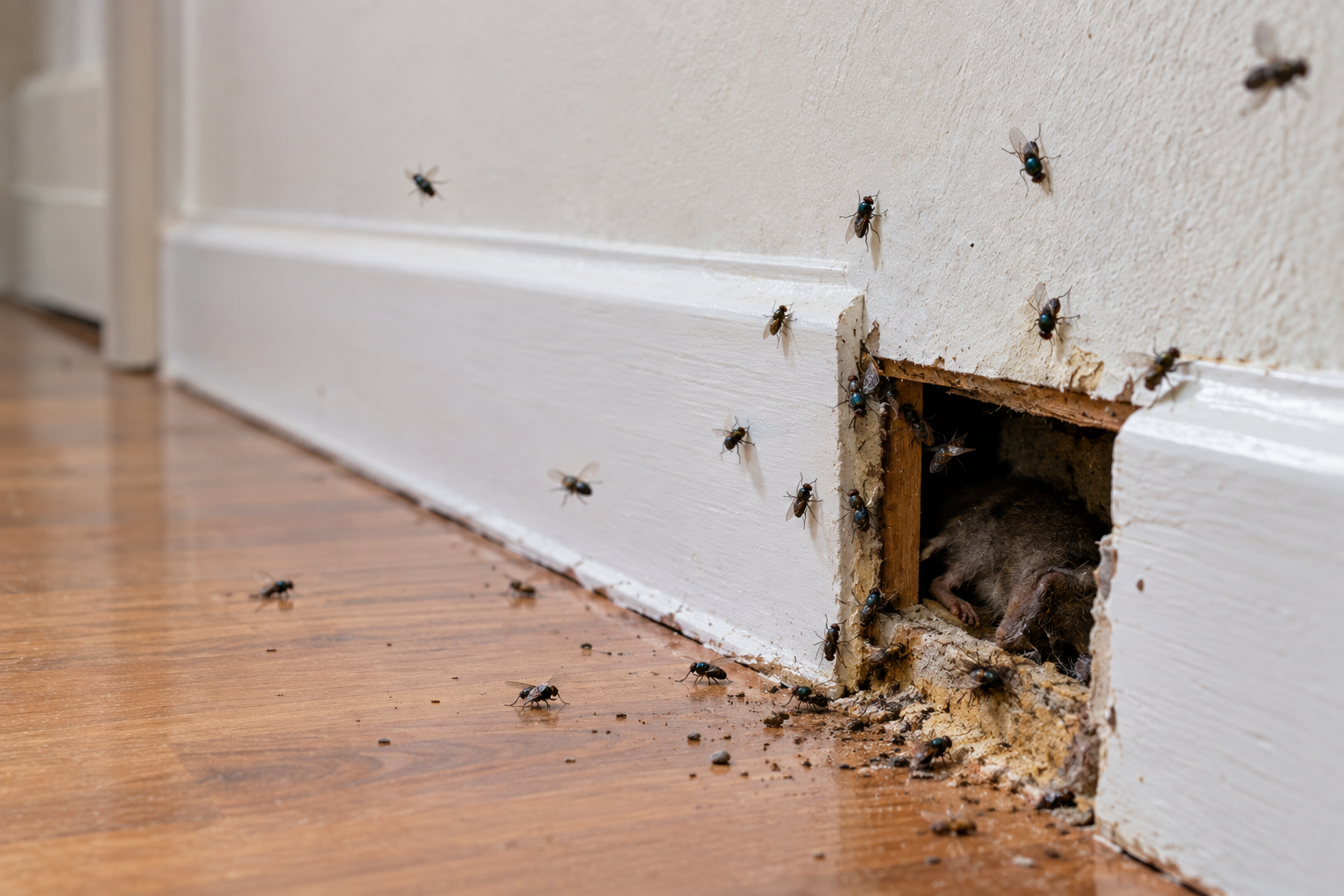
Small flies gathering in one spot — on a wall, a window near it, or around a vent — are a strong sign. You may also see them in a cupboard or near a floor gap.
3. Check the usual places
- Behind and under the stove, fridge and dishwasher
- Inside lower cupboards and the pantry
- Under sinks and behind the toilet
- In the basement, near the furnace, water heater and storage
- In the attic, in or under insulation
- In the garage, among stored items
- Inside a trap you set and forgot about
- In the engine bay or cabin air filter of a parked car
4. Think about the heating and cooling system
If the smell gets much stronger when the furnace or air conditioning runs, the mouse may be in or near a duct. In that case, stop running the system until it's been checked.
5. Consider what happened before
If you or a neighbour put out poison bait recently, a poisoned mouse dying in a hidden space is the most likely cause. Mice that were sealed inside a wall after the entry points were closed are the other common cause.
How to Remove a Dead Mouse Safely
Once you've found it:
- Open windows and air out the room.
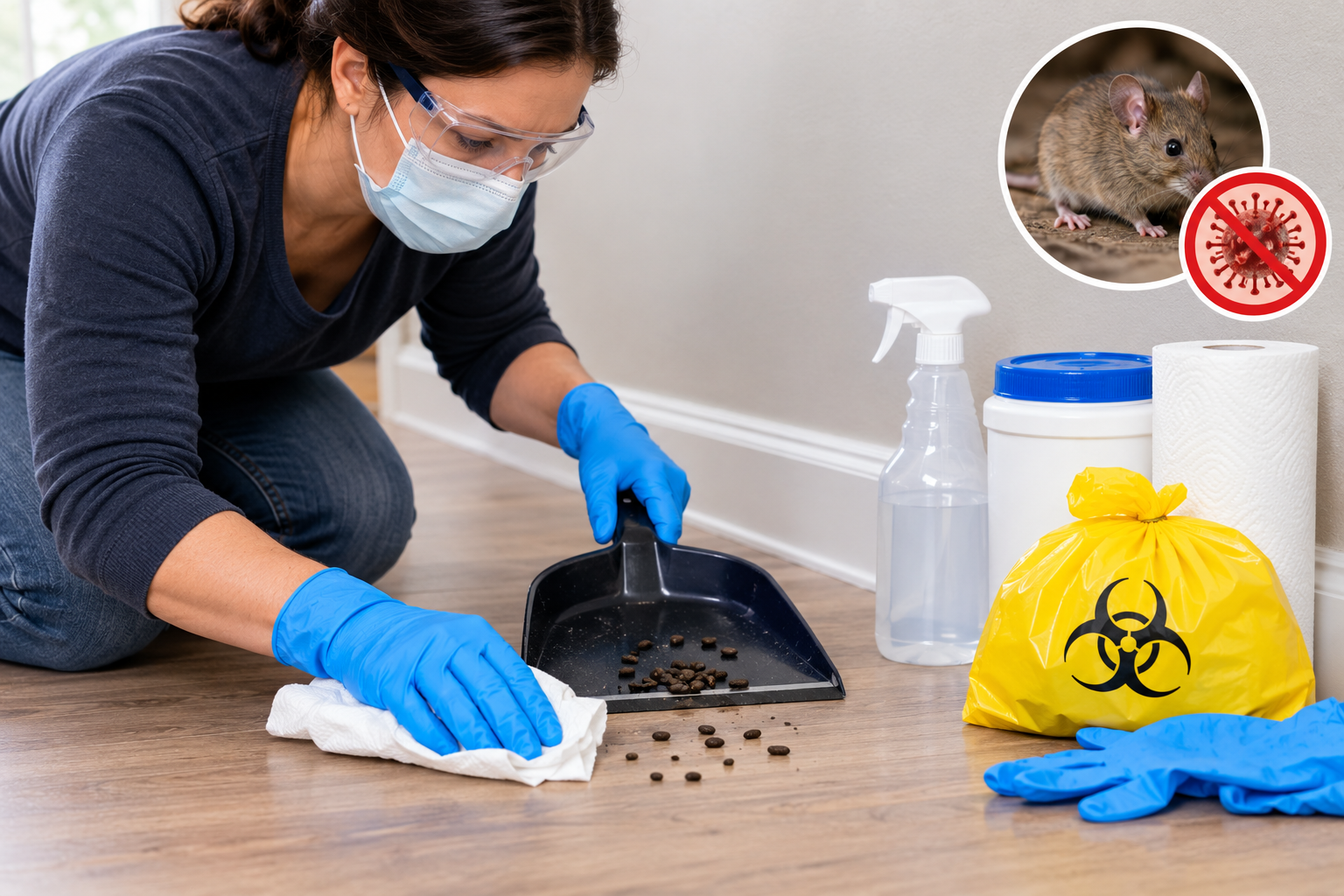
- Put on disposable or rubber gloves. Wear a well-fitting mask if the area is enclosed, such as an attic or crawl space.
- Spray the mouse and the area around it with a household disinfectant or a diluted bleach solution, following the product label, and let it soak for a few minutes. Don't pick up a dry carcass or sweep the area.
- Pick it up with a plastic bag over your hand (or use a disposable tool), then turn the bag inside out around it.
- Double-bag it, seal both bags and put it straight into your outdoor garbage bin.
- Clean and disinfect the spot, including any stains, using paper towels you can throw away.
- Remove gloves and wash your hands thoroughly with soap and water.
Don't touch a mouse with bare hands, don't put it in an indoor bin, and don't compost it.
Health note: Rodents can carry germs, and in Canada deer mice are linked to hantavirus. Wear gloves, wet the area before cleaning and never sweep or vacuum droppings or nesting material. If you develop fever, muscle aches or breathing problems after cleaning up after rodents, contact a healthcare provider and mention the exposure.
Do mice play dead?
Sometimes. A frightened mouse can freeze or go limp and look dead, then suddenly run. Never pick one up with bare hands — use gloves and a bag or tool, and keep the bag closed once it's in there.
Dead Mouse Smell in a Wall
This is the hardest version of the problem, and the most common one after poison has been used.
Your options:
- Ventilate. Open windows, run fans and keep air moving through the room. This won't remove the source, but it shortens how long the smell hangs around.
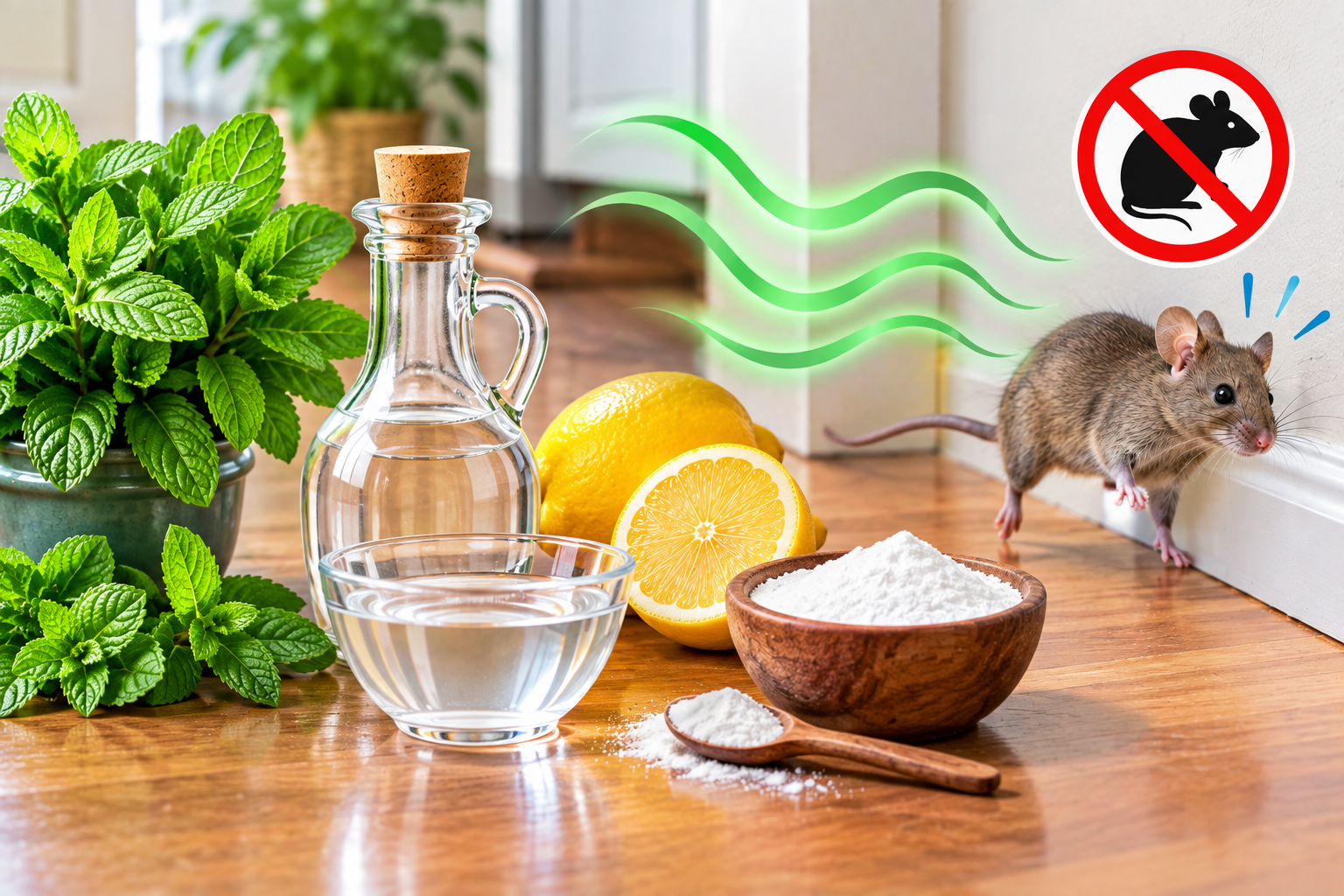
- Use odour absorbers. Bowls of baking soda, activated charcoal or coffee grounds near the wall help absorb odour. Odour-neutralising or enzyme-based products work better than air fresheners, which only mask the smell for a few minutes.
- Check the easy access points first. Sometimes the mouse is reachable through a vent, an outlet box (power off), a gap under a cabinet, or from the basement or attic side of the same wall.
- Cut a small access hole. If the smell is intense and clearly localised, a small hole in the drywall at that spot is sometimes the only way. This is a last resort — and worth having someone do who can locate the exact spot first, so you don't cut more holes than you need.
- Wait it out. If none of the above is practical, the smell will fade over a few weeks.
For working out where mice travel and die inside walls, see mice in walls.
Clearing the Smell After the Mouse Is Gone
Removing the mouse doesn't remove the smell immediately — some of it will have soaked into the surrounding area.
- Ventilate for several days. Fresh air does most of the work.
- Clean the spot with an enzyme cleaner, which breaks down the residue rather than covering it.
- Replace contaminated material. Insulation, cardboard or fabric the mouse was lying on should be bagged and thrown out.
- Use odour absorbers in the room for a week or two.
- Be patient with fabrics and carpet. Wash or shampoo anything nearby.
Avoid relying on air fresheners, scented candles or perfumes alone. They cover the smell for a short while, and the smell returns as soon as they fade.
What Not to Do
| Mistake | Why it's a problem |
| Ignoring it and waiting | The smell can last weeks, and flies and other insects follow |
| Handling the mouse with bare hands | Rodents can carry germs; always use gloves and a bag |
| Only using air freshener | It masks the odour for minutes, then it's back |
| Cutting several holes in the drywall to "look around" | Expensive to repair, and the mouse is usually within a small area — find the exact spot first |
| Continuing to run the furnace or AC when the smell comes from a duct | It spreads the odour through the house |
| Putting the mouse in an indoor bin | The smell continues inside your home |
How to Avoid Dead Mice in Hidden Places
Most dead-mouse-in-a-wall problems come from two things: poison, and sealing mice inside.
- Use traps rather than poison. A trapped mouse is found and removed. A poisoned mouse dies wherever it happens to be, often in a wall or under a floor. see the best mouse traps and bait.
- Check traps every day. A forgotten trap is a common source of the smell.
- Seal in the right order. Trap the mice already inside first, then seal the entry points once activity stops — not the other way around. See how mice get into your house.
- Deal with mice early, before a small problem becomes a colony living in your walls. Our complete guide to getting rid of mice humanely walks through the whole process.
When to Call a Professional
It's worth calling if:
- You can smell it but can't find it
- The smell is coming from inside a wall, ceiling or duct
- The smell is strong enough to affect a bedroom, kitchen or workplace
- You're not comfortable handling a dead animal
- You have flies or other insects appearing around the area
- Mice keep dying in your home, which usually means an active infestation
How Nomore Pest Deals With It
Nomore Pest is a licensed and insured pest control company serving Toronto, Mississauga, Vaughan, Scarborough, North York and Etobicoke. Our technicians locate the source, remove the carcass and clean the area where they can reach it, and — just as importantly — find out why the mouse was in your wall to begin with, then seal the entry points so it doesn't happen again. Learn more about our mouse control services.
Smelling something in the wall? Book an inspection or call 800-461-1827 / 437-922-2705. You can also email info@nomorepest.ca.
Conclusion:
A dead mouse smells sweet and rotten, peaks in the first week and usually fades within one to three weeks. Find it by following the smell to its strongest point and watching for flies, then remove it with gloves and double-bag it for the outdoor bin. If it's inside a wall, ventilate, use odour absorbers and consider having someone locate it before cutting anything. And the best way to avoid the problem next time is to trap rather than poison, check traps daily and seal entry points in the right order. If you can smell it but can't find it, Nomore Pest's rodent team can track it down.
Frequently asked questions
What does a dead mouse smell like?
A dead mouse smells sickly sweet and rotten, with a sour, ammonia-like edge. It's a heavy, organic smell, different from the damp, earthy smell of mould.
How long does a dead mouse smell last?
Usually one to three weeks for a single mouse, with the strongest smell in the first week. Warm conditions make it stronger but shorter; cold weather stretches it out. Removing the mouse ends it much faster.
How do I find a dead mouse in my house?
Follow the smell to its strongest point, checking low along baseboards, under cabinets and around vents. Look for small flies gathering in one spot, and check behind appliances, under sinks, in the attic, the garage and any traps you've set.
How do I get rid of a dead mouse smell in the wall?
Ventilate the room, use odour absorbers such as baking soda or activated charcoal, and try to reach the mouse through a vent, cabinet gap or from the basement or attic side. If the smell is strong and clearly localised, a small access hole may be needed — a pest professional can pinpoint the spot first.
How do I dispose of a dead mouse?
Wear gloves, spray the mouse and surrounding area with disinfectant, pick it up using a plastic bag turned inside out, double-bag it and put it in your outdoor garbage bin. Then disinfect the area and wash your hands thoroughly.
Is a dead mouse smell dangerous?
The odour itself isn't considered a health hazard in a home, but the carcass, droppings and nesting material can carry germs. Use gloves, avoid sweeping or vacuuming, and ventilate the area while you clean.
Do mice play dead?
Yes, a frightened mouse can freeze or go limp and look dead, then suddenly move. Always use gloves and a bag or tool rather than picking one up by hand.
Got a pest problem? Don't wait.
Book a professional inspection across Toronto & the GTA and get peace of mind, backed by a licensed & insured local team.
Or email us at info@nomorepest.ca · Toronto & the GTA