You bought traps, baited them with cheese, set them in the middle of the kitchen floor and caught nothing. Meanwhile, the droppings keep appearing.
That's the most common story we hear. In most cases, the trap wasn't the problem. Where it was placed, how it was baited and how many were set made the difference. This guide explains which mouse traps work best, what bait mice actually go for, and exactly where to put traps so they catch mice.
Quick Answer: The Best Mouse Trap For Your Situation
| Situation | Best choice |
| Fastest, most reliable catch | Snap traps, several at once, placed along walls |
| You want to release mice alive | Live-catch traps, checked at least twice a day |
| Children or pets in the home | Enclosed snap traps or traps inside a tamper-resistant box |
| You don't want to see or touch the mouse | Enclosed or electronic traps |
| Best bait | A pea-sized dab of peanut butter or hazelnut spread; nesting material (a cotton ball) in fall and winter |
| Best placement | Against walls, behind appliances, under sinks and next to droppings never in the middle of the floor |
Types of Mouse Traps Compared
There's no single "best" mouse trap for every home. Here's how the main types compare.
| Trap type | Best for | Watch out for |
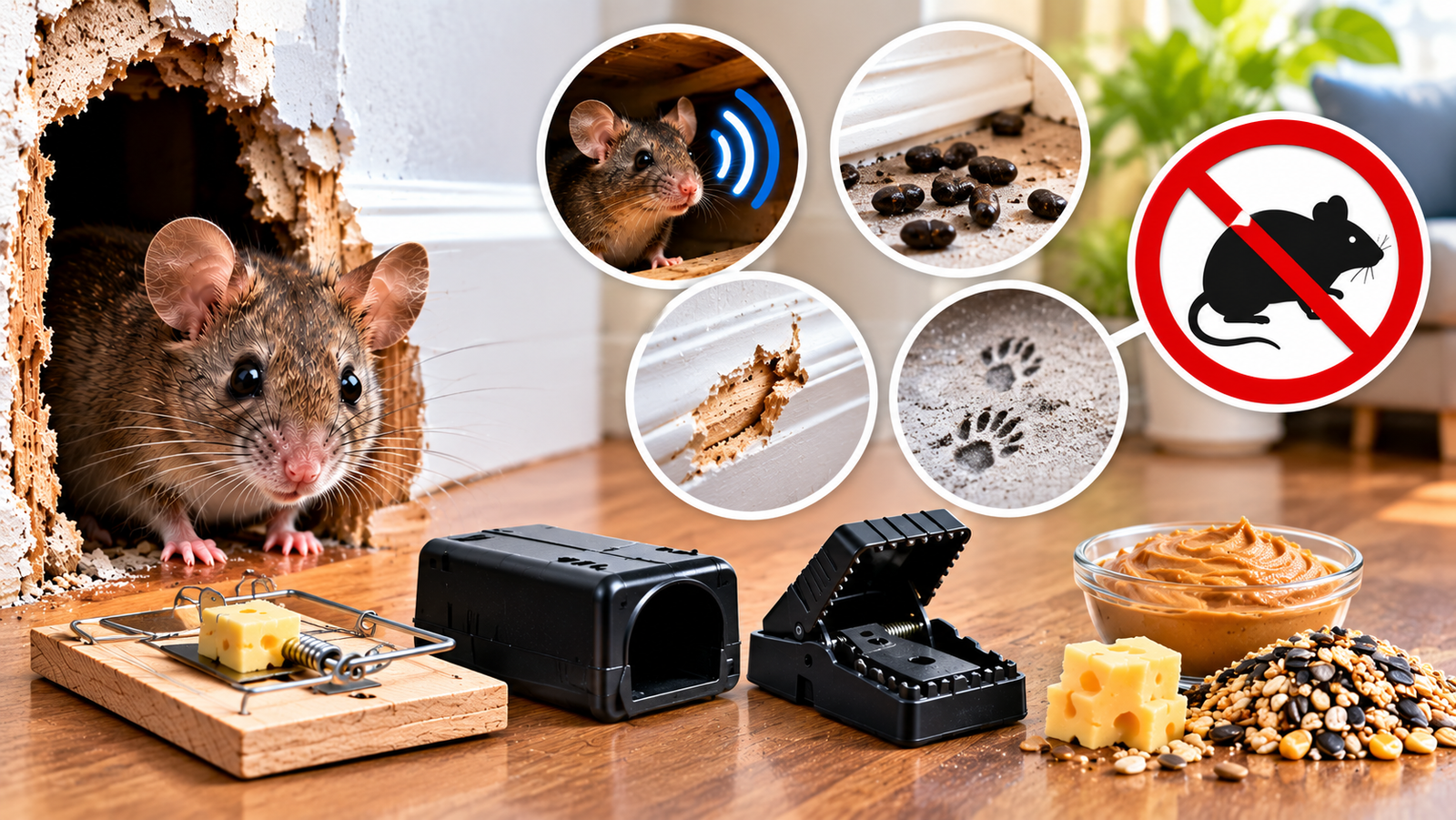
| Snap traps (wood or plastic) | Fast, reliable results; the most effective option for most homes | Must be kept away from children and pets; plastic ones are easier to set and clean |
| Enclosed snap traps / trap boxes | Homes with kids or pets; people who don't want to see the mouse | Slightly more expensive; check them just as often |
| Live-catch traps | Humane catch-and-release | Must be checked at least twice a day; release rules apply; mice may return |
| Multi-catch live traps | Catching several mice in one area, such as a garage or storage room | Mice left too long become stressed, cold and dehydrated |
| Electronic traps | Quick kill inside a closed box; no handling | Need batteries; bigger, so they don't fit into tight spots as easily |
| Glue traps | Not recommended | Cause slow, stressful deaths and can catch pets, birds and other animals |
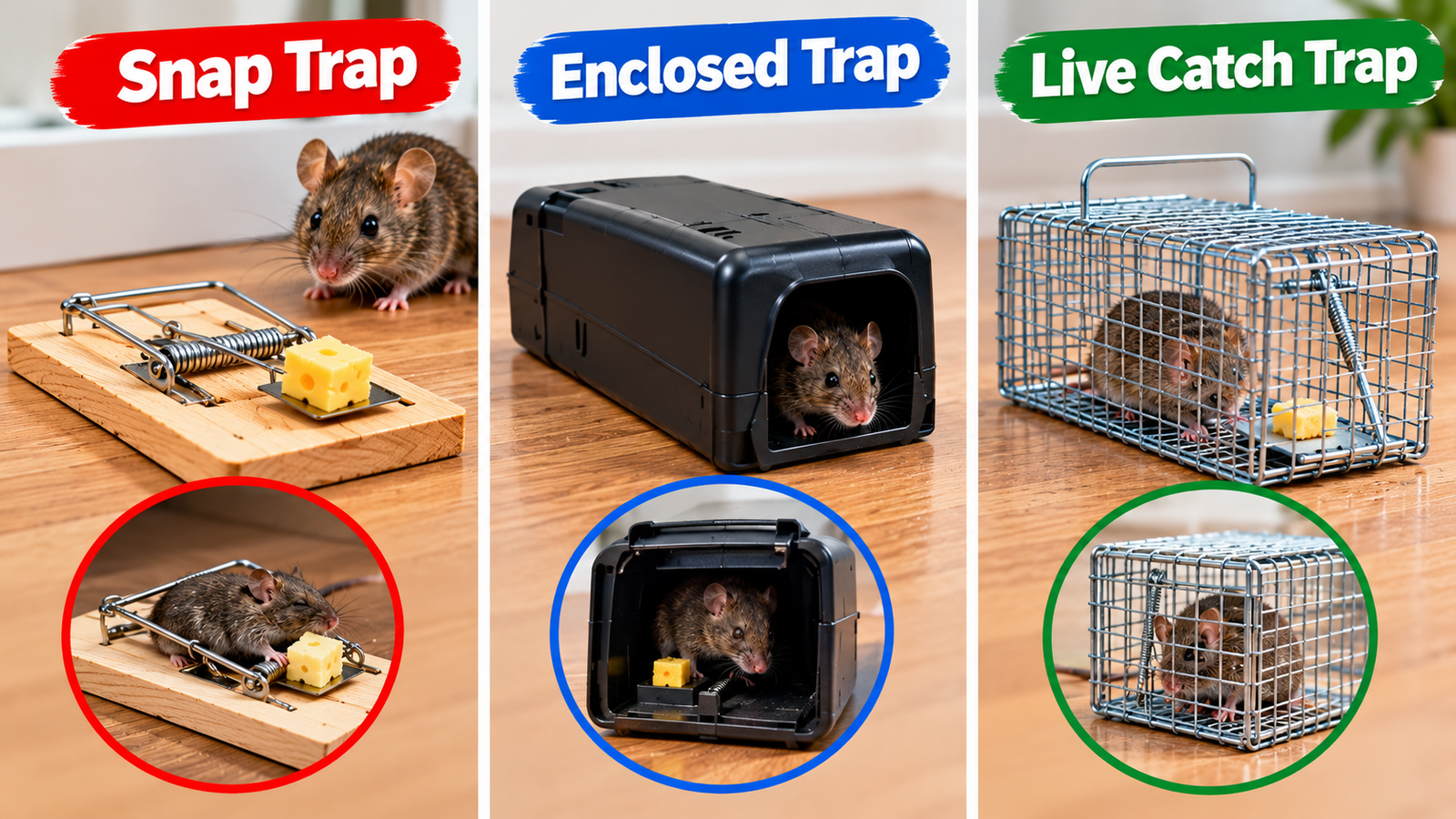
Snap traps: still the most effective
When they're set and placed properly, snap traps kill instantly and work reliably. Plastic snap traps are easier to set than the classic wooden ones, are less likely to go off on your fingers, and can be cleaned and reused. Wooden traps are cheap and effective but are usually thrown away after a catch.
Live-catch traps: the humane option if you check them
Live traps let a mouse walk in and close behind it without hurting it. They're only humane if you check them often. A mouse left in a trap for a day can become badly stressed, cold or dehydrated. Check live traps at least twice a day, and plan where you'll release the mouse before you set the trap.
In Ontario, captured wildlife generally has to be released within 1 km of where it was caught. A mouse released that close may come back, so live trapping works best alongside sealing the entry points see how mice get into your house.
Electronic traps
Electronic traps lure the mouse into a closed chamber and kill it quickly with an electric charge. They're tidy and easy to empty, but they're bulkier and need fresh batteries to work reliably.
Why we don't recommend glue traps
Glue traps don't kill quickly. Mice caught on them can struggle for hours or days. They also catch pets, birds and other small animals by accident. There are better options in every situation.
What Is the Difference Between Mouse Traps vs Mouse and Rat Bait:
If you search for mouse bait in a store, a lot of what you'll find is poison bait blocks, pellets and bait stations filled with rodenticide. That's different from the food you put on a trap.
- Trap bait is food (like peanut butter) used to lure a mouse into a trap.
- Rodenticide bait is poison designed to be eaten. It usually works over several days, and poisoned mice often die inside walls, where they cause a strong smell.
Bait stations are lockable plastic boxes. Some hold poison; others are designed to hold snap traps safely out of reach of children and pets. If you use one, make sure you know which kind it is.
We recommend traps over poison for most homes.
The Best Bait for Mouse Traps
Mice aren't picky eaters, but some baits work much better than others.
| Bait | How well it works | Tips |
| Peanut butter | Very well — strong smell, sticky, high in fat | Use a pea-sized amount so the mouse has to work at it and trigger the trap |
| Hazelnut or chocolate spread | Very well | A good alternative if there are peanut allergies in the home |
| Seeds, oats or birdseed | Well — close to what mice eat naturally | Press into a small dab of peanut butter so they can't be carried away |
| Nesting material (cotton ball, dental floss, yarn) | Very well in fall and winter | Mice are looking for nest material as it gets cold — tie or wedge it onto the trigger |
| Cheese | Not especially well | A common myth — mice prefer seeds, grains and sweet or fatty foods |
Tips for baiting a mouse trap
- Use less bait than you think. A pea-sized dab is enough. Too much lets a mouse eat around the edges without setting off the trap.
- Put the bait on the trigger and press it in, so the mouse has to pull or push to get it.
- Wear gloves when setting and handling traps, for hygiene.
- Refresh bait every few days if it dries out.
- Cut off other food. Traps work much better when the mouse can't find easy food elsewhere store food in sealed containers and don't leave pet food out overnight.
Where to Put Mouse Traps
Placement is the single biggest reason traps succeed or fail. Mice don't run across open floors. They stay close to walls and move along the same routes every night.
Put traps along walls
Place traps flat against the wall, with the trigger end touching the wall, so a mouse running along the edge walks straight into it. You can also set two traps side by side, back to back, facing opposite directions along the wall.
Focus on the places mice actually use
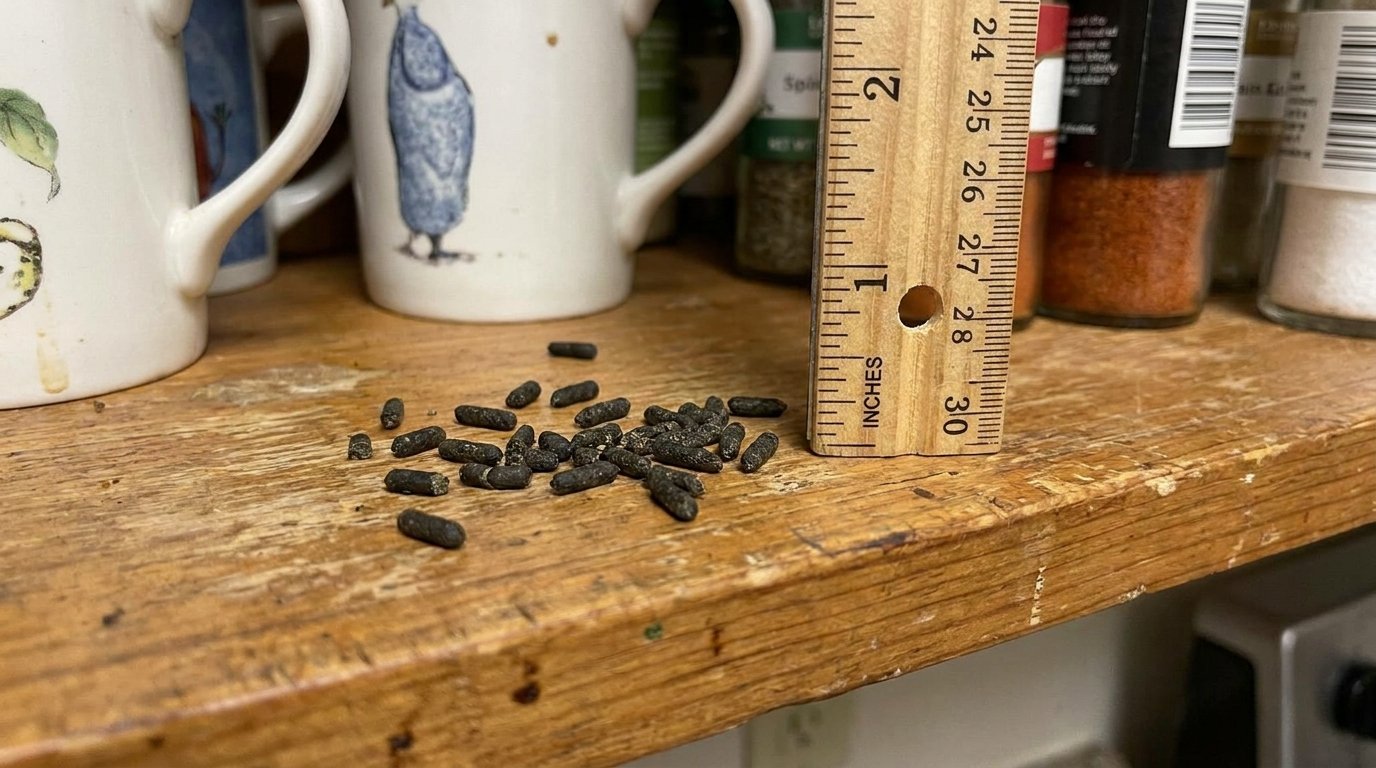
- Next to fresh droppings — they show you where mice travel see what mouse poop looks like
- Behind and beside the stove, fridge and dishwasher
- Under kitchen and bathroom sinks, near where pipes go into the wall
- Inside lower cupboards and the pantry
- Along basement walls, near the furnace and water heater
- In the garage, along walls and near stored items
- In the attic, along the edges near where you've found droppings
- Near small holes or gaps with grease marks around them
If you're hearing mice in the walls, put traps on the floor right next to the places they come out — not inside the wall.Our guide to mice in walls explains how to find those spots.
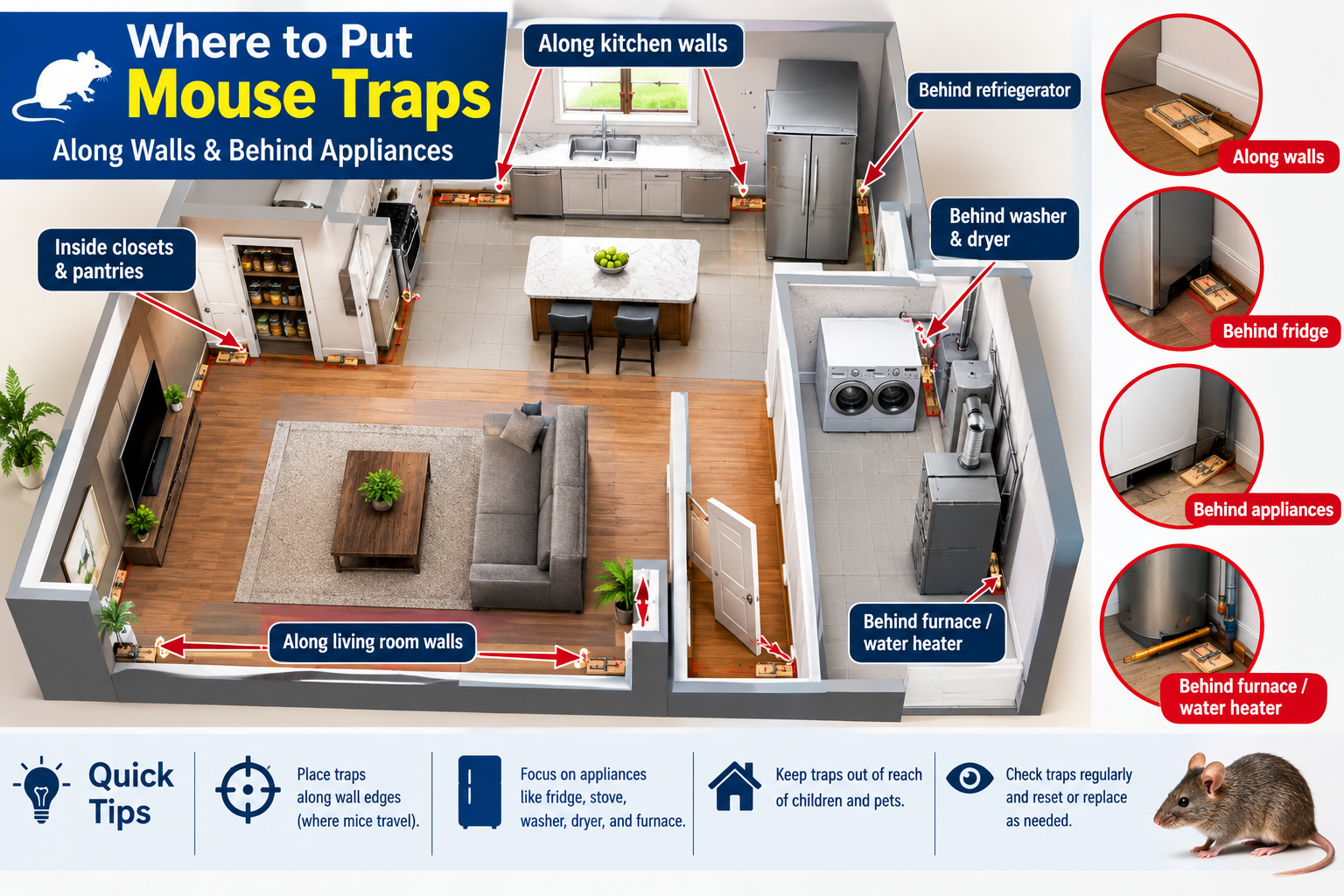
How many traps should you use?
More than most people expect. One trap for a whole kitchen rarely works. As a rough guide, set two or three traps in each spot where you see signs of mice, spaced a couple of metres apart along the walls. A kitchen and basement together can easily need a dozen traps in the first week.
Keep traps away from kids and pets
Use enclosed traps, or place snap traps inside a tamper-resistant box, anywhere children or pets can reach. Behind appliances and inside cabinets with child locks are also good spots.
How Long Does It Take to Catch a Mouse?
Mice are curious, so most catches happen in the first few nights. If a trap hasn't caught anything after three or four nights, move it to another spot along the same wall, or closer to fresh droppings. If you're still catching mice after about two weeks, more mice are getting in or there's a bigger population than traps alone can handle.
Common Mouse Trap Mistakes
| Mistake | What to do instead |
| Placing traps in the middle of the floor | Put them flat against walls, where mice actually travel |
| Using a big chunk of bait | Use a pea-sized amount, pressed onto the trigger |
| Setting only one or two traps | Set two or three in each active spot |
| Using cheese | Use peanut butter, hazelnut spread or nesting material |
| Leaving live traps unchecked | Check them at least twice a day |
| Leaving food out | Store food in sealed containers so the bait is the easiest meal around |
| Trapping without sealing entry points | Seal the gaps, or new mice will keep replacing the ones you catch |
What to Do After You Catch a Mouse
- Put on gloves before touching the trap.
- Seal the mouse in a plastic bag, then put it in a second bag and into the garbage (or release it, if you used a live trap).
- Disinfect the trap if you plan to reuse it.
- Clean up any droppings nearby safely don't sweep or vacuum them.
- Wash your hands thoroughly.
- Reset the trap in the same spot. Where there's one mouse, there are usually more.
When Traps Aren't Enough
Traps remove the mice that are already inside. They don't stop new ones from getting in. It's time to get professional help if:
- You're still catching mice after about two weeks
- You find droppings in several rooms or on more than one floor
- Mice are in walls, ceilings or the attic
- You can't find where they're getting in
- You'd rather not handle traps or dead mice yourself
For the full plan, including sealing and prevention, read our complete guide to getting rid of mice humanely.
How Nomore Pest Handles Mouse Trapping
Nomore Pest is a licensed and insured pest control company serving Toronto, Mississauga, Vaughan, Scarborough, North York and Etobicoke.Our technicians place traps and tamper-resistant stations where mice actually travel, check and service them, and — most importantly find and seal the entry points so the problem doesn't come back. We work in homes and in commercial spaces. Learn more about our mouse control services in Toronto.
Traps not working? Book a mouse inspection or call 800-461-1827 / 437-922-2705. You can also email info@nomorepest.ca.
Conclusion
The best mouse trap is the one placed in the right spot. Use snap traps (or enclosed or live-catch traps if you need them), bait them with a small dab of peanut butter or some nesting material, and set several traps flat against the walls where mice travel. Then seal the entry points so new mice can't replace the ones you catch. If mice keep coming back, Nomore Pest's rodent team can find out why and stop it.
Frequently asked questions
What is the best mouse trap?
For most homes, snap traps are the most effective — they're fast, reliable and inexpensive. Enclosed traps are a better choice around children and pets, and live-catch traps are the most humane option if you can check them at least twice a day.
What is the best bait for a mouse trap?
A pea-sized dab of peanut butter or hazelnut spread works best for most people. In fall and winter, nesting material such as a cotton ball or a bit of dental floss is also very effective, because mice are looking for material to build nests.
Is cheese good bait for mice?
Not really. It's a common myth. Mice prefer seeds, grains and sweet or fatty foods, so peanut butter usually works much better than cheese.
Where is the best place to put mouse traps?
Along walls, with the trigger end touching the wall, in places where you've found droppings — behind appliances, under sinks, inside lower cupboards, along basement walls and near small holes. Mice rarely cross open floors, so traps in the middle of a room rarely work.
How many mouse traps should I set?
Set two or three traps in each area where you see signs of mice. A single trap is rarely enough, and a kitchen and basement together can easily need a dozen in the first week.
Why isn't my mouse trap catching anything?
The most common reasons are placement away from walls, too much bait, too few traps, or easy access to other food. Move traps against walls next to fresh droppings, use a small amount of bait, and store food securely.
Are live mouse traps humane?
Yes, if you check them at least twice a day and release mice promptly. A mouse left in a live trap for a long time can become stressed, cold and dehydrated. Glue traps are not humane and aren't recommended.
Got a pest problem? Don't wait.
Book a professional inspection across Toronto & the GTA and get peace of mind, backed by a licensed & insured local team.
Or email us at info@nomorepest.ca · Toronto & the GTA