Finding mice in your home raises an obvious question: can they make you sick?
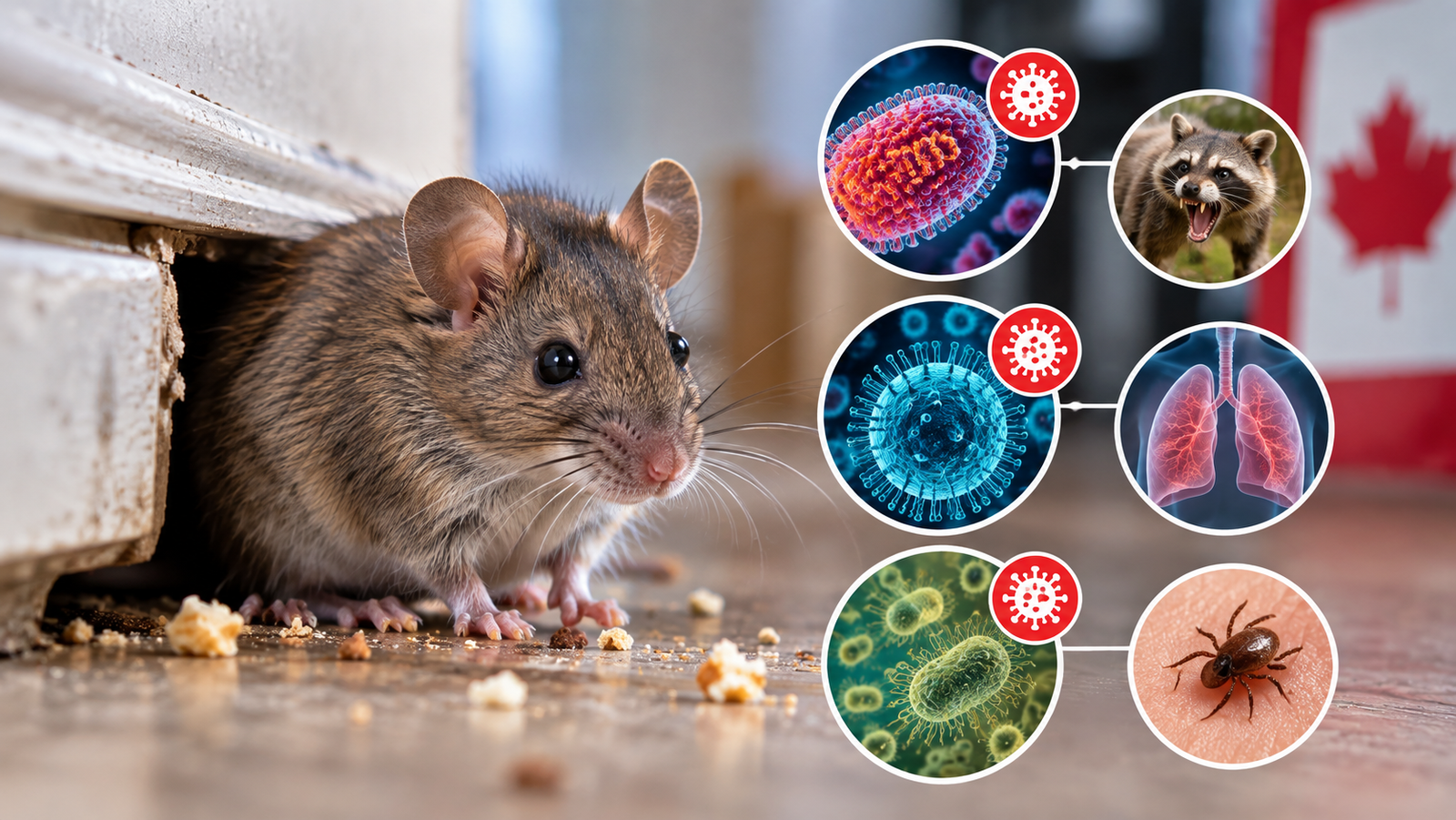
The short answer is yes, mice can carry germs but the risks in Canadian homes aren't quite the ones people expect. Rabies, the disease most people ask about first, is very unlikely. The more realistic concerns are contaminated food and surfaces, allergies and asthma, and, in specific situations, hantavirus.
Here's an honest look at each, and what actually reduces your risk.
Quick About Do Mice Carry Rabies
| Risk | How concerned should you be? |
| Rabies | Very unlikely — small rodents are almost never found to carry rabies |
| Hantavirus | Rare in Canada, but serious; linked to deer mice and disturbed droppings |
| Salmonella and other food-borne bacteria | The most common everyday risk — mice contaminate food and surfaces |
| Allergies and asthma | Often overlooked, and a real problem in homes with long-term mouse activity |
| Mites and fleas | Possible, usually after mice die or leave |
| Bites | Uncommon; clean and see a healthcare provider if it happens |
This post is general information, not medical advice. If you're unwell after contact with rodents, contact a healthcare provider.
Do Mice Carry Rabies?
This is the most common question, and the reassuring answer is that small rodents such as mice, rats, squirrels and chipmunks are almost never found to be infected with rabies, and they are not known to have passed rabies to people in North America. Public health agencies generally do not consider a bite from a small rodent to be a rabies exposure.
That doesn't mean a bite should be ignored. Any animal bite can become infected with ordinary bacteria, and your tetanus protection may need updating.
If a mouse bites you:
- Wash the wound with soap and running water for several minutes.
- Apply an antiseptic and cover it.
- Contact a healthcare provider — especially if the wound is deep, if it becomes red, swollen or painful, or if you're not up to date on tetanus.
- Follow whatever advice your provider or local public health unit gives you.
Hantavirus: Rare, But the One to Take Seriously
Hantavirus is the reason health agencies tell you never to sweep or vacuum mouse droppings.
In Canada, the strain of concern is carried by deer mice, which are common in garages, sheds, barns, cottages, cabins and rural properties. It can cause a rare but serious lung illness. Cases in Canada are uncommon and most reported cases have been in the western provinces, but the precautions apply anywhere deer mice are found — and deer mice live throughout Ontario.
How exposure happens: the virus is mainly picked up by breathing in tiny particles stirred up when dried droppings, urine or nesting material are disturbed — by sweeping, vacuuming or moving stored items in an enclosed space like an attic, shed or crawl space.
Higher-risk situations:
- Cleaning a cottage, cabin, shed or garage that's been closed up for months
- Clearing a heavy build-up of droppings in an attic or crawl space
- Handling nesting material or dead mice without gloves
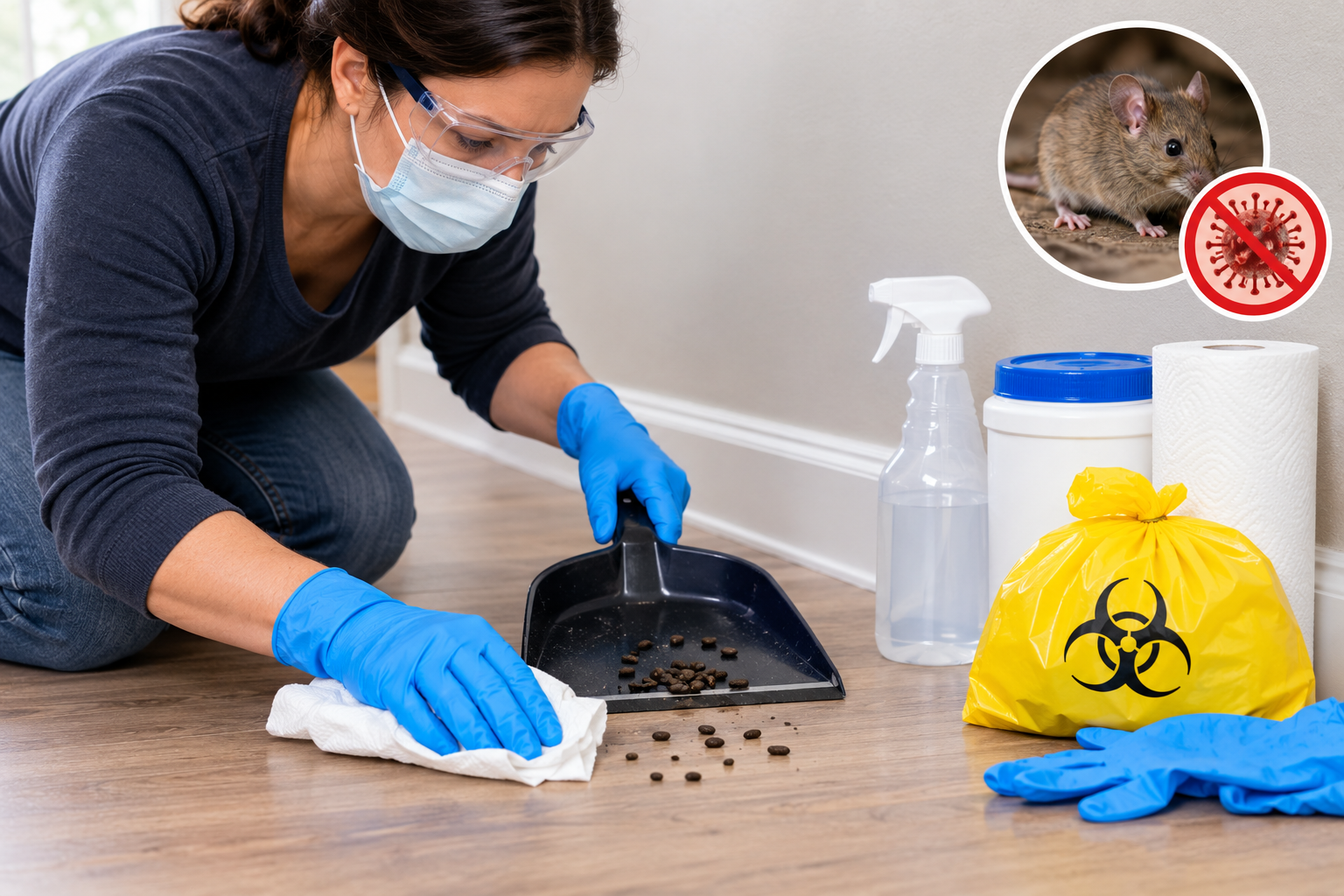
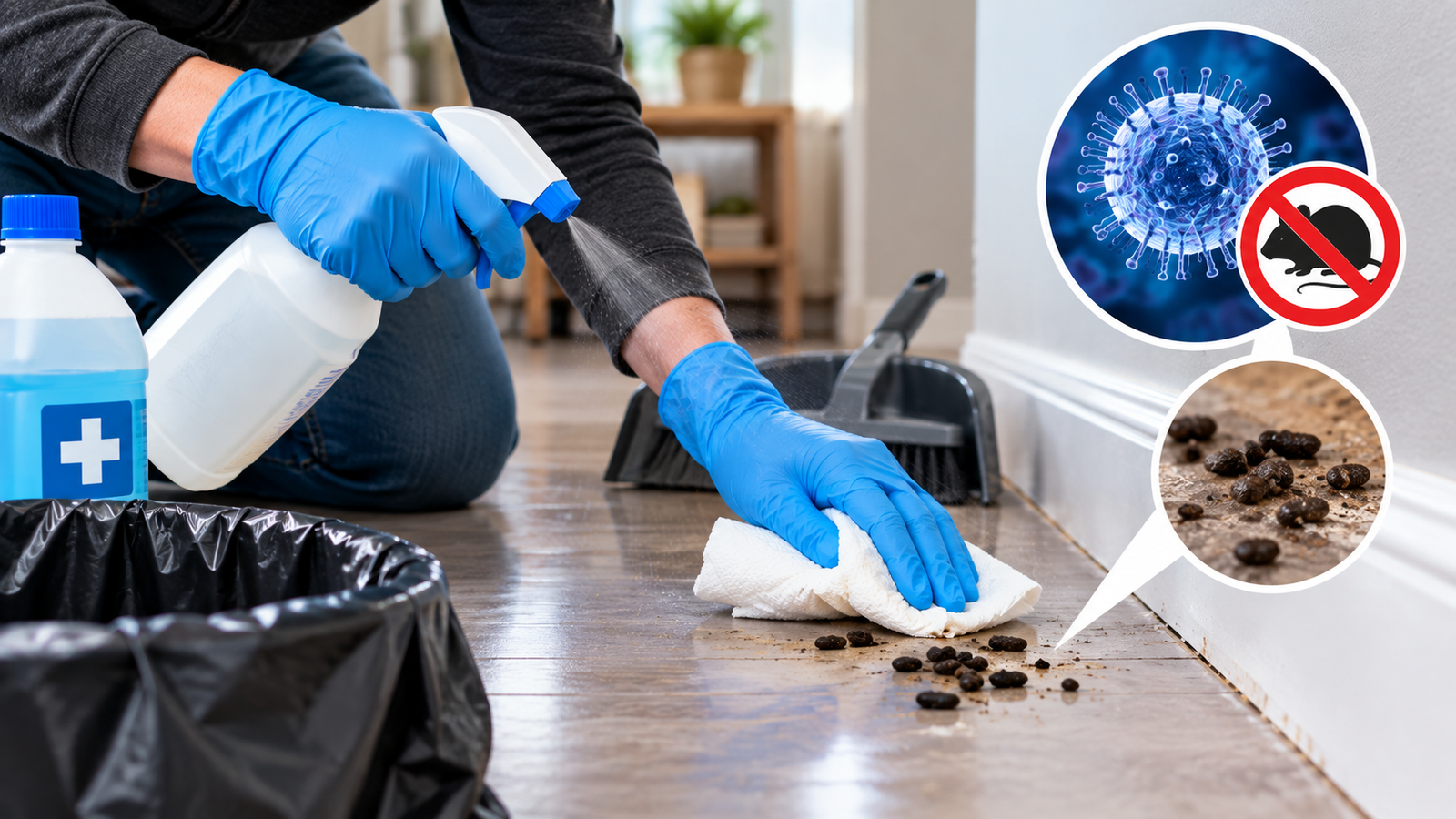
How to reduce the risk: ventilate the space first, never sweep or vacuum, wet droppings with disinfectant before wiping them up, and wear gloves — plus a well-fitting mask in enclosed spaces.
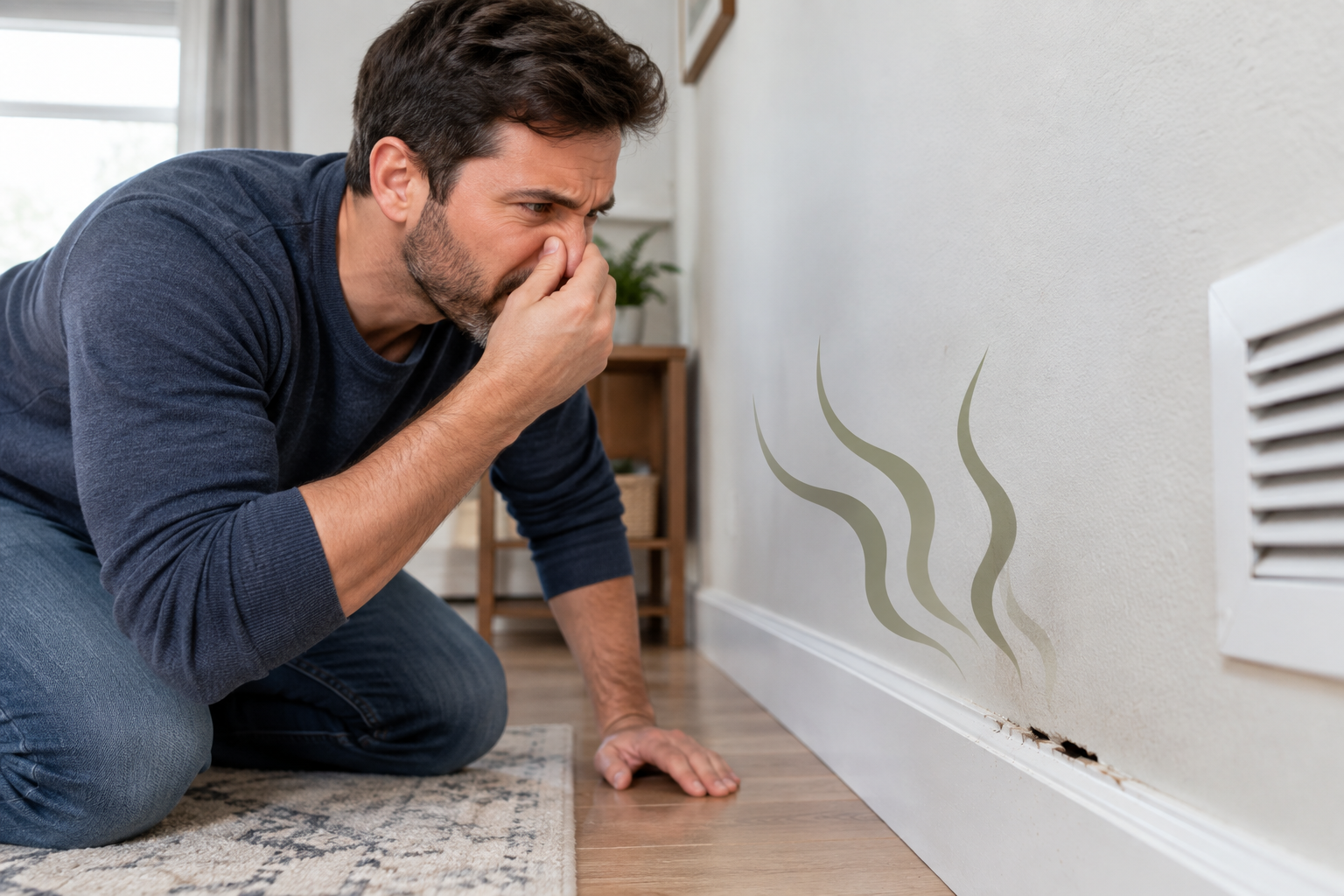
Because house mouse and deer mouse droppings look almost identical, treat all rodent droppings the same way see what mouse poop looks like.
The Everyday Risk: Contaminated Food and Surfaces
This is what actually affects most households with mice.
Mice walk through drains, garbage, crawl spaces and wall cavities, then across your counters and through your cupboards. They leave droppings and urine as they travel, which can spread bacteria such as Salmonella onto food, packaging and food-preparation surfaces.
What to do:
- Throw out food in packaging that's been chewed, and anything droppings have touched
- Wash dishes, cutlery and containers stored in an affected cupboard in hot soapy water
- Disinfect counters, shelves and drawers, not just the spots with droppings
- Store dry goods in sealed glass, metal or thick plastic containers
Allergies and Asthma
Mouse allergens — from urine, dander and droppings — are a well-recognised trigger for allergy and asthma symptoms, particularly in children and in homes with long-term mouse activity. Symptoms can include sneezing, a runny or blocked nose, itchy eyes, skin irritation, coughing and wheezing.
If someone in your home has asthma that gets worse and you have ongoing mouse activity, it's worth mentioning the mice to your healthcare provider — and worth dealing with the infestation properly rather than repeatedly cleaning up after it.
Other Illnesses Associated With Rodents
| Illness | What to know |
| Salmonellosis | Bacteria spread through droppings and urine onto food and surfaces — the most common everyday risk |
| Lymphocytic choriomeningitis (LCMV) | Associated with house mice; uncommon, but a particular concern during pregnancy — speak to your provider if you're pregnant and have mice |
| Leptospirosis | Spread through rodent urine, more commonly associated with rats than house mice |
| Rat-bite fever | Rare, and as the name suggests mainly linked to rats; associated with bites and scratches |
| Tularemia | Rare in this context; associated with handling wild animals |
Most of these are uncommon in Canadian homes. They're listed so you know what the actual concerns are, not to alarm you — the practical takeaway is the same for all of them: don't handle rodents, droppings or nests bare-handed, keep food sealed, and deal with the infestation.
Mites and Fleas
Mice can carry mites and fleas. When mice die or move out of an area, those parasites sometimes look for a new host and can bite people, causing itchy spots — most often in bedrooms, near a wall where mice were active, or in a room under an attic.
If you get unexplained itchy bites after a mouse problem, mention the rodent history when you call a pest control company. Treating the bites without removing the source usually doesn't solve it.
Who Is Most at Risk?
Some people should be more cautious around rodent contamination:
- People who are pregnant (LCMV) — speak to your healthcare provider
- Anyone with a weakened immune system
- Young children, who touch floors and surfaces and put hands in their mouths
- People with asthma or allergies
- Anyone cleaning enclosed spaces with heavy contamination — attics, crawl spaces, sheds, closed-up cottages
In these situations, professional clean-up is a reasonable choice rather than a luxury.
Symptoms: When to Contact a Healthcare Provider
Get medical advice if, after contact with mice, droppings or nesting material, you develop:
- Fever, chills, muscle aches, headache or unusual fatigue
- Shortness of breath or a cough that's getting worse
- Stomach upset, vomiting or diarrhoea
- A bite or scratch that becomes red, swollen or painful
Tell your provider about the rodent exposure and when it happened — it helps them consider the right possibilities. Hantavirus symptoms, for example, typically begin one to six weeks after exposure.
How to Reduce the Risk in Your Home
The risks above all come from the same source, so the answer is the same too:
- Clean up safely — ventilate, wear gloves, wet everything with disinfectant, never sweep or vacuum. See how to clean up mouse droppings safely
- Remove the mice — traps placed along walls near droppings. See the best mouse traps and bait.
- Seal the entry points so new mice can't replace them. See how mice get into your house.
- Store food securely and keep surfaces clean.
- Act early. Mice breed quickly, and a small problem becomes a much larger contamination problem over a winter.
The full plan is in our complete guide to getting rid of mice humanely.
When to Call a Professional
Consider getting help if:
- There's a heavy build-up of droppings, or contamination in an attic, crawl space or wall cavity
- Someone in the home is pregnant, immunocompromised, or has asthma made worse by the mice
- You're dealing with a property that's been closed up for a long time
- Mice keep returning after you clean and trap
- It's a rental, food premises or workplace with health and safety obligations
How Nomore Pest Can Help
Nomore Pest is a licensed and insured pest control company serving Toronto, Mississauga, Vaughan, Scarborough, North York and Etobicoke.Our technicians remove the mice, clean and sanitise contaminated areas with the right protective equipment, and seal the entry points so the contamination doesn't build up again. Learn more about our mouse control services.
Worried about mice in your home? Book an inspection or call 800-461-1827 / 437-922-2705. You can also email info@nomorepest.ca.
Conclusion
Mice can carry germs, but the realistic risks in a Canadian home are contaminated food and surfaces, allergy and asthma symptoms, and in enclosed spaces with a build-up of droppings hantavirus. Rabies is very unlikely. The same steps reduce all of it: clean up safely without sweeping or vacuuming, remove the mice, and seal the way in. If the contamination is heavy or someone in the home is at higher risk, Nomore Pest rodent team can handle the removal and clean-up.
Frequently asked questions
Do mice carry rabies?
Very unlikely. Small rodents such as mice, rats and squirrels are almost never found to be infected with rabies, and they aren't known to have transmitted it to people in North America. Any bite should still be washed thoroughly and checked by a healthcare provider.
Can mice transmit rabies to humans?
There are no known cases of small rodents passing rabies to people in North America, and public health agencies generally don't treat a mouse bite as a rabies exposure. Contact a healthcare provider or your local public health unit for advice after any animal bite.
Do house mice carry diseases?
They can. The most common everyday risk is contamination of food and surfaces with bacteria such as Salmonella. House mice are also associated with LCMV, which is uncommon but a particular concern during pregnancy, and mouse allergens are a known asthma and allergy trigger.
How dangerous is hantavirus in Canada?
It's rare, but serious. In Canada it's linked to deer mice, and most reported cases have been in the western provinces. Exposure usually happens when dried droppings or nesting material are disturbed in an enclosed space, which is why you should never sweep or vacuum droppings.
Can you get sick from mouse droppings?
Yes, which is why droppings should never be swept or vacuumed. Ventilate the area, wear gloves, wet the droppings with disinfectant and wipe them up with paper towel, then double-bag the waste for the outdoor bin.
Are mice dangerous to pets?
Mice can carry mites and fleas, and a pet that catches or eats a mouse can be exposed to parasites. There's also a risk if a pet eats a mouse that has taken rodent poison. Speak to your vet if your pet has been catching mice.
Do I need to see a doctor if a mouse bit me?
Wash the wound with soap and water and contact a healthcare provider, especially if it's deep, becomes red or swollen, or if your tetanus protection isn't up to date. Rabies is very unlikely from a mouse, but ordinary wound infections aren't.
Got a pest problem? Don't wait.
Book a professional inspection across Toronto & the GTA and get peace of mind, backed by a licensed & insured local team.
Or email us at info@nomorepest.ca · Toronto & the GTA