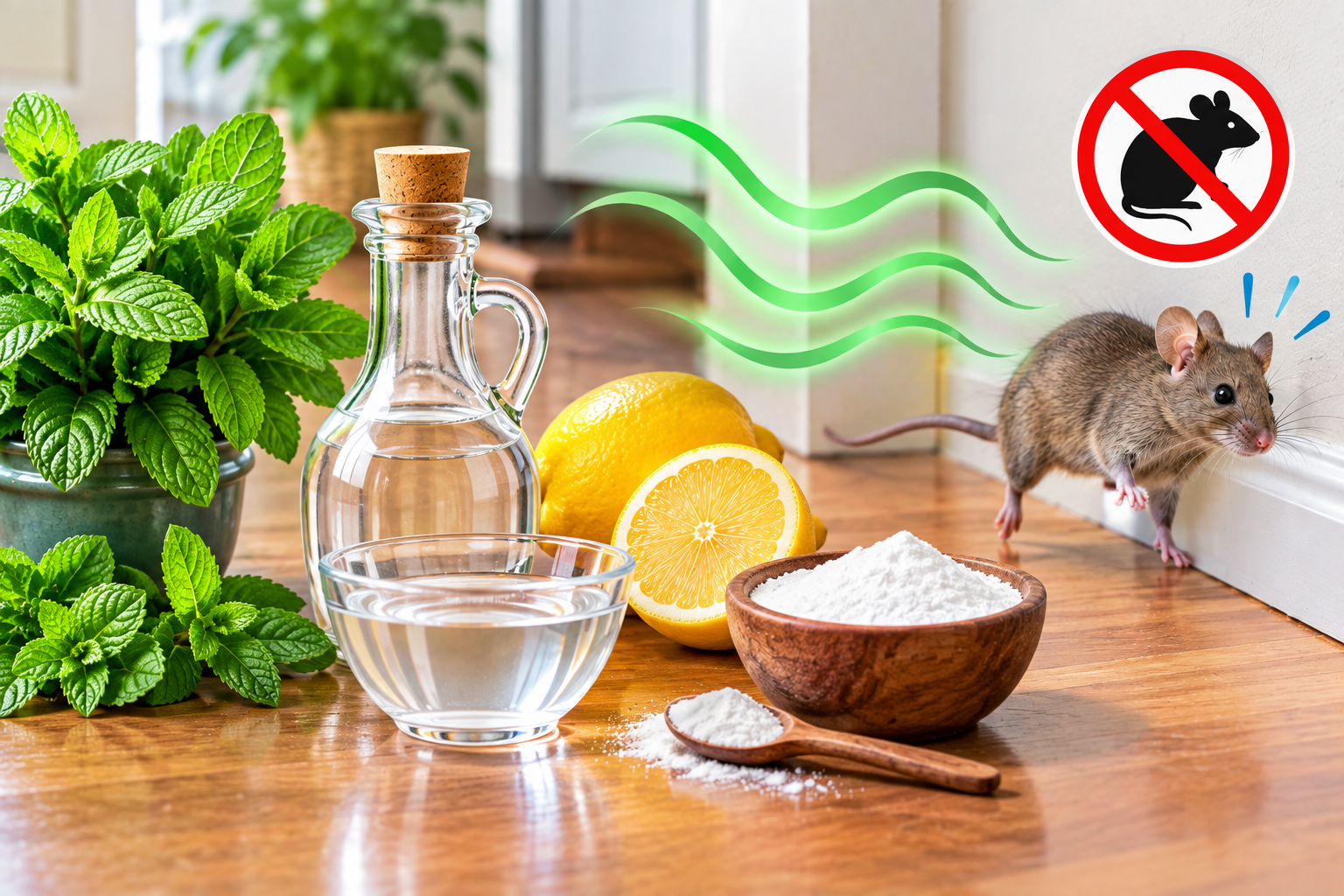
Search for a way to get rid of mice and you'll find dozens of smells that supposedly drive them away: peppermint, vinegar, ammonia, cayenne, dryer sheets, bars of soap. They're cheap, they're easy, and they sound a lot nicer than traps.
So do they work? Here's the honest answer: some smells do bother mice, but scent on its own almost never solves a mouse problem. This guide goes through each one what it does, what it doesn't do, and what to use your time on instead.
Quick Fact: Do These Smells Keep Mice Away?
| Smell | Does it work? |
| Peppermint oil | May put mice off briefly in a small enclosed space; fades fast and won't clear an infestation |
| Other essential oils (eucalyptus, clove, citronella) | Same as peppermint — short-lived at best |
| Vinegar | Little evidence; the smell fades within hours |
| Ammonia | Strong smell mice dislike, but fumes are unpleasant and unsafe indoors |
| Cayenne, pepper, cloves, garlic | No reliable evidence |
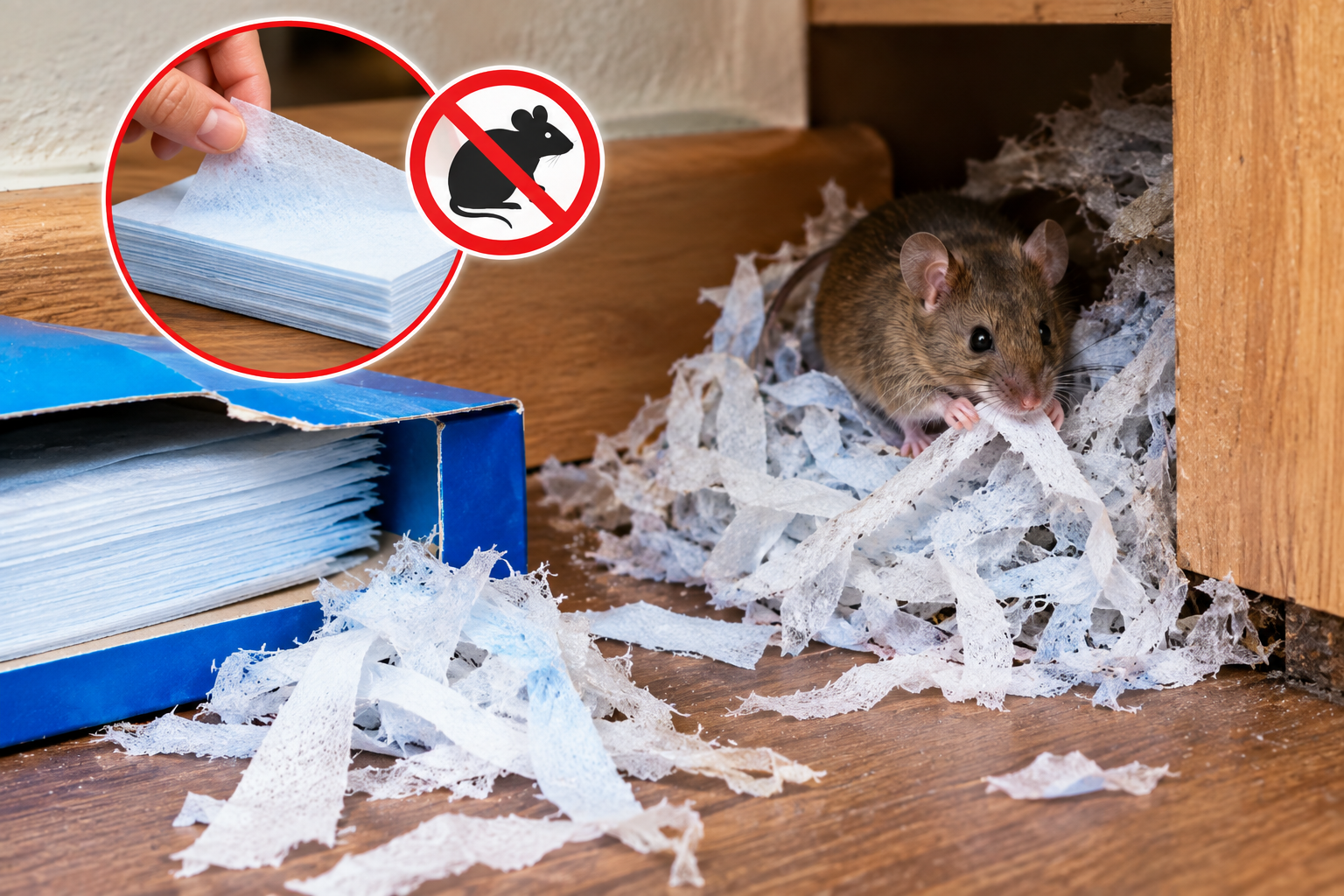
| Dryer sheets | No — mice have been found nesting in them |
| Bars of scented soap | No — mice have been known to eat soap |
| Mothballs | No, and not safe to use for this — see the mothball post |
| Predator scents (cat litter, fox urine) | Unreliable indoors and unhygienic |
Why Scent Alone Doesn't Get Rid of Mice
Mice come into your home for warmth, food and shelter. Those needs are strong enough that a smell they don't love usually isn't enough to push them out. There are four practical problems:
- Scent fades. Essential oils evaporate within hours to a couple of days. Mice are still there when the smell is gone.
- Mice get used to it. A smell that's unpleasant at first becomes part of the background especially when there's food on the other side of it.
- It doesn't reach where they live. Mice nest in walls, under floors and in attics. A cotton ball in a cupboard doesn't reach a nest inside a wall cavity see mice in walls.
- It doesn't close the way in. Even if a scent moved one mouse along, the gap it came through is still open for the next.
That doesn't mean scent is useless. It means it belongs at the end of your plan, not the start.
Peppermint Oil: The Most Popular Answer
Peppermint oil is the best-known mouse repellent, and it's the one people ask about most. Mice do have a strong sense of smell, and a concentrated dose of peppermint in a confined space may discourage them from using that spot for a while.
What it won't do is clear a house of mice. There's no good evidence it removes an established infestation, and in a real home with air movement, warmth and food the oil loses strength quickly.
If you want to try peppermint oil
- Use pure peppermint essential oil, not peppermint extract from the baking aisle
- Soak cotton balls and place them in enclosed spots: under sinks, at the back of cupboards, near gaps
- Refresh them every few days, as soon as the smell fades
- Treat it as an extra on top of sealing gaps and trapping not a replacement
Important: essential oils and pets
Concentrated essential oils, including peppermint, can be harmful to cats and dogs if they lick them, walk through them or breathe them in a closed space. Cats are especially sensitive. Keep oils and soaked cotton balls well out of reach of pets and children, use them in small amounts, and check with your vet before using them in a home with pets.
Other Smells People Try
Vinegar
Vinegar has a sharp smell that some people believe repels mice. There's little evidence for it, and the smell fades within hours. It's a good cleaner useful for wiping down surfaces after you've disinfected them but not a mouse repellent.
Ammonia
Ammonia is sometimes suggested because it smells a bit like predator urine. Mice do dislike the smell, but it's an unpleasant and irritating one to have in your home, the effect fades, and it doesn't reach nests. Never mix ammonia with bleach or other cleaners the fumes are dangerous. We don't recommend it indoors.
Cayenne pepper, black pepper, cloves and garlic
These come up constantly in home-remedy lists. There's no reliable evidence that any of them keep mice out of a house, and scattering powders around a kitchen creates its own mess.
Dryer sheets
One of the most persistent myths. Pest professionals regularly find dryer sheets shredded into mouse nests. They don't keep mice away.
Scented soap
Another myth mice have been known to gnaw on soap rather than avoid it.
Mothballs
Mothballs aren't made or labelled for mice, and the fumes aren't safe to breathe in living spaces.
Predator scents
Used cat litter, fox urine and similar products are sold as rodent deterrents. Results indoors are unreliable, and spreading used litter around your home creates a hygiene problem of its own.
And what about ultrasonic plug-ins?
Not a smell, but the same category of quick fix. Results are inconsistent and mice tend to get used to the sound.
Smells That Attract Mice the More Useful List
If you're thinking about smell, this is the list that actually changes things. Mice are drawn in by food odours:
- Pet food left out overnight, and open bags of pet food
- Spilled birdseed under feeders
- Open cereal, grains, rice, flour and pasta in bags or boxes
- Crumbs behind the toaster, under the stove and in the cutlery drawer
- Grease on the stovetop and in the oven
- Garbage and recycling with food residue, especially without a lid
- Compost, indoors or in an open pile outside
- Fruit bowls and bread left on the counter
Removing these does far more than adding a smell mice dislike.
What Actually Keeps Mice Away
The three things that work, in order:
- Seal the entry points. Mice get in through gaps around 6 mm wide around pipes, under garage doors, through vents and weep holes and along the roofline. Sealing them with materials mice can't chew is the one step that gives lasting results. See how mice get into your house..
- Remove food, water and shelter. Sealed containers, clean surfaces, no clutter, no cardboard nesting material, and firewood away from the walls.
- Trap the mice already inside. Traps placed flat against walls near droppings, baited with a pea-sized dab of peanut butter. See the best mouse traps and bait..
Do those three, and you won't need a repellent. Skip them, and no scent will save you.
Are Home Remedies Ever Worth It?
They have their place:
- As a stopgap, to discourage mice from one specific spot while you organise proper control
- In small enclosed spaces such as a stored vehicle, a drawer or a cupboard you rarely open
- Alongside sealing and trapping — never instead of them
Just set your expectations accordingly, and keep any product away from pets, children and food surfaces.
When to Call a Professional
It's time to stop experimenting and get help if:
- You're still finding droppings after a couple of weeks of trying home remedies
- You hear mice in walls or ceilings
- You've found droppings in more than one room
- You can't find where they're getting in
- You'd like the house sealed properly rather than treated repeatedly
How Nomore Pest Handles It
Nomore Pest is a licensed and insured pest control company serving Toronto, Mississauga, Vaughan, Scarborough, North York and Etobicoke.We don't rely on scents. Our technicians find where mice are active, remove the ones inside and seal the gaps they're using, so the problem is dealt with rather than masked. Learn more about our mouse control services.
Tried the home remedies already? Book a mouse inspection or call 800-461-1827 / 437-922-2705. You can also email info@nomorepest.ca.
Conclusion
Mice do dislike strong smells like peppermint and ammonia, but scent fades, mice get used to it, and no cotton ball reaches a nest inside a wall. If you want to use peppermint oil in a cupboard, go ahead — just keep it away from pets and treat it as a small extra. The three things that actually keep mice out are sealing the gaps, removing food and shelter, and trapping what's already inside. For the full plan, see our complete guide to getting rid of mice humanely, or let Nomore Pest rodent team deal with it properly.
Frequently asked questions
What smells do mice hate?
Mice dislike strong scents such as peppermint oil, other concentrated essential oils and ammonia. They may avoid a treated spot for a short time, but the smell fades quickly and mice get used to it, so scent alone won't remove an infestation.
Does peppermint oil really keep mice away?
It may discourage mice from a small enclosed space for a short while, but there's no good evidence it clears a house of mice. Use it alongside sealing entry points and trapping, not instead of them — and keep it away from pets.
Is peppermint oil safe around cats and dogs?
Concentrated essential oils can be harmful to cats and dogs if licked, walked through or inhaled in a closed room, and cats are especially sensitive. Keep oils and soaked cotton balls out of reach and check with your vet first.
Does vinegar repel mice?
There's little evidence that it does, and the smell fades within hours. Vinegar is useful for cleaning, but it isn't a reliable mouse repellent.
Do dryer sheets keep mice away?
No. It's a common myth mice have been found using shredded dryer sheets as nesting material.
What is the best mouse repellent?
The most effective "repellent" isn't a scent at all. Sealing the gaps mice use to get in, removing food and shelter, and trapping the mice already inside is what keeps them out for good.
How do I get rid of mice with home remedies?
Home remedies can discourage mice from one specific spot, but they don't remove an infestation. Use them as a stopgap while you seal entry points, store food securely and set traps that combination is what actually works.
Got a pest problem? Don't wait.
Book a professional inspection across Toronto & the GTA and get peace of mind, backed by a licensed & insured local team.
Or email us at info@nomorepest.ca · Toronto & the GTA