You're waking up with itchy red bites and you've spotted a tiny dark bug in the bed. Is it fleas or bed bugs? Both are small, reddish-brown and feed on blood, and both can leave dark specks on your sheets. But they live in different places, behave differently and need different treatment. Getting it right saves you time and money.
This guide explains how to tell bed bugs from fleas by comparing their appearance, bite patterns, the signs they leave behind, and where they’re commonly found.
Quick Answer: Bed Bugs vs Fleas
| Clue | Points to bed bugs | Points to fleas |
| The bug moves by | Crawling slowly | Jumping |
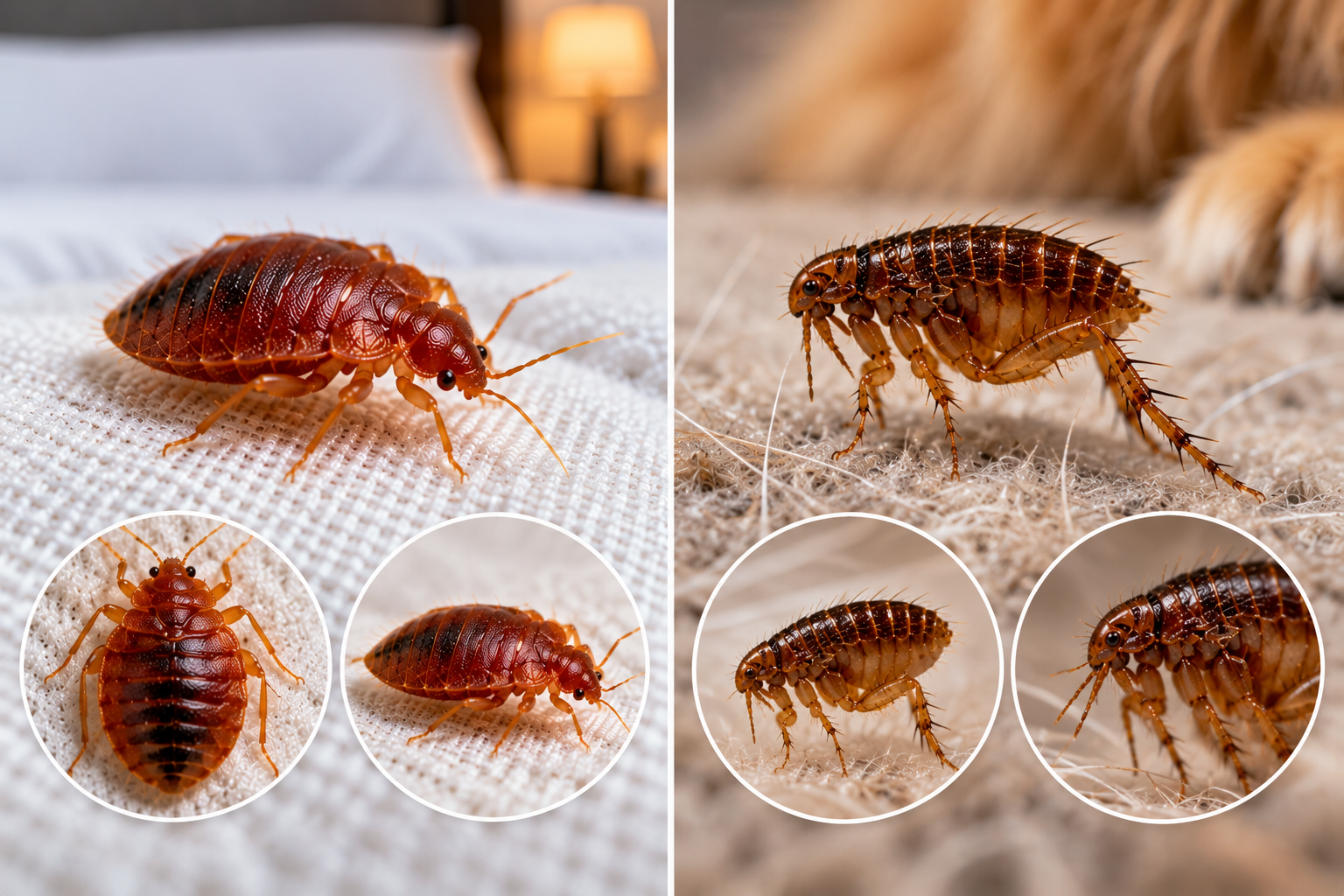
| Body shape from above | Wide, flat oval | Thin, narrow (flattened side to side) |
| Pets in the home | Doesn't matter; bed bugs feed on people | Usually yes, especially a dog or cat that scratches |
| Where you find them | Mattress seams, bed frame, headboard, couch | Pet bedding, carpets, rugs, on the pet |
| Bites | Exposed skin while sleeping: arms, neck, face, shoulders | Often lower legs and ankles |
| Other signs | Shed skins and eggs glued in seams | Pepper-like specks in pet fur; tiny white eggs that roll off |
What the Bugs Look Like
Bed bugs
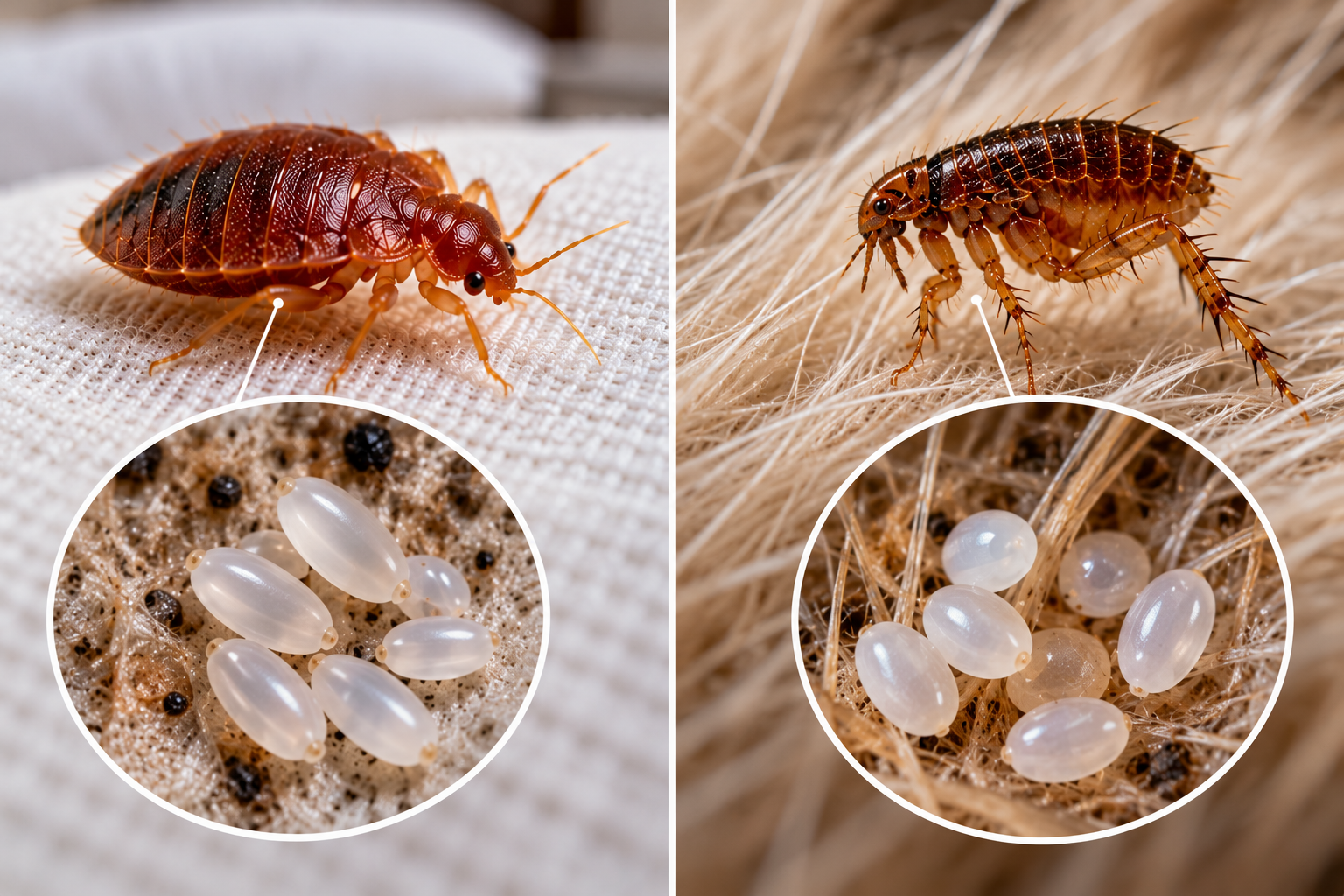
- Adults are about 5–7 mm long, roughly the size of an apple seed.
- Flat from top to bottom, so they look wide and oval from above.
- Reddish-brown; young nymphs are pale and see-through until they feed.
- No working wings, and they can't jump. They crawl, fairly slowly.
Fleas
- Health Canada describes fleas as 1–4 mm long, dark brown or reddish-brown.
- Flattened from side to side, so they look thin and narrow from above and taller from the side.
- Powerful back legs. Health Canada notes they can jump up to 20 cm straight up.
- Move quickly through fur and fabric, and are hard to catch with your fingers.
The fastest test: try to touch it. A bug that disappears with a jump is a flea. A bug that crawls away is not.
Bed Bug Bites vs Flea Bites
Both can cause small, itchy red bumps, and reactions vary a lot from person to person, so bites on their own can't confirm either one. Location and timing help, though.
| Bed bug bites | Flea bites |
| Where on the body | Skin exposed while sleeping: arms, shoulders, neck, face, legs | Often around the ankles, feet and lower legs |
| Pattern | Often in a line or small cluster | Small groups or rows, sometimes with a tiny central puncture |
| When they appear | Noticed in the morning, after sleeping | Any time of day, especially after time on carpets or near pets |
| Who gets bitten | People in the bed, even with no pets | Pets scratch first; people near pets or on floors |
If bites keep appearing on the lower legs and your pet is scratching, think fleas. If bites appear on your upper body after sleeping and there are no pets in the home, think bed bugs.
Bed Bug Droppings vs Flea Dirt
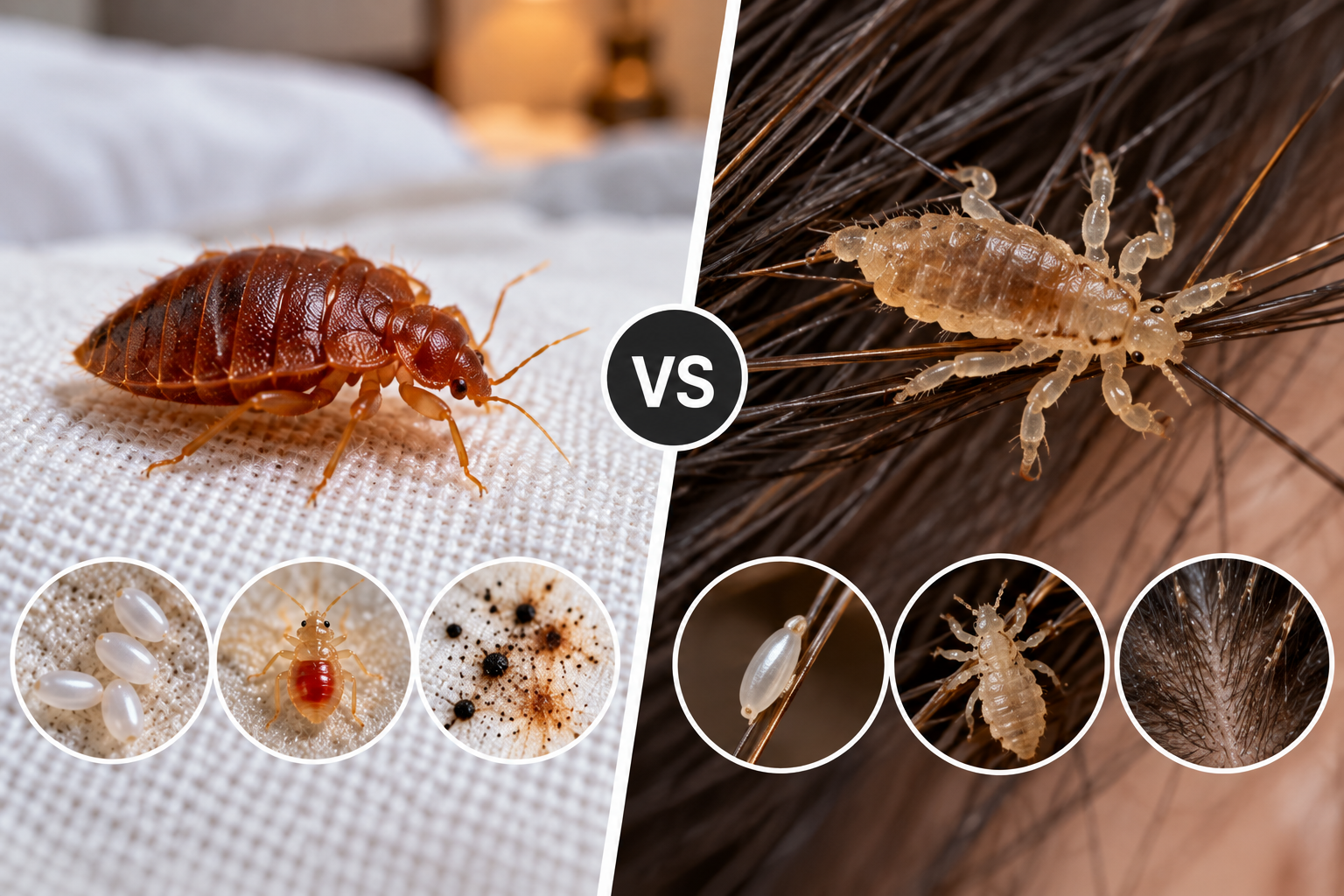
This is where people get confused, because both bugs leave dark specks of digested blood, and both turn red when you wet them.
- Bed bug droppings are black dots that soak into fabric like ink and cluster along mattress seams, box springs, bed frames and headboards.
- Flea dirt looks like ground pepper. Health Canada says to look for it in a pet's fur near the tail and in pet sleeping areas. It's loose and sits on top of fur and fabric rather than soaking in.
Since both pass the damp paper towel test, location is the giveaway: mattress seams point to bed bugs, and pet fur and pet beds point to fleas.
Bed Bug Eggs vs Flea Eggs
Bed bug eggs are about 1 mm long, pearl-white and glued in place in seams and cracks. Flea eggs are smaller, smooth and not sticky. University of Kentucky entomologists note that female fleas lay eggs in a pet's fur and the eggs soon fall off into carpets, furniture cushions and wherever the pet rests. So flea eggs end up loose in pet bedding and carpet, while bed bug eggs stay stuck in the bed.
Can Fleas Live in Your Bed?
They can end up there, especially if a pet sleeps on the bed. But fleas don't live in mattresses the way bed bugs do. University of Kentucky entomologists note that adult fleas spend most of their time on the pet rather than in the carpet. Their eggs and worm-like larvae collect wherever the pet rests, which can include your bed if your dog or cat sleeps with you.
Fleas found on a bed with no pets in the home are unusual. In that case, look harder for bed bug signs in the seams and frame.
Can Bed Bugs Live on Pets?
Not really. Bed bugs prefer people and don't live in fur the way fleas do. They may bite a pet that sleeps on an infested bed, but they feed briefly and go back to hiding in the bed and furniture. Finding bugs living in your pet's fur points to fleas, not bed bugs.
Where to Look
For bed bugs:
- Mattress seams, piping and tufts
- Box spring corners and the fabric underside
- Bed frame joints, slats and headboard
- Couch seams and cushions where someone sleeps
For fleas:
- Your pet's fur, especially near the tail, neck and belly. A fine-toothed flea comb helps.
- Pet beds, blankets and favourite resting spots
- Carpets and rugs, especially in shaded areas where pets lie
- Upholstered furniture pets use
A simple test for fleas: walk around carpeted rooms in white socks pulled up high. Fleas jumping onto the socks show up clearly.
How Treatment Differs
If it's fleas
Treating the pet is the key step. Ask your veterinarian which flea product suits your pet, since vets can prescribe products that aren't sold over the counter. Health Canada also recommends daily vacuuming of carpets and upholstered furniture and washing pet and family bedding in hot, soapy water. Flea cocoons can survive for weeks and resist insecticides, so new adults may keep appearing for a while after you start treatment.
If it's bed bugs
Treating your pet does nothing for bed bugs. Treatment has to target the mattress, box spring, bed frame, furniture and cracks where they hide. Washing bedding hot and drying it on the hottest setting helps, but bed bugs and eggs in the bed and furniture usually need professional treatment with a follow-up visit.
What to Do Next
- Catch a bug on clear tape or in a sealed bag and photograph it next to a coin.
- Check your pet with a flea comb and look for pepper-like specks near the tail.
- Check the mattress seams and bed frame for black spots, shed skins and eggs.
- If it's fleas, start with your vet and keep up the vacuuming and washing.
- If it's bed bugs, keep sleeping in your bed, bag and wash your bedding, avoid bug bombs, and book a professional inspection.
How Nomore Pest Can Help
If the signs point to bed bugs, our licensed technicians inspect the bed, furniture and room to confirm the problem, then use proven bio and chemical treatments that target every life stage, including eggs. A follow-up inspection is built into every plan. We serve homes, apartments and businesses across Toronto, Mississauga, Vaughan, Scarborough, North York and Etobicoke.
Not sure which bug you're dealing with? Book a free bed bug inspection and we'll identify it before recommending any treatment.
Conclusion
Fleas jump, look thin from above, live on pets and tend to bite around the ankles. Bed bugs crawl, look wide and oval, hide in the mattress and bed frame, and bite exposed skin while you sleep. Both leave dark specks of digested blood, so check where the specks are: pet fur and pet beds mean fleas, mattress seams mean bed bugs. Fleas start with your vet; bed bugs start with an inspection.
Think it's bed bugs? Call Nomore Pest at 800-461-1827 or 437-922-2705, or email info@nomorepest.ca for a free bed bug inspection anywhere in Toronto and the GTA.
Frequently asked questions
How can I tell if I have fleas or bed bugs?
Watch how the bug moves and where you find it. Fleas jump, look thin from above, and live on pets and in pet bedding and carpets. Bed bugs crawl, look wide and oval, and hide in mattress seams, bed frames and headboards. Pets that scratch a lot point to fleas.
Can fleas live in your bed?
They can end up there, mainly if a pet sleeps on the bed, because flea eggs fall off the pet wherever it rests. But fleas don't live in mattresses the way bed bugs do. Fleas on a bed in a home with no pets are unusual, so check for bed bug signs.
What do flea bites look like compared to bed bug bites?
Both are small, itchy red bumps. Flea bites often show up around the ankles and lower legs, sometimes with a tiny central puncture. Bed bug bites usually appear on skin exposed while sleeping, like arms, shoulders, neck and face, often in a line or cluster.
Do fleas and bed bugs leave the same droppings?
Both leave dark specks of digested blood that turn red when damp. Flea dirt looks like ground pepper and is found in pet fur and pet bedding. Bed bug droppings are black dots that soak into fabric along mattress seams and bed frames.
Can I have fleas without a pet?
It's possible but less common. Fleas can come in from a previous occupant's pets, visiting animals, or wildlife living in or near the home. If there are no pets and bites happen at night in bed, bed bugs are more likely.
Will flea treatment kill bed bugs?
No. Flea products for pets don't affect bed bugs, which hide in the bed and furniture rather than on animals. Bed bugs need treatment aimed at the mattress, frame, furniture and cracks, usually with a follow-up visit.
Got a pest problem? Don't wait.
Book a professional inspection across Toronto & the GTA and get peace of mind, backed by a licensed & insured local team.
Or email us at info@nomorepest.ca · Toronto & the GTA