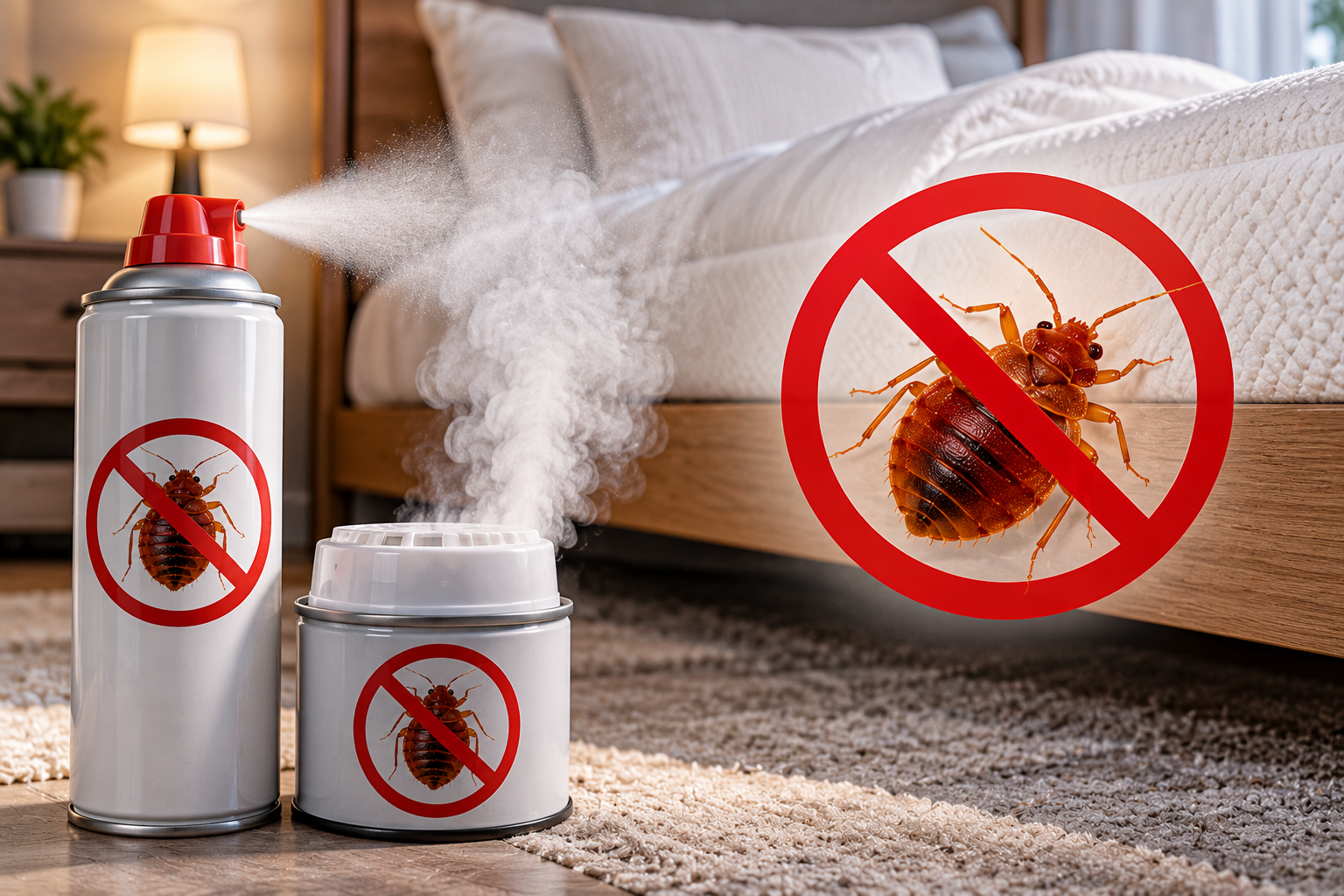
Bed bug traps are cheap, easy to set up and sold everywhere, so it's natural to hope a few of them will solve the problem. The truth is more useful than that. The right traps are one of the best tools for finding out whether you have bed bugs and whether treatment is working. They just can't get rid of an infestation on their own.
This guide explains which bed bug traps work, how interceptors catch bugs, how to set them up properly, and what a catch actually tells you.
Quick Answer: Do Bed Bug Traps Work?
- For detecting bed bugs: yes. Interceptor traps under bed legs are one of the most reliable ways to confirm bed bugs, especially when numbers are low.
- For monitoring treatment: yes. They show whether bugs are still active after treatment.
- For eliminating an infestation: no. Rutgers University entomologists say people shouldn't rely on monitors alone to control bed bugs. Most of the population, including eggs, stays hidden in the mattress, frame and furniture.
Types of Bed Bug Traps
| Type | How it works | Best for | Limits |
| Interceptor (pitfall) traps | Dishes under bed or furniture legs; bugs climb in and can't climb out | Detecting and monitoring, day after day | Only catch bugs travelling to or from the bed |
| CO2-baited (active) monitors | Release carbon dioxide to mimic a sleeping person and draw bugs in | Quick detection, often in a single night | Bulkier, need setup; many commercial units release little CO2 |
| Lure or pheromone traps | Use chemical attractants, sometimes with heat or CO2 | Adding to other monitors | Results vary by product |
| Sticky traps / glue boards | Catch bugs that wander across them | Occasional extra evidence | No attractant; catch very few bed bugs |
How Bed Bug Interceptors Work
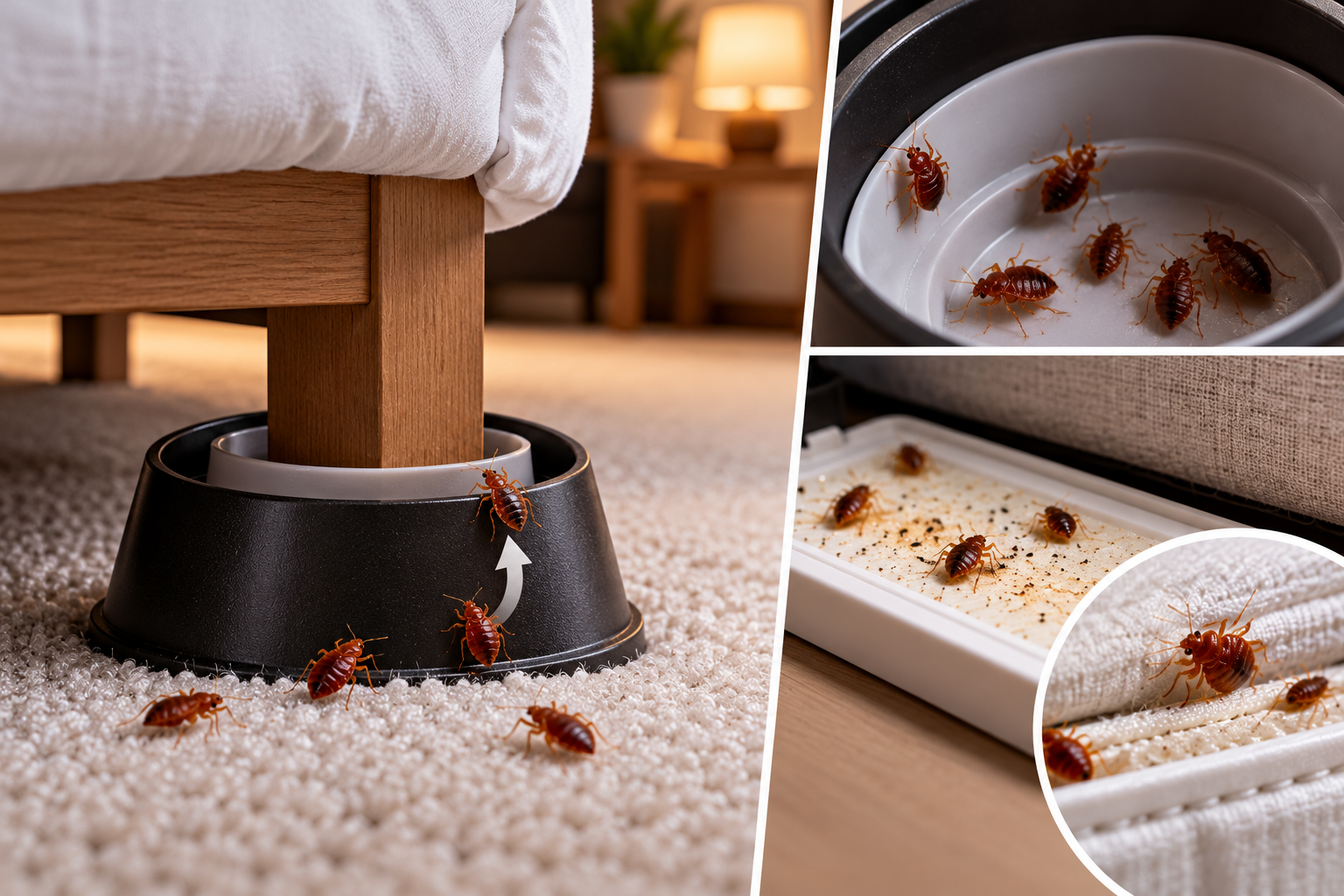
An interceptor is a plastic dish with two rings, an outer moat and an inner well. You place one under each leg of the bed. The outside has a rough surface bed bugs can climb, but the inner walls are smooth and slippery. Bugs heading up to the bed fall into the outer ring, and bugs coming down from the bed fall into the inner well. Either way, they can't climb back out.
University of Kentucky entomologists note that interceptors catch wandering bed bugs that crawl or fall in and can't escape, and that they're useful for confirming whether an infestation has been eliminated. Rutgers researchers found interceptors were much more effective than visual inspections at detecting bed bugs.
That's what makes them so valuable: they keep working 24 hours a day and catch bugs you'd never see in a five-minute check of the mattress.
The inner vs outer ring tells you something
- Bugs in the outer ring were climbing up toward the bed. They're coming from the floor, walls, nearby furniture or another room.
- Bugs in the inner well were coming down from the bed, which means they're living in the bed itself.
How to Set Up Interceptors the Right Way
Interceptors only work if bed bugs have no other way to reach the bed. Follow these steps:
- Pull the bed 10–15 cm away from the wall so the headboard doesn't touch it.
- Tuck in sheets and blankets so nothing hangs to the floor.
- Clear everything under the bed, including boxes, bags and shoes. Anything touching both the floor and the bed frame is a bridge.
- Place one interceptor under every leg, including the middle legs of larger frames.
- Do the same for the couch or chair if someone sleeps or rests there for long periods.
- Keep the inside of each dish clean and dry. Dust and debris give bugs something to grip and climb out.
Rutgers notes that interceptors are passive monitors, so leave them in place for a week or longer to catch very low numbers.
How Often to Check Interceptors
The US EPA recommends inspecting interceptors at least every seven days and continuing to check them for at least a year after you think the problem is solved. Bed bugs can survive for months without feeding, so a few quiet weeks don't prove they're gone.
When you check:
- Use a flashlight. Small nymphs are pale and easy to miss.
- Note which leg and which ring each bug was in.
- Photograph any catch next to a coin for scale.
- Empty the bugs into a sealed bag and throw it out, then wipe the dish clean.
Do CO2 and DIY Traps Work?
Bed bugs find people mostly by following the carbon dioxide we breathe out. Rutgers University entomologists call CO2 the primary attractant for bed bugs, and they found that CO2-baited traps can detect low numbers of bed bugs in a single night.
In a 2015 study published in the Journal of Economic Entomology, Rutgers researchers tested a homemade sugar-and-yeast CO2 trap in occupied apartments. One night with the sugar-yeast trap caught about as many bed bugs as interceptors left under furniture for 11 days, and the difference wasn't statistically significant. The same paper notes that most commercial active monitors release far less CO2 than a person does, which limits how well they compete with you as bait.
The catch with DIY CO2 traps is practicality: they need a large container, have to be set up each night, and dry ice versions carry safety risks. For most homes, interceptors are the simpler long-term option, with a CO2 trap as a quick check.
What About Sticky Traps and "Bed Bug Detectors"?
Sticky traps and glue boards have no attractant, so they only catch the odd bug that happens to cross them. They're fine as an extra source of evidence near the bed but poor at telling you whether bed bugs are present or gone.
Products sold as "bed bug detectors" are usually interceptors, CO2 monitors or lure traps under a different name. Judge them by how they work rather than the label, and treat any product that promises to eliminate bed bugs by trapping alone with caution.
Why Traps Can't Get Rid of Bed Bugs
- Eggs never move. They're glued into seams and cracks and won't end up in a trap.
- Most bugs stay hidden. Many bed bugs live inside the mattress, box spring and frame, close enough to feed without crossing a trap.
- Bugs on the bed stay on the bed. Once a bug is already in the mattress, interceptors on the legs won't catch it until it leaves.
- Females keep laying. As long as some bugs are feeding, new eggs keep replacing the ones you catch.
Interceptors combined with mattress encasements, laundering and professional treatment work well together. Traps on their own buy time while the infestation keeps growing.
What Your Trap Catch Means
| What you find | What it likely means |
| Nothing for several weeks | Low or no activity, but keep checking; bed bugs can go months without feeding |
| One or two bugs | Bed bugs are present; low numbers are the easiest stage to treat |
| Nymphs of different sizes | Bed bugs are breeding in the home |
| Bugs mostly in the inner well | They're living in the bed itself |
| Bugs mostly in the outer ring | They're coming from the floor, walls, furniture or a neighbouring unit |
| Catches after treatment | Treatment hasn't reached every bug or egg; a follow-up is needed |
When to Call a Professional
- Your interceptors have caught even one confirmed bed bug
- You're catching nymphs, which means eggs are hatching
- You're still catching bugs weeks after cleaning or DIY treatment
- Bugs are showing up in the outer ring and you live in an apartment or condo
- You have bites or other signs but your traps stay empty, and you want a proper inspection
How Nomore Pest Uses Monitoring
Our licensed technicians inspect the bed, furniture and room to confirm bed bugs and see how far they've spread. We use proven bio and chemical treatments that target every life stage, including eggs, and a follow-up inspection is built into every plan to confirm the bugs are gone. Interceptors are a good way for you to keep an eye on things between visits.
We serve homes, apartments and businesses across Toronto, Mississauga, Vaughan, Scarborough, North York and Etobicoke.If your traps have caught something, book a free bed bug inspection.
Conclusion
Bed bug traps work, but for detection and monitoring, not elimination. Interceptors under every bed leg are the most practical option for most homes. Check them at least weekly and keep them in place for months after treatment. CO2 traps can confirm bed bugs quickly. If your traps catch even one bed bug, treat that as your signal to act while numbers are still low.
Caught a bed bug? Call Nomore Pest at 800-461-1827 or 437-922-2705, or email info@nomorepest.ca for a free bed bug inspection anywhere in Toronto and the GTA.
Frequently asked questions
Do bed bug traps really work?
For detection and monitoring, yes. Interceptor traps under bed legs catch bed bugs travelling to and from the bed, and Rutgers researchers found them much more effective than visual inspections. But traps won't eliminate an infestation, because eggs and most bugs stay hidden in the mattress, frame and furniture.
Where should I put bed bug interceptors?
Under every leg of the bed, including middle legs, and under couches or chairs where someone sleeps. Pull the bed away from the wall, tuck in bedding so nothing touches the floor, and clear everything from under the bed so the legs are the only way up.
How often should I check bed bug traps?
The US EPA recommends checking interceptors at least every seven days and continuing for at least a year after the problem seems solved, since bed bugs can survive for months without feeding.
Can one bed bug in a trap mean an infestation?
It can. Bed bugs don't usually travel alone, and females lay eggs daily. One confirmed bed bug is a good reason to inspect the mattress, box spring and frame, and to book a professional inspection while numbers are low.
Do homemade bed bug traps work?
Some do. A 2015 Rutgers study found a homemade sugar-and-yeast CO2 trap caught about as many bed bugs in one night as interceptors did over 11 days. They need a large container and nightly setup, so they're best for a quick check rather than long-term monitoring.
Do sticky traps catch bed bugs?
Not well. Sticky traps have no attractant and only catch bugs that happen to wander across them. Interceptors under the bed legs or CO2-baited monitors are much better at detecting bed bugs.
Got a pest problem? Don't wait.
Book a professional inspection across Toronto & the GTA and get peace of mind, backed by a licensed & insured local team.
Or email us at info@nomorepest.ca · Toronto & the GTA