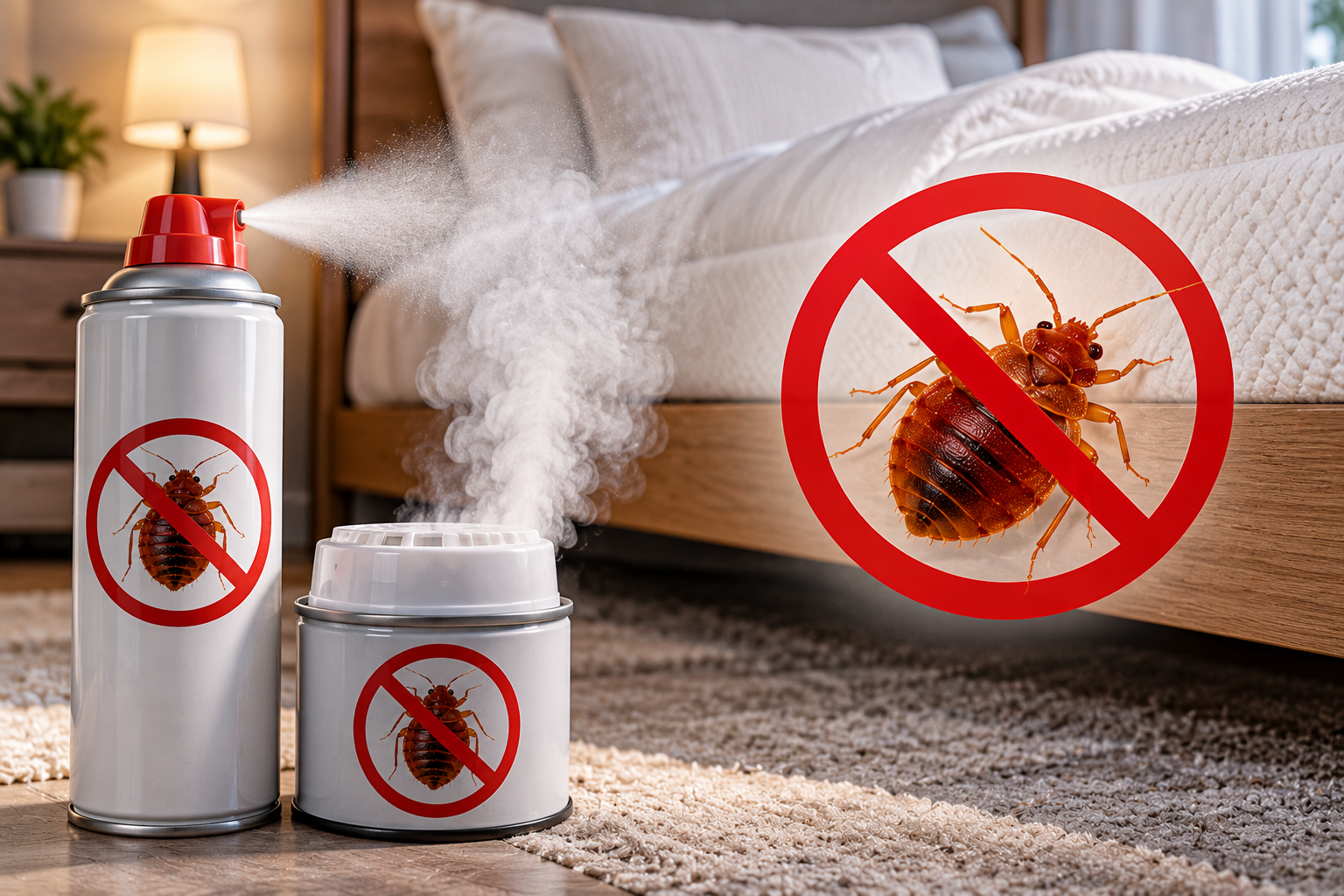
When you find bed bugs, the quickest-looking fix is on the shelf at the hardware store: a can of bed bug spray or a bug bomb you set off and leave for a few hours. It feels like doing something. The problem is that most of these products don't reach where bed bugs actually live, and some can make the situation worse.
This guide explains what bed bug sprays and bug bombs can and can't do, what the research says, how to use a spray safely if you choose to, and what works better.
Quick Answer: Do Bed Bug Sprays And Bug Bombs Work?
- Bug bombs (foggers): no. A 2012 Ohio State University study found over-the-counter foggers had little or no effect on bed bugs collected from real homes.
- Contact sprays: they kill bugs they hit directly, but most bed bugs and eggs are hidden where spray doesn't reach.
- Residual sprays: can help along cracks and crevices, but many bed bugs are resistant to common insecticides.
- On their own: neither sprays nor foggers usually eliminate an infestation.
Why Bug Bombs Don't Work on Bed Bugs
A bug bomb, or total-release fogger, fills a room with an insecticide mist that settles on exposed surfaces. That works poorly against bed bugs for three reasons.
1. The mist doesn't reach them
Bed bugs spend most of their time deep in mattress seams, box springs, bed frame joints, cracks in furniture and gaps behind baseboards. Fog settles on top of surfaces. It doesn't penetrate those protected spots.
2. Many bed bugs are resistant
Most over-the-counter foggers use pyrethroid insecticides. University of Kentucky entomologists note that bed bugs are becoming increasingly resistant to pesticides, and many populations shrug off products that would kill other insects.
3. The research says so
In 2012, Ohio State University entomologists Susan Jones and Joshua Bryant tested three pyrethroid foggers against five bed bug populations collected from infested homes. Published in the Journal of Economic Entomology, the study found that the foggers had little or no effect on the field-collected bed bugs. Only one population showed significant mortality, and only when the bugs were fully exposed in the open. The researchers concluded the products should not be recommended for bed bug control.
University of Kentucky entomologists reach the same conclusion: total release foggers are ineffective against bed bugs.
Can bug bombs spread bed bugs?
There's a real risk. Irritated bed bugs may move deeper into hiding or toward untreated areas, such as nearby rooms or, in apartments and condos, neighbouring units through wall voids and gaps. That can turn a one-room problem into a bigger one.
Bug bombs are a safety hazard
The US EPA warns that foggers should be used only with extreme care, because improper use can harm your health or cause a fire or explosion, and says they shouldn't be your only control method. Foggers use flammable propellants, and pilot lights, stoves and sparks from appliances can ignite them. Using too many foggers for the size of the room makes this worse.
Do Bed Bug Sprays Work?
Bed bug sprays are more targeted than foggers, but they have limits. It helps to know the two main types.
| Type | How it works | Limits |
| Contact sprays | Kill bugs that are wet with the spray | Only kill what they hit; no lasting effect; most bugs and eggs are hidden |
| Residual sprays | Leave a film that can affect bugs crossing it later | Resistance is common; must be applied exactly to cracks and crevices; some can't go on mattresses |
| Dusts (e.g. diatomaceous earth) | Damage the bug's outer layer as it crawls through | Slow; the University of Kentucky says diatomaceous earth seldom eliminates an infestation on its own |
A spray can be one part of a broader plan, especially for treating cracks around the bed frame and baseboards. It won't solve the problem by itself, mainly because eggs glued deep in seams and cracks usually survive.
Bug Spray on the Bed: Is It Safe?
Many people search for a spray they can use directly on their bed. Be careful here. Health Canada advises:
- Only use products registered in Canada for bed bugs. Look for a Pest Control Products (PCP) registration number on the label. Don't buy products without one.
- Read the label and follow it exactly. The label is the law for how the product can be used.
- Never apply pesticides to people, pets or bedding unless the label specifically says you can.
- Products for bed frames aren't for mattresses or box springs unless the label says so.
- Don't use pesticides on cribs, playpens or children's toys.
- Don't make homemade pesticides. They can be dangerous to mix and use.
Health Canada also warns against ozone generators, which can cause breathing problems and aren't approved for bed bugs in Canada.
What About Household Products?
Rubbing alcohol, bleach and household disinfectant sprays aren't designed or registered for bed bug control. The University of Kentucky lists bleach, alcohol and bug bombs among things that should not be used against bed bugs. Alcohol is also highly flammable, which makes spraying it around a bedroom a fire risk.
Smoke, Fire and Other Risky Ideas
Burning, smoking or using open flames to kill bed bugs is dangerous and doesn't reach hidden bugs. University of Kentucky entomologists specifically warn against using cigarette lighters and similar methods, noting they can result in fires.
What Works Better Than Sprays and Bombs
- Heat for fabrics: wash bedding and clothing hot and dry on the hottest setting for at least 30 minutes. Health Canada notes bed bugs die at 50°C.
- Steam: a steamer that reaches 100°C or more kills bed bugs and eggs on contact on mattresses, seams and furniture.
- Vacuuming: removes bugs, eggs and shed skins from seams and cracks.
- Encasements: zippered bed bug covers trap bugs inside the mattress and box spring.
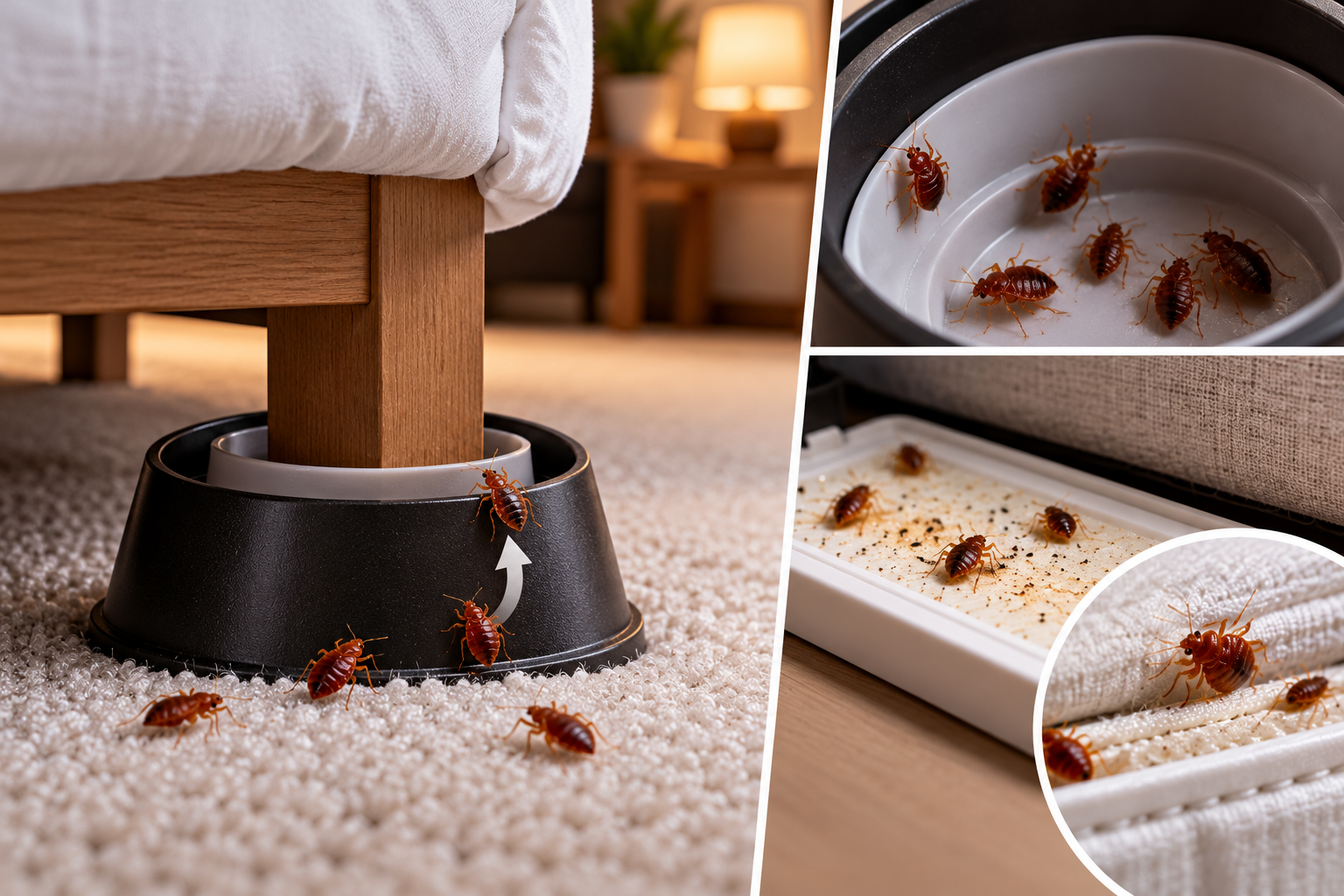
- Interceptor traps: show whether bugs are still active.
- Professional treatment: licensed technicians use products and methods targeted at every life stage, with follow-up visits for eggs that hatch later. Health Canada strongly recommends hiring a licensed professional.
Already Used a Bug Bomb?
You're not alone. If you've already fogged a room:
- Air out the room fully according to the product label before going back in.
- Wash exposed bedding and clothing hot and dry them on high.
- Check nearby rooms and furniture for bed bugs that may have moved.
- Don't set off another fogger. Repeating it adds health and fire risk without fixing the problem.
- Tell your technician what you used when you book an inspection, so they can plan treatment around it.
- If you rent, let your landlord know. Neighbouring units may need to be checked.
When to Call a Professional
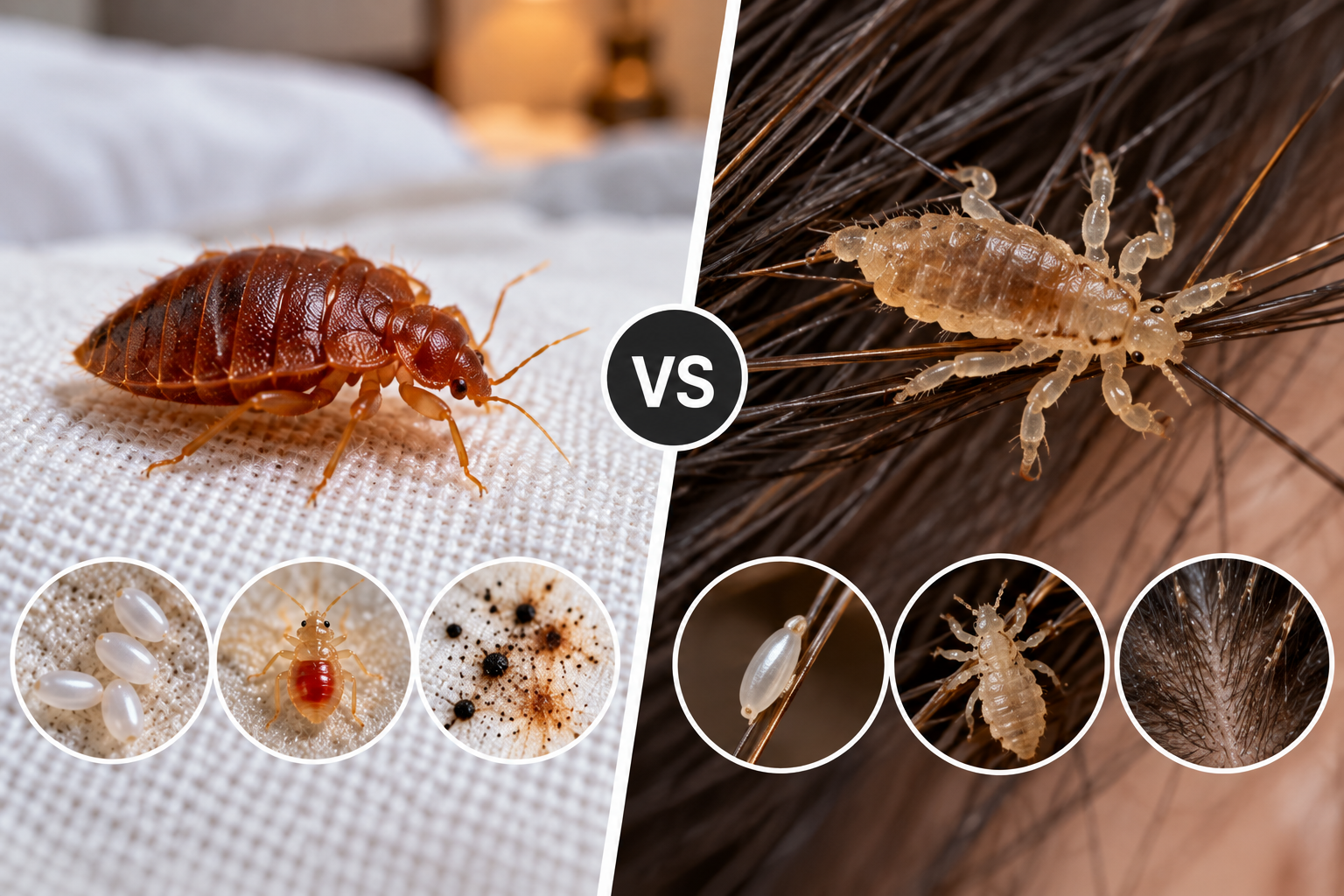
- You've confirmed bed bugs: live bugs, eggs, shed skins or fecal spots
- You've tried sprays or foggers and you're still finding signs or bites
- Bed bugs have shown up in more than one room
- You live in an apartment, condo or townhouse with shared walls
How Nomore Pest Treats Bed Bugs
Our licensed technicians inspect the bed, furniture and room to find where bed bugs are hiding, then use proven bio and chemical treatments that target every life stage, including eggs. You'll get a preparation checklist before treatment, and a follow-up inspection is built into every plan.
We serve homes, apartments and businesses across Toronto, Mississauga, Vaughan, Scarborough, North York and Etobicoke. Before you buy another can, book a free bed bug inspection.
Conclusion
Bug bombs don't work against bed bugs: the mist doesn't reach where they hide, many bed bugs are resistant, and research has shown foggers have little or no effect. They also carry real fire and health risks. Sprays kill what they touch but miss hidden bugs and eggs, and should only be used exactly as the label allows. Heat, steam, encasements, monitoring and professional treatment are what actually end an infestation.
Sprays not working? Call Nomore Pest at 800-461-1827 or 437-922-2705, or email info@nomorepest.ca for a free bed bug inspection anywhere in Toronto and the GTA.
Frequently asked questions
Do bug bombs kill bed bugs?
Not effectively. A 2012 Ohio State University study found that over-the-counter foggers had little or no effect on bed bugs collected from homes. The mist settles on open surfaces and doesn't reach bugs hiding in seams, cracks and furniture.
Can a bug bomb make bed bugs worse?
It can. Bed bugs may move deeper into hiding or into nearby rooms and, in apartments, neighbouring units. Foggers also carry fire and health risks, and the US EPA says they shouldn't be your only control method.
What spray kills bed bugs?
Contact sprays kill bed bugs they hit directly, and some residual sprays registered for bed bugs can help along cracks and crevices. Use only products with a Canadian PCP registration number and follow the label exactly. Sprays alone rarely end an infestation because eggs and hidden bugs survive.
Can I spray bug spray on my bed?
Only if the product label specifically allows use on mattresses or bedding. Health Canada says never to apply pesticides to people, pets or bedding unless the label permits it, and products for bed frames aren't for mattresses or box springs.
Why are bed bugs hard to kill with sprays?
Most bed bugs and all their eggs hide in tight seams and cracks that sprays don't reach, and many bed bug populations have become resistant to common insecticides like pyrethroids.
What should I use instead of a bug bomb?
Wash and dry bedding and clothing on high heat, steam mattress seams and furniture, vacuum cracks, encase the mattress and box spring, use interceptor traps, and book a licensed professional for treatment of the bed, furniture and room.
Got a pest problem? Don't wait.
Book a professional inspection across Toronto & the GTA and get peace of mind, backed by a licensed & insured local team.
Or email us at info@nomorepest.ca · Toronto & the GTA