You're changing the sheets and notice a cluster of tiny black dots near the corner of the mattress, or a few rusty spots on the pillowcase you can't explain. Before you see a single bug, these stains are often the first sign of bed bugs, and knowing what they look like can help you catch a problem early.
This guide explains what bed bug poop and stains look like, where to find them, how to tell them apart from ordinary marks, and what to do next.
Quick Answer: What Bed Bug Poop Looks Like
| Feature | Bed bug droppings |
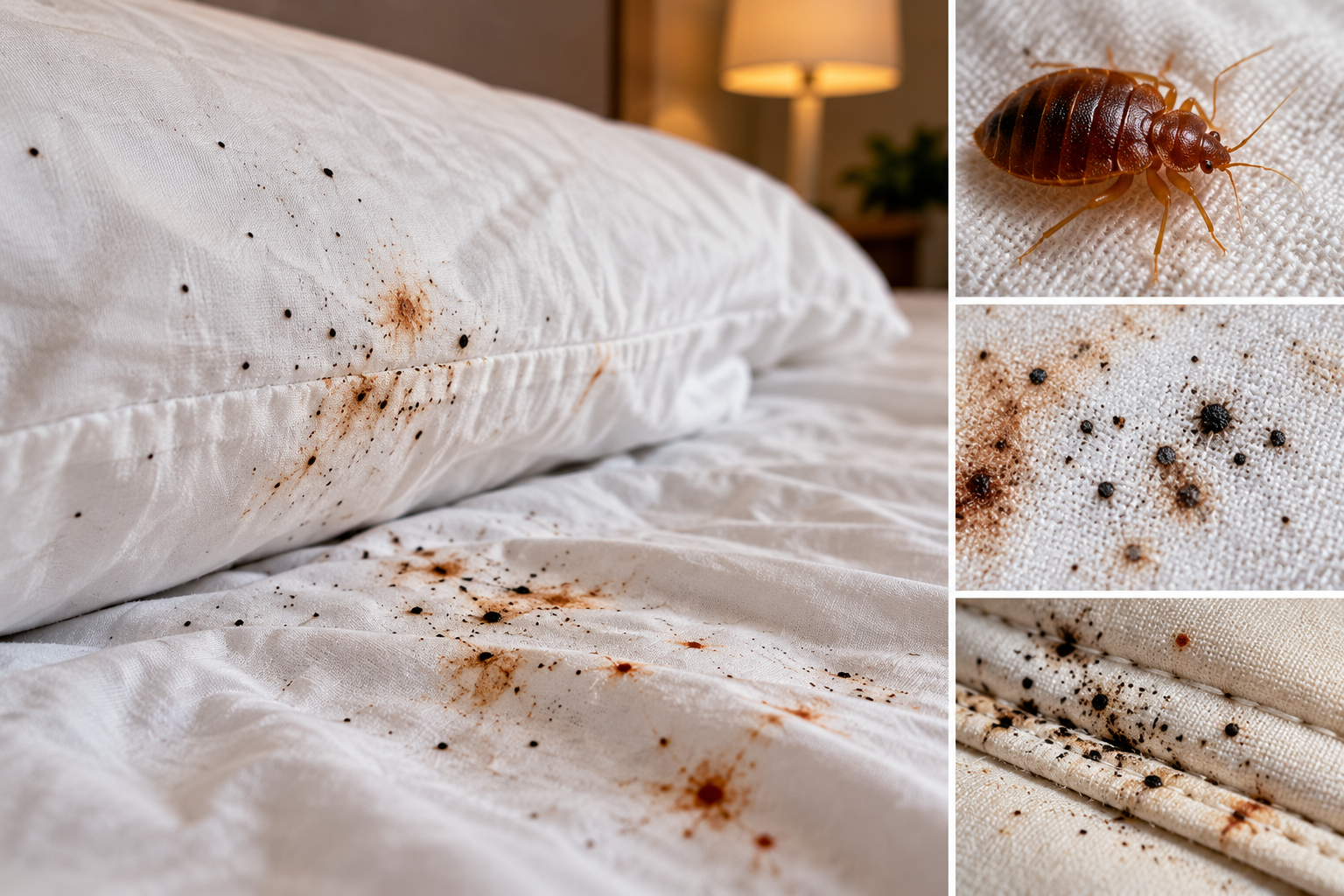
| Colour | Black to dark brown; can look rusty when smeared |
| Size | Tiny dots, roughly the size of a pen tip |
| Pattern | Clusters of many dots in one area, not single random specks |
| On fabric | Soak in and spread slightly, like a marker touched to cloth |
| On hard surfaces | Sit on top as small raised bumps |
| Where | Mattress seams, piping, box spring, bed frame joints, headboard |
| Wipe test | A damp cloth or wipe smears it reddish-brown |
What Is Bed Bug Poop?
Bed bugs feed only on blood. What they leave behind is digested blood, so their droppings are liquid when they come out and dry into dark spots. That's why bed bug "poop" doesn't look like the pellets mice or cockroaches leave. It looks more like ink or marker dots.
Entomologists at the University of Kentucky describe dark spots of dried excrement along mattress seams as a telltale sign of bed bugs. The US EPA notes that these spots may bleed into fabric the way a marker would.
What Bed Bug Stains on Sheets Look Like
There are two main kinds of bed bug stains, and they look different.
Fecal spots (droppings)
- Small black or very dark brown dots, often in groups of a dozen or more
- Found where bed bugs hide and rest, especially along mattress seams and the edges of the box spring
- On sheets and pillowcases, they look like a scatter of pen dots that have spread slightly into the fabric
- Older spots can look faded or brownish; fresh ones are darker
Blood stains
- Small rust-red or reddish-brown smears and spots on sheets, pillowcases or pyjamas
- Usually caused by rolling over and crushing a bed bug that has just fed
- Can also come from a bite that bleeds a little after the bug leaves
- Tend to appear where your body rests: the middle of the sheet, near the pillow, or by your legs
Finding blood stains by themselves doesn't confirm bed bugs, because scratched bites, nosebleeds and small cuts leave similar marks. Blood stains plus dark fecal spots in the seams is a much stronger sign.
Early Signs: What a New Infestation Looks Like
Early on, there isn't much to see. You might find only a few dark dots along one seam of the mattress, near the head of the bed, or one or two small rusty spots on the sheet. That's easy to dismiss, but it's also the easiest time to deal with the problem.
As an infestation grows, the spots spread and pile up. Heavy infestations can leave dense dark staining along seams, on the underside of the box spring, in the joints of the bed frame, behind the headboard and in nearby furniture.
Where to Look for Bed Bug Droppings
Bed bugs leave droppings where they hide and digest, not just where they feed. Check these spots with a flashlight:
- Mattress seams, piping, tufts and labels
- The corners and underside of the box spring, including the fabric dust cover
- Bed frame joints, slats and screw holes
- The back of the headboard and where it meets the wall
- Pillow seams and the edges of fitted sheets
- Nightstand drawers, especially the joints and corners
- Couch seams and cushions, if someone sleeps or naps there
- Baseboards, outlet covers and the edge of carpet near the bed
How to Test a Spot: Is It Bed Bug Poop?
This simple test helps you tell bed bug droppings from dirt, mould or fabric marks.
- Dampen a cotton swab, wet wipe or paper towel with a little water.
- Rub it gently over the spot.
- Check the colour. Bed bug droppings are digested blood, so they usually smear into a reddish-brown streak. Dirt and dust tend to stay grey or black, and mould usually doesn't smear red.
A red-brown smear means you're looking at digested blood. It points strongly to bed bugs when it's on the mattress or bed frame. On a pet bed or carpet where an animal sleeps, it could be flea dirt instead (see below).
Bed Bug Droppings vs Other Spots
| Spot | What it looks like | Where it's found | Wipe test |
| Bed bug droppings | Clusters of tiny black dots that soak into fabric | Mattress seams, bed frame, headboard | Smears reddish-brown |
| Flea dirt | Tiny black specks, often comma-shaped | Pet beds, carpets, on pets' fur | Turns red when damp |
| Mould or mildew | Fuzzy or blotchy grey, green or black patches | Damp areas, under mattresses on the floor | Doesn't turn red |
| Cockroach droppings | Specks like ground pepper or coffee grounds, or small cylinders | Kitchens, bathrooms, cabinets | Smears brown, not red |
| Mouse droppings | Solid pellets, about the size of a grain of rice | Along walls, in cupboards, near food | Don't smear; stay solid |
| Dirt or ink | Random marks, no clusters | Anywhere | Grey or the ink's colour |
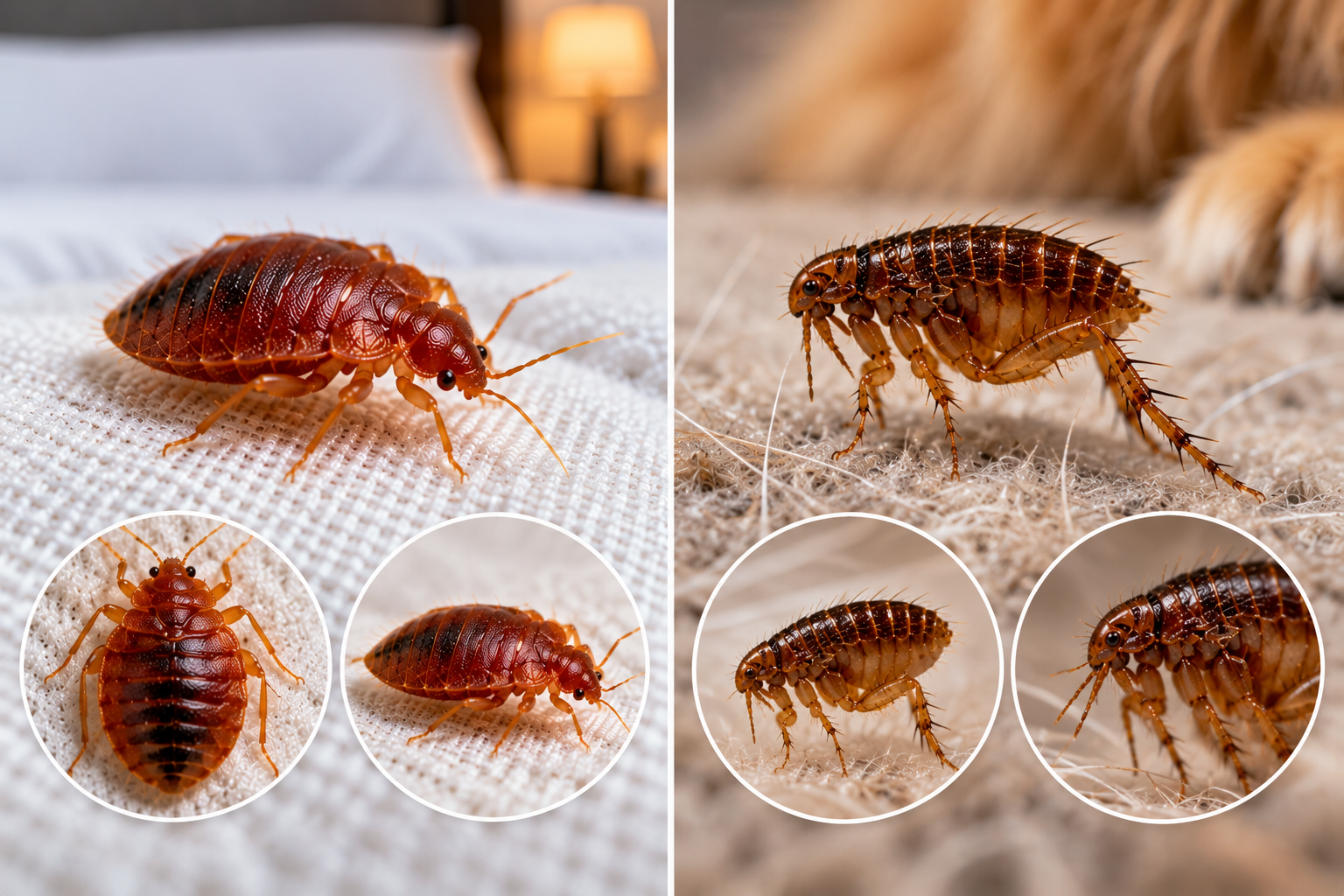
Flea dirt is the trickiest one, because it's also digested blood and passes the same wipe test. The difference is location: flea dirt shows up where pets sleep and on the pets themselves, while bed bug droppings collect in mattress seams and bed frames.
If you're seeing pellets near food or along walls, you're more likely dealing with mice. Our guide on what mouse poop looks like covers those.
Other Signs to Check For
Droppings rarely appear alone. If you've found suspicious spots, look nearby for:
- Shed skins: empty, see-through, bug-shaped casings left as young bed bugs grow
- Eggs: tiny pearl-white ovals, about 1 mm long, stuck in seams and cracks
- Live bugs: flat, oval, reddish-brown adults about the size of an apple seed
- Bites: itchy welts, often in a line or cluster, though some people don't react at all
Spots plus any one of these makes bed bugs very likely.
Does Washing the Sheets Get Rid of Them?
Washing removes the stains from your sheets, and washing hot then drying on the hottest setting kills any bugs or eggs in the bedding. But it doesn't touch the bugs living in the mattress seams, box spring, bed frame or furniture. Those are the ones leaving the droppings, and they'll keep doing it.
For removing the stains themselves:
- Treat the spots with cold water first. Hot water can set blood-based stains.
- Use an enzyme-based stain remover or a little dish soap, then wash as usual.
- Dry on the hottest setting the fabric allows to kill anything you missed.
Don't scrub stains off the mattress before an inspection. A technician uses them to see where bed bugs are concentrated.
I Found Bed Bug Poop. What Should I Do?
- Don't panic or move to another room. Sleeping elsewhere can spread bed bugs to a second area.
- Take photos of the spots with a coin for scale. They help with identification.
- Bag your bedding in a sealed plastic bag in the bedroom, then wash it hot and dry it on high.
- Check the rest of the bed and nearby furniture for shed skins, eggs or live bugs.
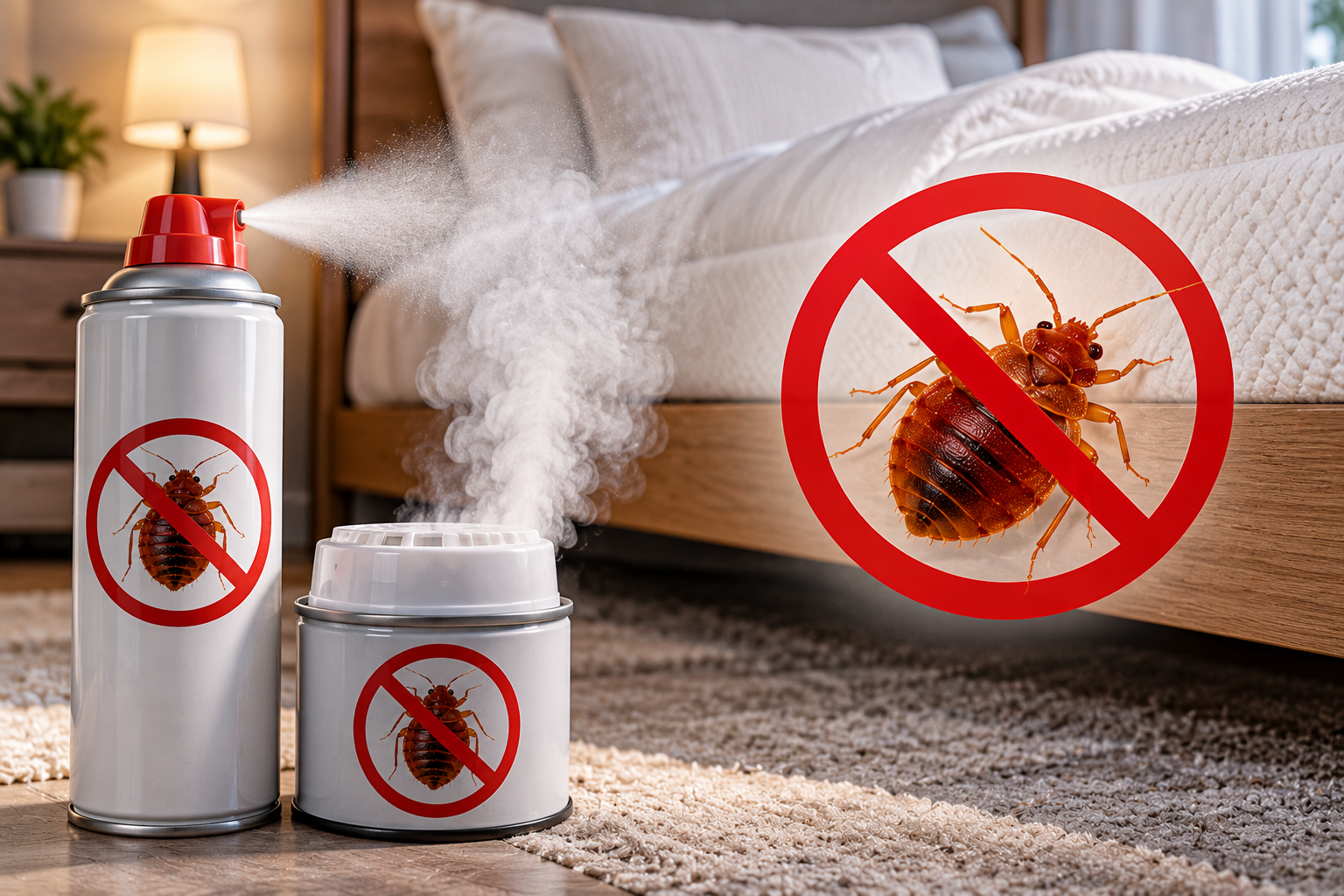
- Avoid bug bombs and store sprays. They don't reach the seams and cracks where bed bugs hide, and they can scatter them.
- Book an inspection.If you're wondering how to get rid of bed bugs, a professional pest control inspection can help identify bed bugs, assess the extent of the infestation, and determine the most effective treatment for your home.
When to Call a Professional
- You've found dark spots that smear reddish-brown in your mattress seams or bed frame
- You're seeing spots plus shed skins, eggs or live bugs
- New spots keep appearing on clean sheets
- You live in an apartment or condo with shared walls
- You've already tried cleaning or spraying and the signs keep coming back
How Nomore Pest Handles Bed Bugs
Our licensed technicians inspect the mattress, box spring, frame, headboard and nearby furniture to confirm whether the spots are from bed bugs and how far the infestation has spread. If treatment is needed, we use proven bio and chemical treatments that target every life stage, including eggs. A follow-up inspection is built into every plan to make sure they're gone.
We serve homes, apartments and businesses across Toronto, Mississauga, Vaughan, Scarborough, North York and Etobicoke.. If you've found spots you're not sure about, book a free bed bug inspection.
Conclusion
Bed bug poop looks like clusters of tiny black or dark brown dots that soak into fabric and smear reddish-brown when wiped with a damp cloth. You'll find them along mattress seams, box springs, bed frames and headboards. Blood smears on sheets can come with them. Washing the bedding cleans the stains but not the bed, so if the spots keep coming back, it's time for a professional inspection.
Found spots on your sheets? Call Nomore Pest at 800-461-1827 or 437-922-2705, or email info@nomorepest.ca for a free bed bug inspection anywhere in Toronto and the GTA.
Frequently asked questions
What does bed bug poop look like?
Bed bug poop looks like clusters of tiny black or dark brown dots, about the size of a pen tip. Because it's digested blood, it soaks into fabric like a marker dot and smears reddish-brown when you wipe it with a damp cloth.
What do bed bug stains on sheets look like?
You'll usually see two kinds: small clusters of black dots from droppings, and rust-red smears from bed bugs crushed after feeding. Droppings collect near seams and edges, while blood smears appear where your body rests.
Can you see bed bug poop without seeing bed bugs?
Yes. Bed bugs hide during the day in seams, cracks and furniture joints, so many people find the droppings first. Dark spots that smear reddish-brown in mattress seams are a strong sign even if you haven't seen a bug yet.
How do I tell bed bug poop from flea dirt?
Both are digested blood and turn red when damp, so check the location. Flea dirt shows up on pets, pet beds and carpets where animals rest. Bed bug droppings collect in mattress seams, box springs, bed frames and headboards.
Does bed bug poop wash out of sheets?
Usually, yes. Pre-treat with cold water and an enzyme stain remover, then wash and dry on the hottest setting. Hot water can set the stain, so start cold. Washing cleans the sheets, but it won't remove the bed bugs hiding in the mattress and frame.
Is bed bug poop dangerous?
Bed bugs aren't known to spread disease to people through their droppings. The main problems are itchy bites, stained bedding and lost sleep. Heavy infestations should be treated promptly, and droppings are a sign that bugs are actively feeding.
Got a pest problem? Don't wait.
Book a professional inspection across Toronto & the GTA and get peace of mind, backed by a licensed & insured local team.
Or email us at info@nomorepest.ca · Toronto & the GTA