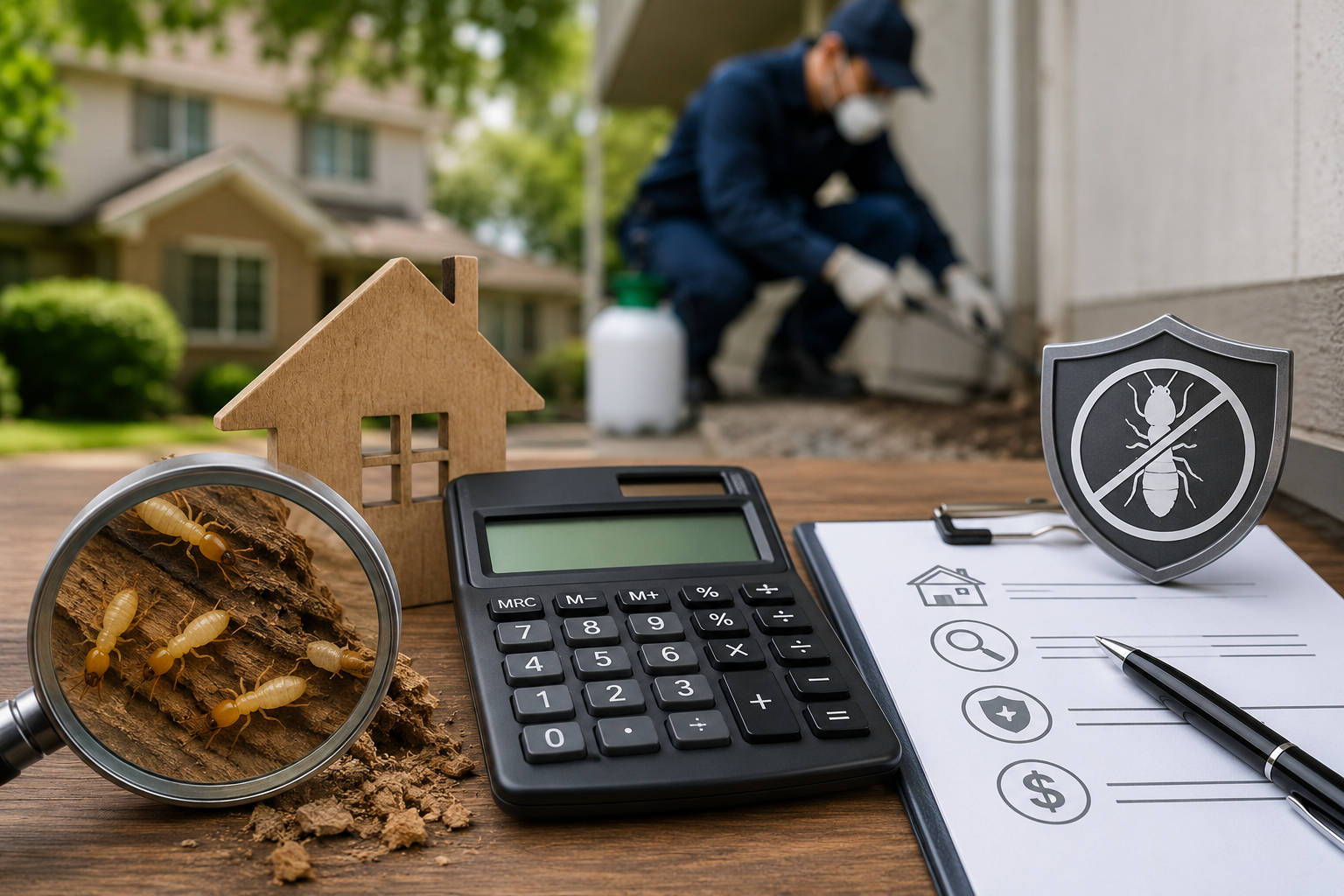
You have booked a termite inspection and now you are wondering what you have actually signed up for. Will they drill into walls? Do you need to move furniture? How long does the whole thing take?
A termite inspection is less invasive than most people expect. It is mainly a careful visual survey, carried out in a specific order, using a handful of simple tools.
This guide walks through exactly what happens during a termite inspection in Toronto — what the inspector checks, what they are looking for, how long it takes, and what happens next depending on what they find.
What Is a Termite Inspection?
A termite inspection is a structured examination of a property to determine whether termites are present, where they are getting in, and how far activity has spread.
It is not a treatment and it is not a guess. The inspector is building a picture of the building's relationship with the soil around it, because that is where subterranean termites live.
In Ontario there is one termite species that matters: the eastern subterranean termite, Reticulitermes flavipes. It nests underground, needs constant moisture, and reaches wood through the ground rather than by flying to it.
That single fact shapes the entire inspection. An inspector spends most of their time at the point where soil meets structure, not scanning your ceilings.
Structural extermination in Ontario requires a licensed exterminator under the province's Pesticides Act. Ask to confirm licensing before booking — it is a reasonable question and any legitimate company will answer it directly.
How Long Does a Termite Inspection Take?
Most residential termite inspections in Toronto take between 45 minutes and two hours.
A modest semi-detached home with an accessible unfinished basement sits at the shorter end. A large detached property with a crawl space, a finished basement and heavy landscaping takes considerably longer.
Access is the biggest variable. If the inspector has to work around stored boxes, furniture pushed against basement walls, or a crawl space hatch buried under storage, the visit stretches out.
How to Prepare for a Termite Inspection
You do not need to do much, but a few things make the inspection faster and more thorough.
- Clear access to basement and crawl space walls. Pull stored boxes, bins and furniture eighteen inches away from the perimeter walls so the inspector can see the base of every wall.
- Unlock the garage, shed and crawl space hatch. These are common entry points and they need to be checked.
- Clear the exterior perimeter. Move planters, firewood stacks and stored materials away from the foundation. Firewood against a wall is a classic termite bridge.
- Do not clean up evidence. If you have found mud tubes, damaged wood or dead insects, leave them exactly as they are. That is the most useful thing in the house.
- Write down what you have seen and when. Dates matter. "Winged insects on the basement window in early May" tells an inspector far more than "I saw some bugs."
If you have already found something and are not sure what it is, our guide to identifying termite mud tubes will help you describe it accurately when you call.
What the Inspector Actually Checks
The inspection follows a route rather than wandering. Most technicians work from the outside in, then from the lowest point of the building upward.
The exterior and foundation
This is where the inspection starts and where most evidence turns up. The inspector walks the full perimeter, examining the foundation wall from grade level upward.
They are looking for mud tubes running from soil to siding, cracks and gaps in the foundation, and any place where wood touches the ground directly.
Porch supports, deck posts, fence posts against the house, exterior steps and garage slabs all get individual attention. So do downspouts and hose bibs, because persistently damp soil is what attracts a colony in the first place.
The basement and crawl space
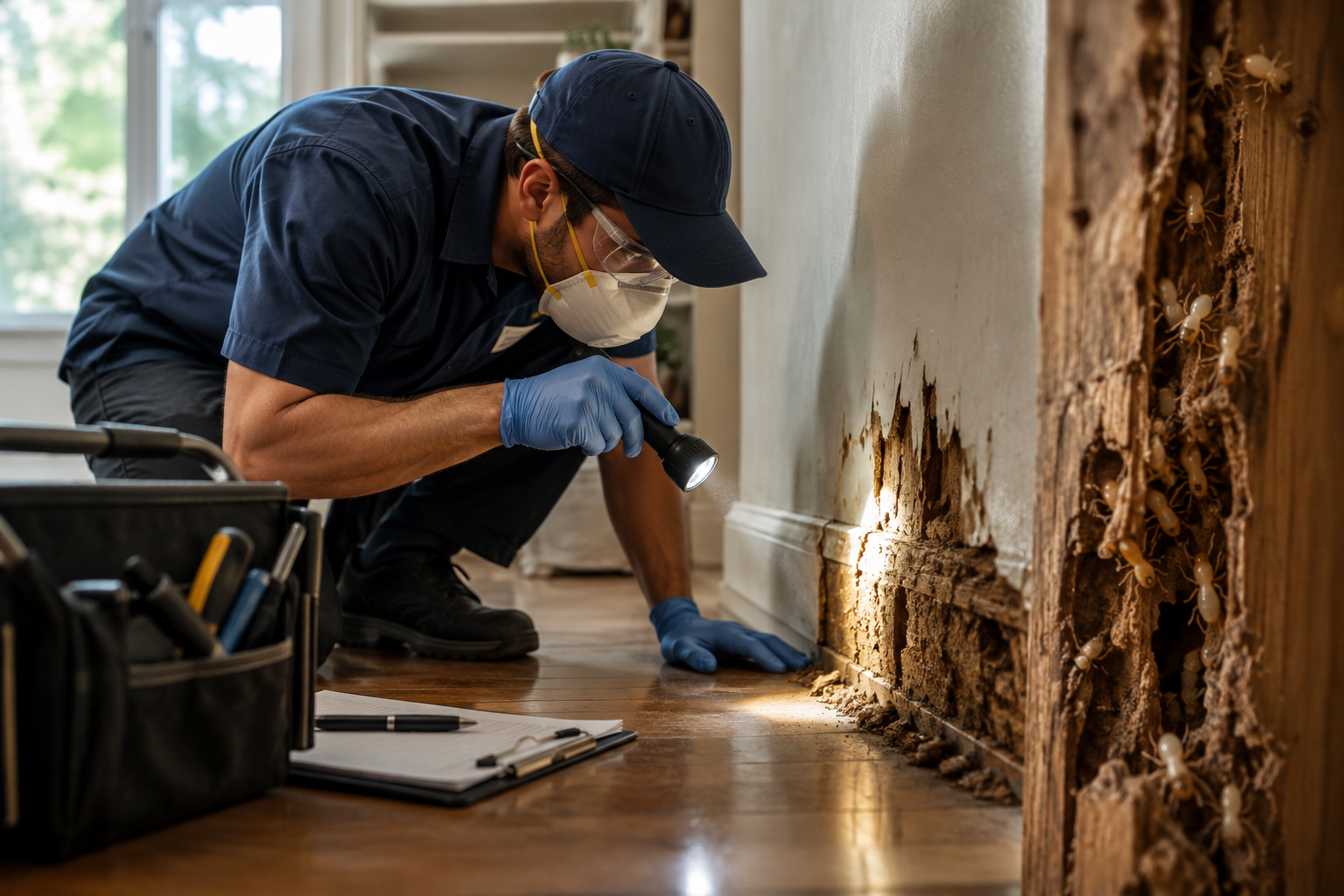
Inside, the lowest level takes the most time. The inspector works along the base of every exterior wall with a flashlight, checking for tubes on concrete, block and stone.
Sill plates — the horizontal timber sitting on top of the foundation wall — get close attention, because they are usually the first structural wood a colony reaches.
Floor joists, the underside of the subfloor, support posts and the area around plumbing penetrations are all checked. In crawl spaces this means the inspector going in on their back with a light.
Older Toronto homes with rubble or stone foundations take longer here. The irregular surface hides tubes far better than smooth poured concrete does.
Structural wood
Wood is checked by sounding and probing rather than by looking alone. The inspector taps timber with the handle of a screwdriver and listens.
Sound wood gives a solid, dull knock. Wood hollowed out by termites gives a distinctly papery, empty sound, and an experienced inspector hears the difference immediately.
Where a hollow section is found, they probe it. A screwdriver pushed into damaged wood will sink in with almost no resistance, revealing galleries packed with soil.
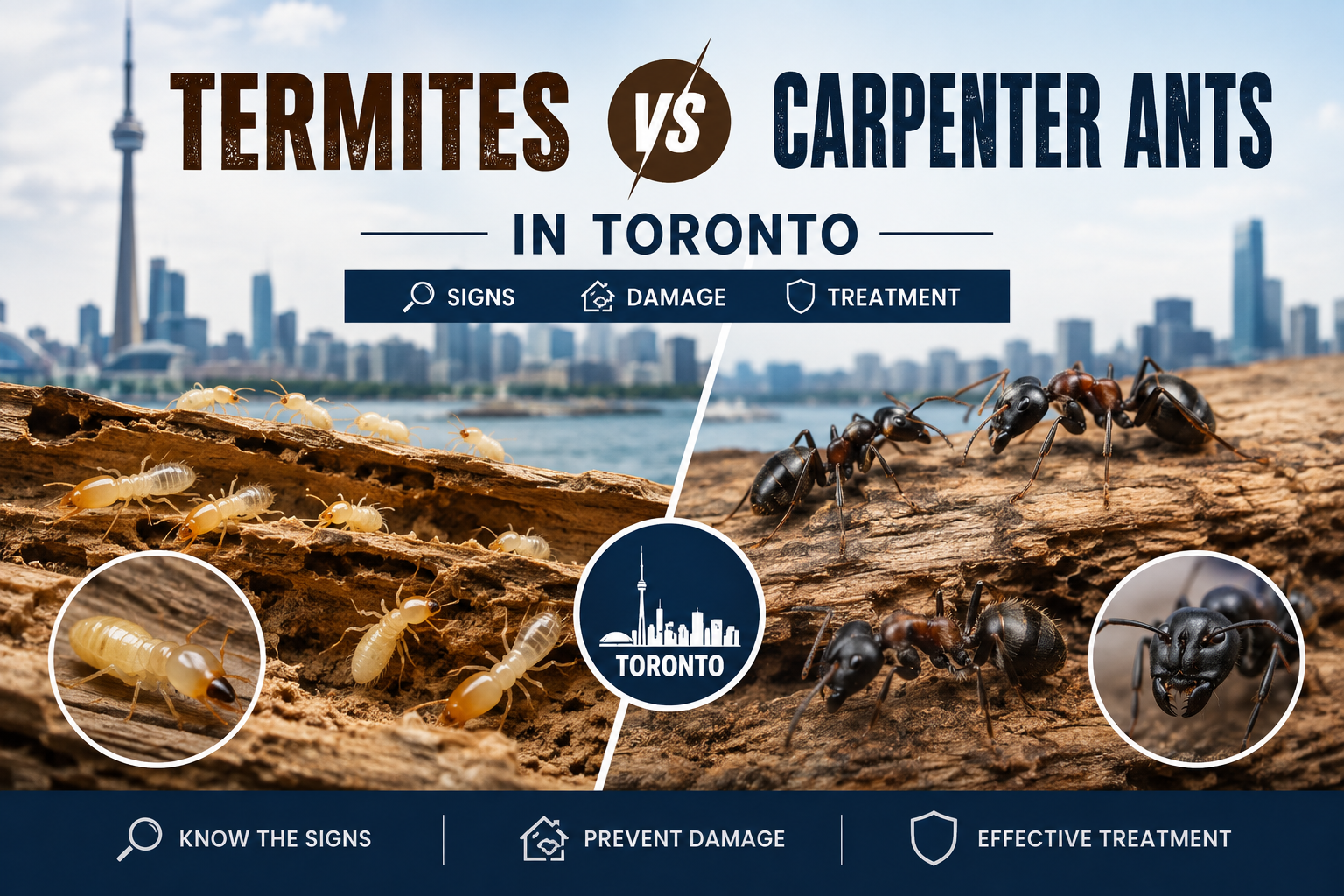
Termite galleries look different from carpenter ant damage, which is why identification matters at this stage. If you want the distinction explained properly, the difference between termite and carpenter ant damage covers it in detail.
Moisture and conducive conditions
A good inspection records not only what is happening now but what makes the property attractive going forward.
The inspector notes leaking pipes, poor drainage, downspouts discharging against the foundation, grading that slopes toward the house, and any standing damp in the basement.
They also record wood-to-soil contact anywhere on the property. These conducive conditions appear in the report because fixing them is often the difference between a one-time problem and a recurring one.
Living areas
Upper floors get a lighter but not skipped check. The inspector looks at baseboards, window and door frames, and any wood that sits near a bathroom or kitchen where moisture accumulates.
Common indoor signs include paint that looks blistered or bubbled, floors that feel spongy underfoot, and doors or windows that have started sticking without an obvious reason.
Window sills also get checked for discarded wings, which swarmers shed after flying. If you have found winged insects indoors, it is worth knowing how to tell termite swarmers apart from flying ants before the inspection.
The Tools an Inspector Uses
Termite inspection equipment is deliberately simple. The core toolkit is a bright flashlight, a screwdriver or probe, and a ladder.
A moisture meter is used to identify damp areas in walls and timber, since elevated moisture readings often point to where activity is most likely.
Some companies also use a borescope, a small camera on a flexible cable that can be fed into a wall cavity through a tiny hole. This is used sparingly, usually only when there is a specific reason to look inside a particular wall.
Nothing in a standard inspection causes meaningful damage to your home. If a company proposes opening walls, that is a separate conversation and should be agreed with you first.
What Happens If Termites Are Found
Finding activity does not end the inspection. It changes what the inspector is doing for the rest of the visit.
The next task is mapping the extent. The inspector traces tubes back toward their source, checks adjacent structural members, and works out how much of the building is involved.
You should receive a written report covering what was found, where, the apparent extent of activity, the conducive conditions on the property, and a recommended treatment approach.
Treatment is then quoted based on that picture. A localised problem caught early may only need a targeted treatment, while established activity across a foundation usually calls for a full perimeter approach.
Those two scenarios sit at very different price points, which is why an inspection has to come before any quote. Our breakdown of what termite treatment costs in Toronto explains how the methods are priced and what changes the number.
Ask the inspector to walk you through the findings on site, not just in an emailed PDF. Seeing the mud tube on your own sill plate makes the recommendation far easier to understand.
What Happens If Nothing Is Found
A clear inspection is a genuinely useful result, and it should still come with a report.
That report documents what was checked, confirms no activity was observed, and lists the conducive conditions found on the property — the drainage issue, the firewood stack, the deck post set into soil.
Those recommendations are the value of a clear inspection. Removing wood-to-soil contact and fixing drainage genuinely reduces the risk of a future problem.
One honest limitation worth understanding: an inspection reports on what is visible and accessible. Activity concealed behind finished basement walls or beneath slab flooring can escape a visual survey, which is why re-inspection matters in higher-risk areas.
How Much Does a Termite Inspection Cost in Toronto?
A termite inspection in the GTA typically costs between $75 and $250. Many companies credit or waive that fee if you go ahead with treatment at the same visit.
Ask about this before booking, because policies differ and it can meaningfully change what you pay overall.
Pre-purchase inspections are sometimes priced differently from standard homeowner inspections, since they usually come with a more formal written report for the transaction.
When Should You Book a Termite Inspection?
There are five situations where an inspection is clearly worth booking.
- You have found evidence. Mud tubes, hollow-sounding wood, discarded wings or unexplained winged insects indoors all warrant a professional look.
- You are buying a home. Termite activity is material information in an Ontario property transaction, and it is far cheaper to find before closing than after.
- It is spring. Swarming in Ontario runs roughly March to May, and it is when activity is most visible.
- A neighbour has had termites. Colonies do not respect property lines, and activity on an adjacent lot is a legitimate reason to check your own.
- You own an older home that has never been checked. Pre-1960 construction, rubble foundations and unfinished basements are common across older Toronto neighbourhoods, and they suit termites well.
In areas with known activity, an inspection every one to two years is a reasonable rhythm. Elsewhere, inspect when there is a reason to.
If you are unsure whether what you are seeing justifies a call, the signs of a termite infestation is a good place to start before booking a professional termite inspection.
Can You Inspect for Termites Yourself?
You can carry out a useful preliminary check, and it is worth doing. Take a flashlight, walk the perimeter of your foundation, and look for mud tubes running from soil to structure.
In the basement, work along the base of every exterior wall and tap any accessible structural wood with a screwdriver handle, listening for a hollow sound.
What a homeowner check cannot do is judge extent. Finding one mud tube tells you termites are present; it tells you nothing about how far the colony has spread through the structure.
That distinction is the entire reason professional inspection exists. The treatment decision depends on scope, and scope requires knowing where else to look.
Booking an Inspection in Toronto
A termite inspection is straightforward, non-destructive, and usually done within a couple of hours. You get a clear answer about whether termites are present, and a written record either way.
The part that matters most is timing. Activity found early is a contained problem; activity found after damage reaches structural wood is a repair job as well as a pest control one.
Nomore Pest carries out termite inspections across Toronto and the GTA. We check the foundation, basement, crawl space and structural wood, explain what we find on site, and give you a written report and a clear quote before any work begins.
If you have seen mud tubes, hollow wood or winged insects around your property, book a termite inspection with Nomore Pest and find out exactly what you are dealing with.
Frequently asked questions
How long does a termite inspection take?
Most residential termite inspections in Toronto take between 45 minutes and two hours. A smaller home with an accessible unfinished basement is quicker, while a large property with a crawl space, finished basement or heavy landscaping takes longer.
Do termite inspectors drill holes in walls?
A standard inspection is non-destructive. Inspectors work visually, tap wood to listen for hollow sections, and probe damaged timber. A borescope may be used through a very small hole in specific cases, but anything more invasive should be agreed with you first.
How should I prepare for a termite inspection?
Clear boxes and furniture about eighteen inches away from basement and crawl space walls, unlock the garage, shed and crawl space hatch, and move planters and firewood away from the foundation. Most importantly, leave any mud tubes or damaged wood exactly as you found them.
How much does a termite inspection cost in Toronto?
A termite inspection in the GTA typically costs between $75 and $250. Many companies credit or waive the fee if you proceed with treatment at the same visit, so it is worth asking about that policy before you book.
What do termite inspectors look for?
Mud tubes running from soil to structure, hollow-sounding or damaged structural wood, discarded swarmer wings, and any point where wood contacts soil. They also record moisture problems and drainage issues that make a property attractive to termites.
How often should you get a termite inspection?
In areas with known termite activity, every one to two years is reasonable. Elsewhere, book an inspection when there is a specific reason: evidence found, a home purchase, spring swarming, or a neighbour with a confirmed infestation.
Can I inspect my own home for termites?
You can do a useful preliminary check with a flashlight and a screwdriver, looking for mud tubes along the foundation and tapping accessible structural wood. What a homeowner check cannot establish is how far activity has spread, and that is what determines the treatment.
What happens if the inspection finds nothing?
You still receive a written report documenting what was checked and listing conducive conditions found on the property, such as drainage problems or wood-to-soil contact. Fixing those is what reduces the risk of a future infestation.
Got a pest problem? Don't wait.
Book a professional inspection across Toronto & the GTA and get peace of mind, backed by a licensed & insured local team.
Or email us at info@nomorepest.ca · Toronto & the GTA