Every spring and summer across Toronto and the GTA, homeowners notice the same unsettling sight: a cloud of small winged insects around a window, door or porch light. The big question is always the same — are these flying ants, or are they termites?
It is more than an academic question. Flying ants are mostly a nuisance. Termites can quietly destroy the structure of your home. Telling them apart quickly can be the difference between a shrug and a costly repair bill. Here is exactly how to identify what you are looking at.
Quick comparison at a glance
| Feature | Flying Ant | Termite (swarmer) |
|---|---|---|
| Waist | Pinched, hourglass shape | Straight, no visible waist |
| Antennae | Bent or "elbowed" | Straight and bead-like |
| Wings | Front wings longer than back | Two pairs of equal length |
| Wing length | Roughly proportional to body | Much longer than the body |
| Colour | Black, brown or reddish | Usually black or brown |
| Home damage | Minimal (carpenter ants nest in wood) | Severe — they eat the wood |
1. Body shape: pinched waist vs. straight body
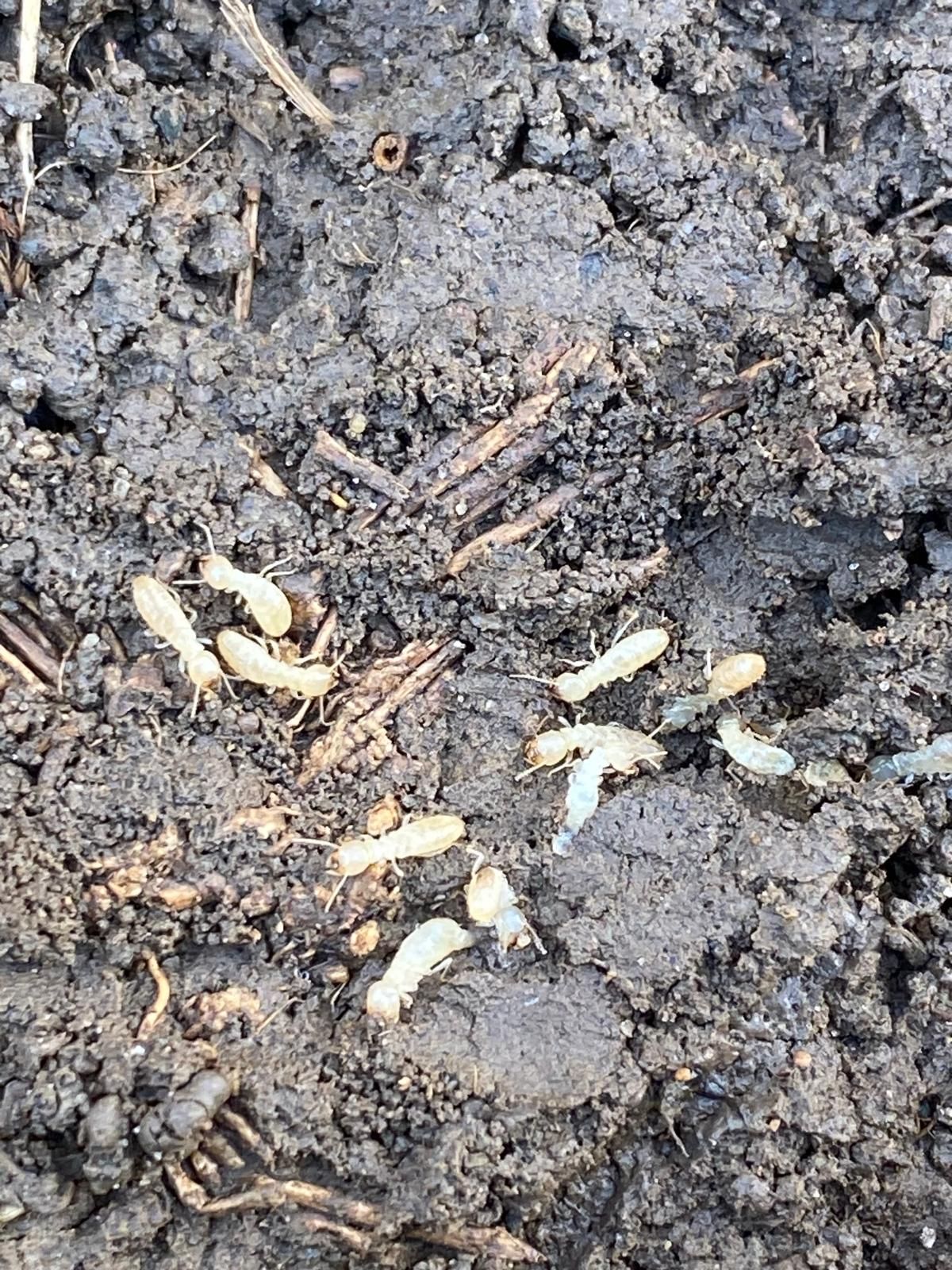
This is the fastest way to tell them apart. Ants have a distinct pinched, hourglass waist between the thorax and the abdomen, so the body looks like three clearly separated segments. Termites have a straight, cylindrical body with no visible waist — the thorax and abdomen blend into one uniform tube shape. If you can get close enough or zoom in on a photo, the waist alone usually settles it.
2. Antennae: elbowed vs. straight
Ants have bent, "elbowed" antennae that clearly angle partway along their length. Termites have straight antennae made up of tiny bead-like segments, with no obvious bend.
3. Wings: unequal vs. equal
Both insects grow two pairs of wings during swarming season, but they are shaped very differently. An ant's front wings are noticeably longer than its back wings. A termite's two pairs of wings are all the same length, and they are much longer in proportion to the body than an ant's. There is a bonus clue here: termites shed their wings almost as soon as they land, so little piles of equal-sized translucent wings on window sills or floors point to termites, not ants.
4. Size and colour
Termites are usually slightly larger than most ants, generally ranging from about 1/4 inch to 1 inch, and are typically black or brown. Ants vary more widely, from roughly 1/8 inch up to about 1 inch. Size alone is not definitive, but combined with the waist, antennae and wings, it completes the picture.

The difference that really matters: damage
Here is why getting the ID right is so important. Flying ants are largely a nuisance — they invade homes looking for food, and while some species like carpenter ants do tunnel into wood to nest, they do not actually eat it. Carpenter ant damage is real but generally slower and less severe than termite damage.
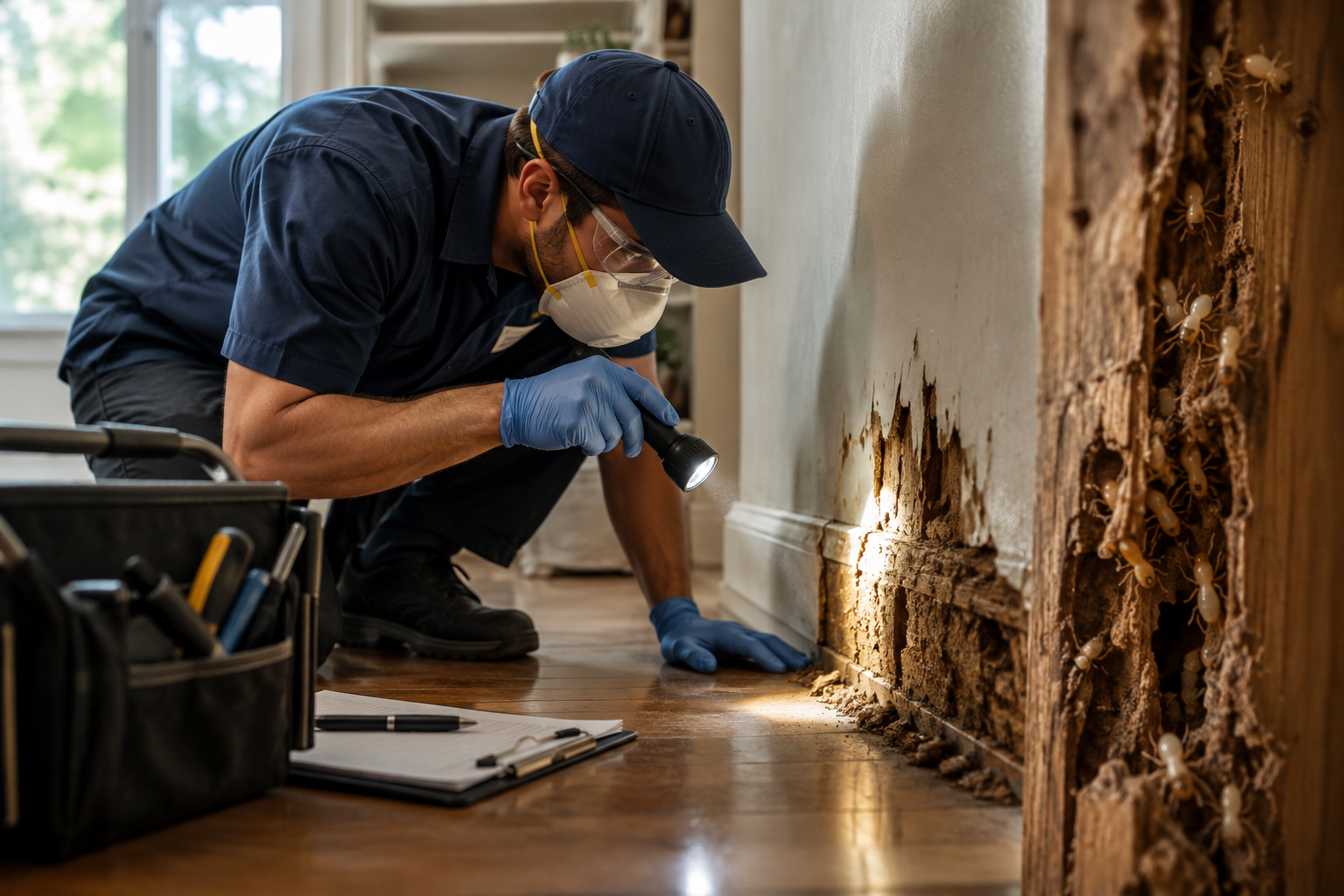
Termites are known as the silent destroyers because they feed on wood as their primary food source. Left untreated, they can severely damage structural beams, subflooring, furniture and even the foundation of a home — often before anyone notices. A mature colony works around the clock, out of sight, which is what makes it so dangerous. So while spotting flying ants may just mean sealing up some entry points, spotting termites is a signal to act fast.
Why this matters for Toronto & GTA homeowners
Termites are more common in Southern Ontario than most people expect, and swarms tend to appear on warm, humid days in spring and early summer — the same conditions that bring out flying ants. Because the two look so similar to the untrained eye, it is easy to dismiss a termite swarm as "just ants" and miss the early warning. If you find winged insects indoors, especially near a foundation, basement window or crawl space, take a closer look rather than reaching for the vacuum — the swarm you see is often just the visible tip of a much larger, hidden problem. For a full rundown of the other red flags, see our guide to the signs of a termite infestation.
Not sure what you're dealing with? Let a pro confirm it
If you have found winged insects, discarded wings or unexplained wood damage and you are not 100% certain what they are, the safest move is a professional inspection. A trained technician can confirm the species, tell you whether the activity is active, and — if it is termites — map how far the colony has spread and treat it before it does more damage. Learn more on our termite removal & treatment services page.
Frequently asked questions
Do flying ants turn into termites?
No. Flying ants and termites are completely different insects. Winged ants are reproductive ants and winged termites are reproductive termites; one never becomes the other.
Are flying ants dangerous to my house?
Most flying ants are a nuisance rather than a structural threat. Carpenter ants are the exception — they excavate wood to nest, which can cause damage over time, though usually less severe than termite damage.
When do termites swarm in Ontario?
Termite swarms in the GTA typically occur in spring and early summer, often on warm, humid days. Seeing a swarm near your home is one of the clearest signs of a nearby colony.
I found small wings on my window sill — ants or termites?
Equal-length translucent wings shed in a pile strongly suggest termites, since termites drop all four same-sized wings shortly after swarming. Ant wings are unequal in length. A quick professional inspection can confirm it.
Got a pest problem? Don't wait.
Book a professional inspection across Toronto & the GTA and get peace of mind, backed by a licensed & insured local team.
Or email us at info@nomorepest.ca · Toronto & the GTA