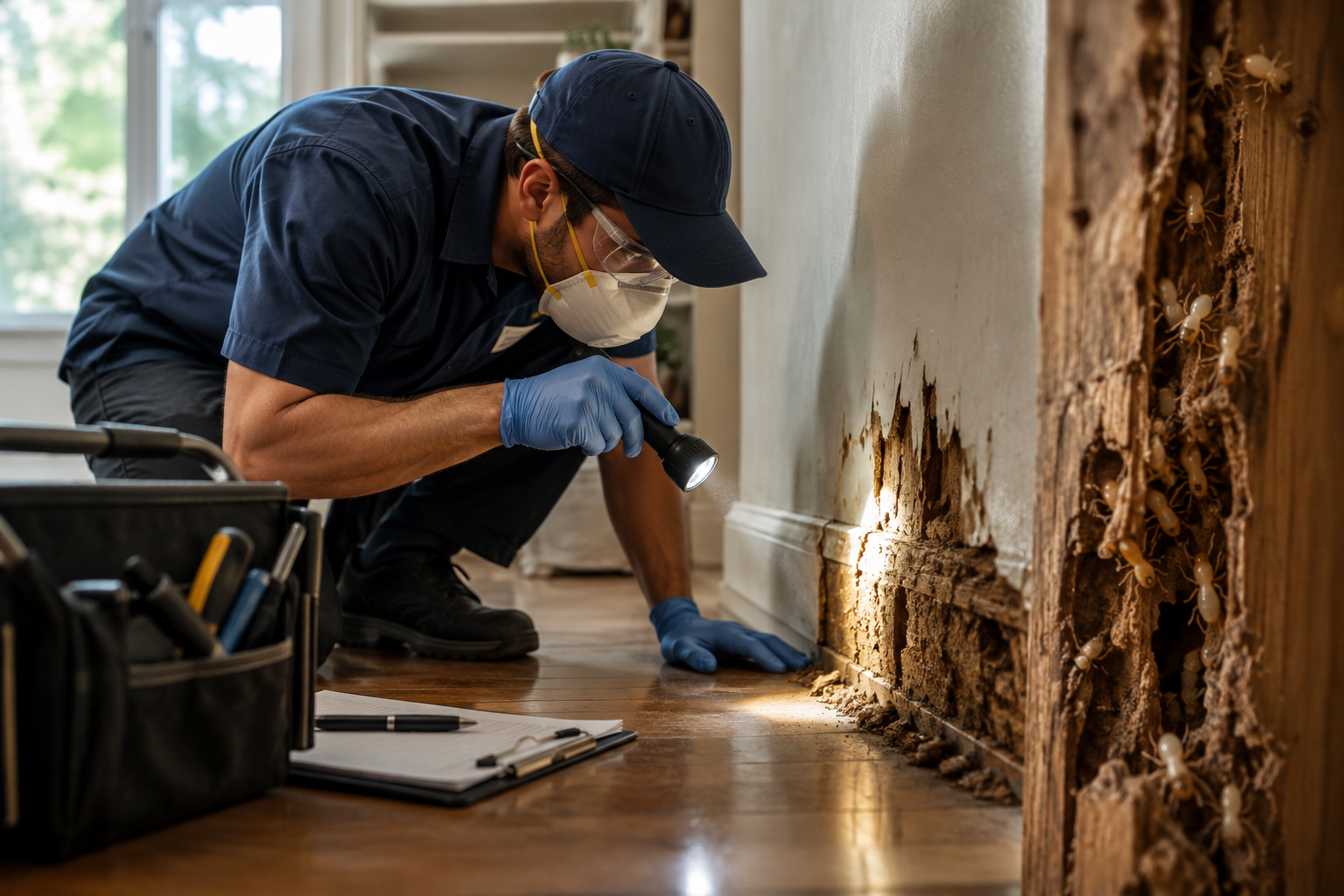
Termites are often called the "silent destroyers" — and for good reason. A single colony can quietly feed on the wood inside your walls, floors and foundation for months before you ever notice a problem. By the time the damage is visible, repairs can run into the thousands of dollars, and most property insurance policies in Ontario do not cover termite damage. That makes early detection your best line of defence.
Late spring through summer is peak termite season across Toronto and the GTA, so now is the perfect time to know what to look for. Here are the seven most common warning signs of a termite infestation — and what to do the moment you spot one.

1. Visible damage to wooden structures
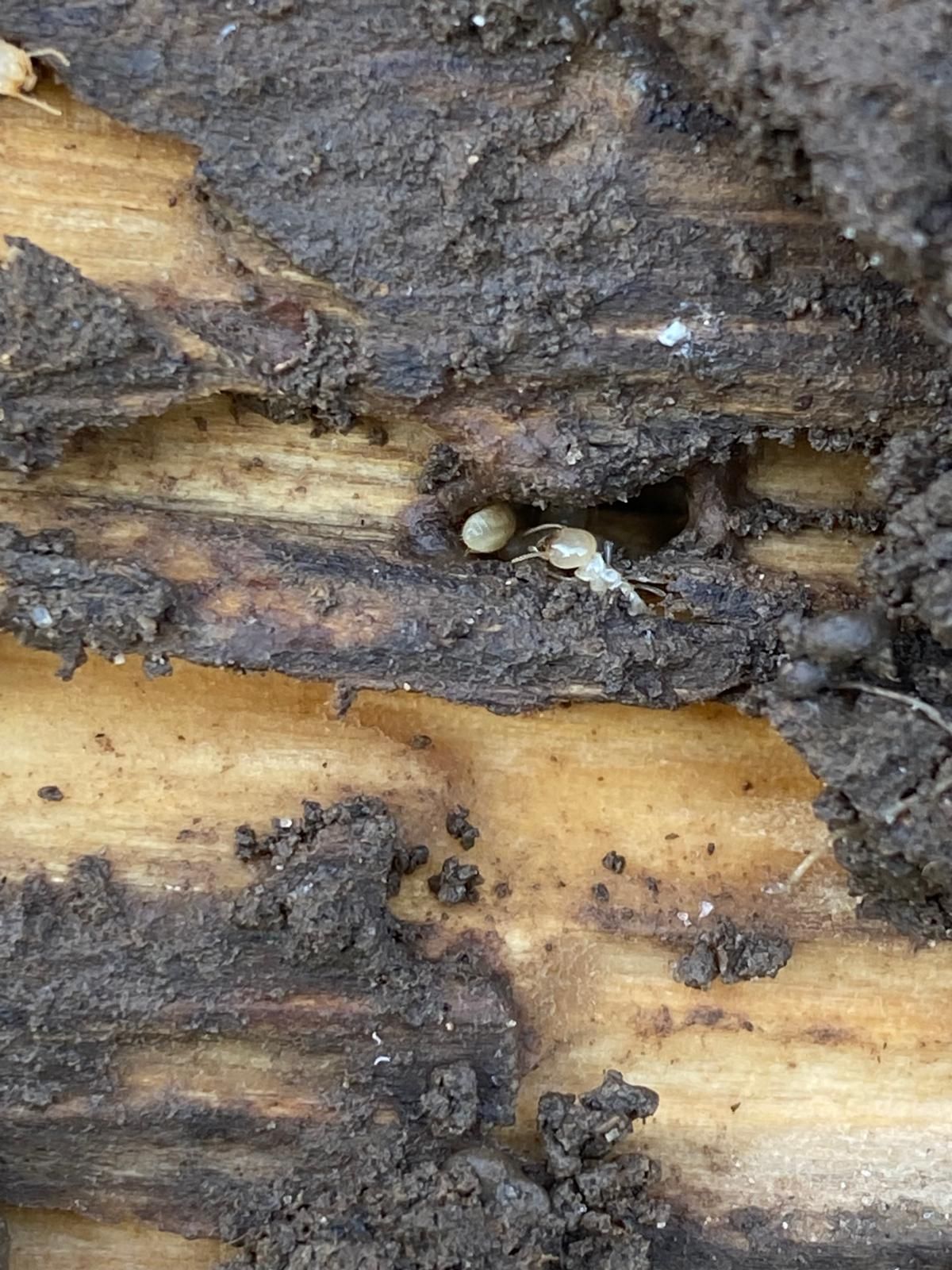
Termites feed on wood from the inside out, so a surface can look perfectly fine while the interior is being eaten away. Look for hollowed-out wood, thin winding tunnels, and chewed or ragged edges on beams, joists, door frames, baseboards and window sills.
A quick test: tap on wooden surfaces with the handle of a screwdriver. If the wood sounds hollow or feels soft, papery or crumbly, termites may have been at work beneath the surface. Blistered flooring, sagging areas and paint that looks like it is covering water damage are also red flags.
2. Mud tubes and tunnels
Subterranean termites — the type found throughout Ontario — build mud tubes to travel safely between their underground nest and a food source. These pencil-width tunnels are typically brown or greyish and are most often found running along foundation walls, in basements, in crawl spaces and around any wood that touches the soil. Spotting even one active mud tube is a strong sign that a colony is nearby and working.
3. Swarmers (flying termites)
Once a colony matures, it produces swarmers — winged reproductive termites whose job is to fly off, pair up and start new colonies. In the GTA, swarms usually appear in spring and early summer, often on warm, humid days, clustered near windows, doors and light sources. A swarm indoors is one of the clearest signs that an active colony is on or very near your property. (Not sure if they're termites or flying ants? Our guide on flying ants vs. termites shows you how to tell them apart.)
4. Discarded wings
Swarmers shed their wings almost immediately after they land and mate. Finding small piles of translucent, equal-sized wings on window sills, along baseboards or near light fixtures is a telltale sign that termites have swarmed. Termite wings are all the same length — a detail that helps distinguish them from flying ants.
5. Frass (termite droppings)
As some termites tunnel through wood, they push their droppings — called frass — out through tiny holes. Frass looks like small piles of what could be mistaken for sawdust or coffee grounds, and it tends to collect directly beneath the infested wood. If you keep finding little mounds of "sawdust" you can't explain, take a closer look.
6. Hollow or hard-to-open wood
Ongoing termite activity introduces moisture into wood, which can make it warp and swell. Doors that suddenly stick, windows that are hard to open, and floors that feel spongy or uneven can all point to hidden termite damage rather than simple seasonal humidity.
7. Bubbling or peeling paint
Moisture from termite activity trapped behind paint or wallpaper can cause it to bubble, blister or peel — an effect that is easy to mistake for water damage. If there is no obvious plumbing or roof issue to explain it, termites may be the real culprit.
Why Toronto and GTA homes are at risk
Many homeowners assume termites are only a problem in warmer climates, but that is a myth. Eastern subterranean termites are established in pockets across Toronto, Mississauga, Vaughan, Markham and other parts of Southern Ontario. Older neighbourhoods, homes with wood-to-soil contact, damp basements and properties near mature trees are especially vulnerable. Because the colony lives underground and feeds out of sight, an infestation can grow for a long time before any signs appear — which is exactly why routine inspections matter.
What to do if you spot the signs
If you notice mud tubes, swarmers, discarded wings, frass or suspicious wood damage, don't wait — and don't rely on store-bought sprays, which only reach the few insects you can see and leave the colony intact. The reliable approach is a professional inspection followed by a targeted treatment plan:
- Book a professional termite inspection to confirm whether the activity is active and map how far it has spread.
- Get a treatment plan tailored to your property that targets the entire colony, not just the surface.
- Set up ongoing monitoring so future activity is caught early, before it becomes another expensive repair.
You can learn more about our approach on our termite removal & treatment services page, or see the bigger picture in our complete guide to pest control in Toronto.
Frequently asked questions
How quickly do termites damage a home?
Colonies can number in the hundreds of thousands and feed continuously, so meaningful structural damage usually develops over months to a few years. Early detection and regular inspections are the best protection.
Are termites active in winter in Ontario?
Subterranean termites slow down in cold weather but don't disappear. They move deeper underground and stay active around heated foundations and basements, then become far more visible when they swarm in spring and summer.
Can I get rid of termites myself?
DIY products usually only kill the termites you can see and rarely reach the underground colony, so the infestation continues. Professional treatment that targets the whole colony is the dependable way to eliminate them.
Does home insurance cover termite damage?
In most cases, no. Termite damage is generally treated as preventable and is typically excluded from Ontario property insurance policies, which is another reason early treatment pays off.
Got a pest problem? Don't wait.
Book a professional inspection across Toronto & the GTA and get peace of mind, backed by a licensed & insured local team.
Or email us at info@nomorepest.ca · Toronto & the GTA