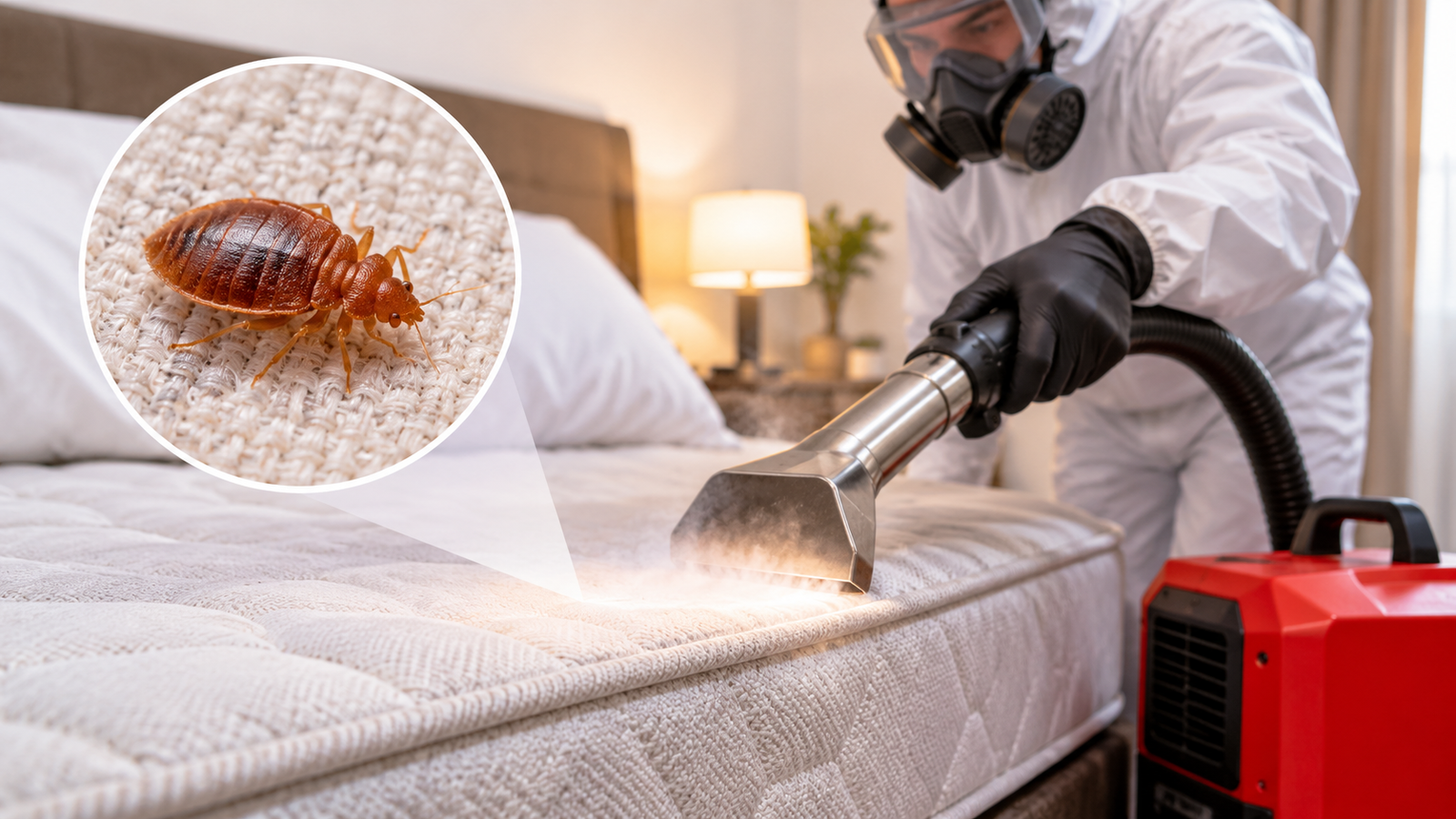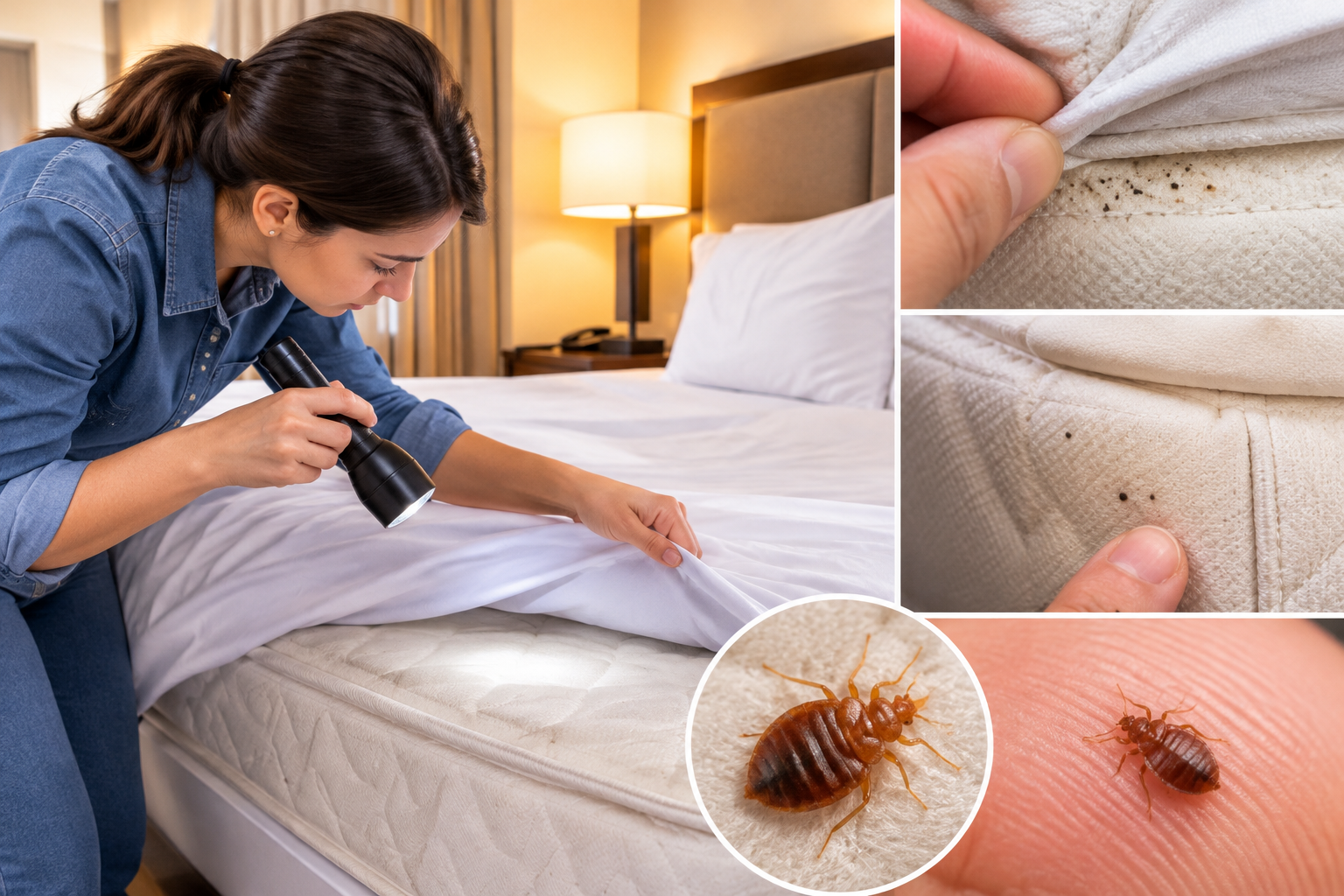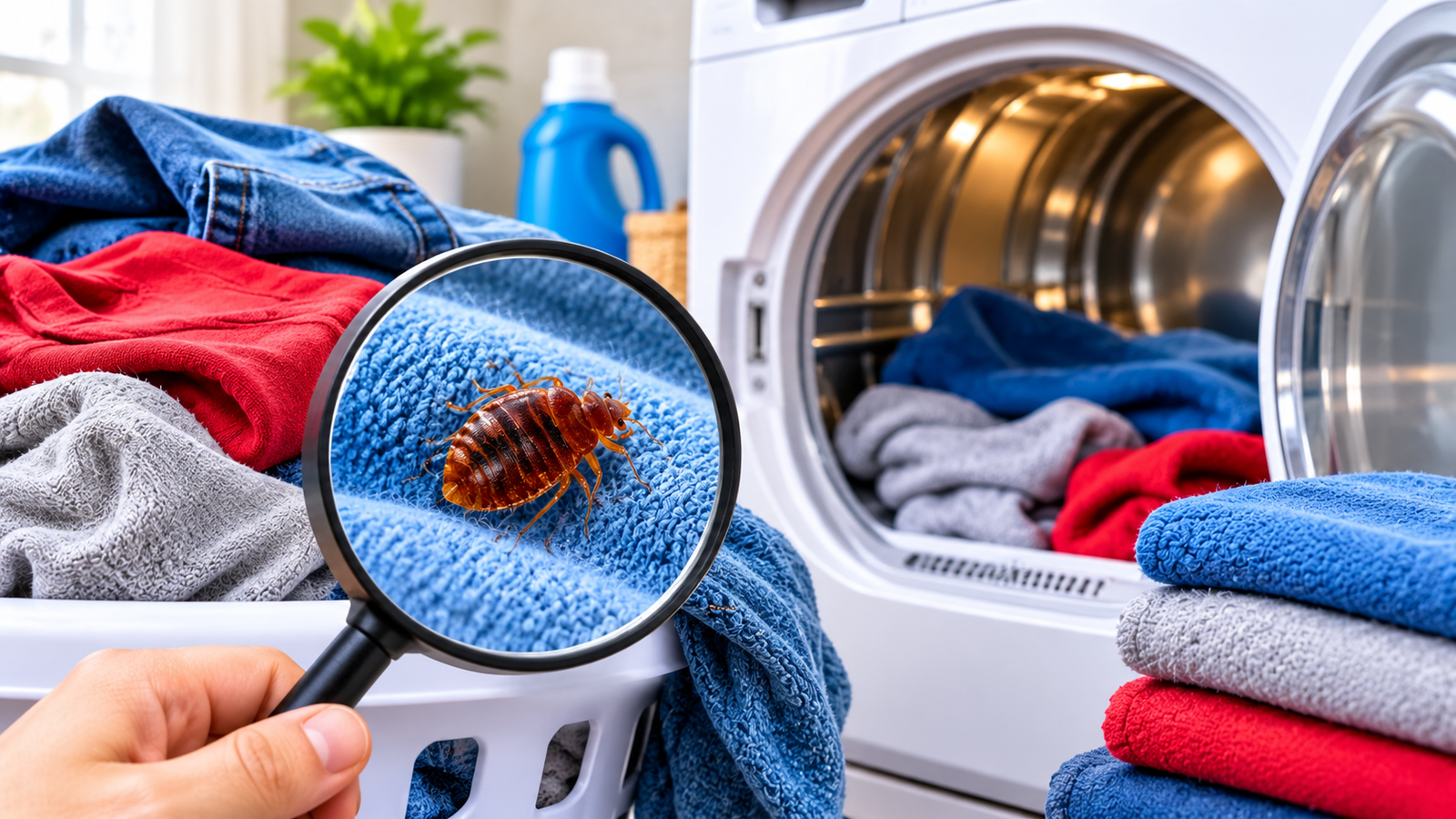
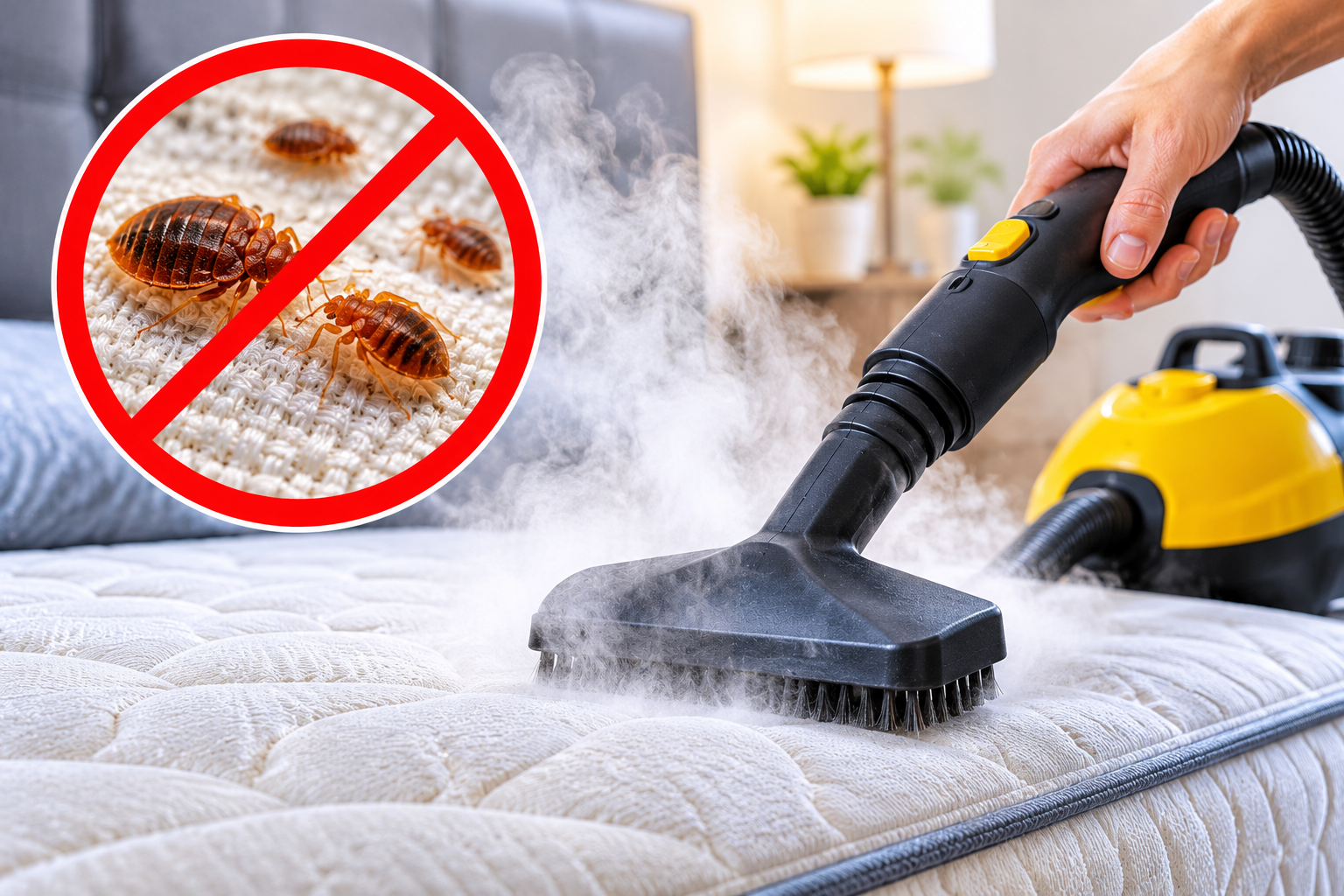
A good steamer is one of the most useful bed bug tools you can use at home. It kills bed bugs and their eggs on contact, without spraying insecticide on your mattress. Vacuuming pulls bugs, eggs and shed skins out of seams and cracks. Used together and used correctly, they can bring numbers down fast. Used carelessly, they can miss most of the bugs or even spread them.
This guide explains how steam and vacuums work against bed bugs, what kind of steamer to use, the right technique, and where these tools fall short.
Quick Answer: Does Steam Kill Bed Bugs?
- Yes, on contact. Health Canada notes that bed bugs die at 50°C, and steamers generally put out steam at 100°C or more.
- It kills eggs too, if the steam reaches them.
- It only works where it touches. Bugs deep in walls, furniture joints or thick padding can survive.
- Vacuuming helps by removing bugs and eggs, but it doesn't kill them, and the vacuum has to be emptied carefully.
- Neither one alone usually ends an infestation, but both are valuable parts of a treatment plan.
How Steam Kills Bed Bugs
Bed bugs and their eggs can't survive high heat. Health Canada notes that bed bugs die at 50°C, and that steamers generally emit steam at 100°C or higher. When hot steam hits a bug or egg directly, it kills it almost instantly.
That makes steam ideal for the places bed bugs hide most: mattress seams, piping and tufts, box spring edges, upholstered furniture, bed frame joints and baseboards. It's especially useful for items that can't go in a dryer.
What Kind of Steamer Works Best?
| Feature | Why it matters |
| High temperature at the tip | The steam needs to stay well above 50°C when it reaches the fabric. Health Canada notes steamers generally emit steam at 100°C or more. |
| Dry or low-vapour steam | Health Canada recommends dry or low-vapour steamers because they leave less moisture behind, reducing the risk of mould. |
| Gentle airflow, with a diffuser | The US EPA advises against forceful airflow, which can blow bed bugs out of cracks instead of killing them. A diffuser spreads the steam. |
| Detail and upholstery attachments | Small nozzles reach into seams, tufts and corners. |
| Canister style | Canister steamers usually hold heat better and run longer than small handheld ones. |
Garment steamers and carpet cleaners that spray hot water are not the same. Hot water extraction leaves fabrics wet and often doesn't stay hot enough at the surface.
How to Steam for Bed Bugs
- Prepare the room. Strip the bed, bag the bedding in the room, and wash it hot and dry it on high.
- Let the steamer heat up fully before you start.
- Start with the mattress. Work slowly along every seam, the piping, tufts, buttons and label. Then the sides, top, bottom and corners.
- Move slowly. Health Canada says to move slowly so the heat penetrates deeper. Rushing leaves bugs and eggs alive below the surface.
- Do the box spring, including the edges, corners and the fabric on the underside.
- Do the bed frame and headboard, especially joints, screw holes and cracks.
- Move on to couches, chairs and baseboards near the bed.
- Don't soak anything. Fabrics should feel warm and slightly damp, not wet. Let everything dry fully, with a fan if needed.
- Vacuum after steaming. Health Canada recommends steaming first, then vacuuming, because steam flushes out surviving bugs.
Where not to steam
- Electrical outlets, power bars and electronics
- Fabrics that water or heat can damage, such as silk, some leather and certain synthetics. Test a hidden spot first
- Wood finishes that can blister or warp. Keep the nozzle moving
Does Vacuuming Kill Bed Bugs?
Vacuuming doesn't kill bed bugs, but it removes them. That's still very useful, because it pulls bugs, eggs, shed skins and fecal debris out of seams and cracks and reduces the population quickly. Health Canada recommends vacuuming daily while you're dealing with an infestation.
The catch is that the bugs are still alive inside the vacuum. If it isn't emptied properly, they can crawl back out or spread to other rooms.
Why vacuums miss eggs
Bed bug eggs are coated with a sticky substance that glues them to surfaces, according to Texas A&M AgriLife Extension. A quick pass with a vacuum often leaves them behind. Health Canada recommends using a stiff brush with a back-and-forth motion on mattresses to loosen them, and a crevice tool for seams and corners.
How to Vacuum for Bed Bugs
- Choose the right vacuum. Health Canada advises against handheld vacuums and models with cloth bags or fabric hoses, which can become infested. A HEPA-filter vacuum is a good choice, especially for anyone with allergies or asthma.
- Use a crevice tool on seams, piping, tufts, box spring corners, bed frame joints and baseboards.
- Brush first with a stiff brush to loosen eggs on mattresses.
- Cover the whole area: mattress, box spring, bed frame, baseboards, cushions, rugs, carpet edges, heating units, and the inside and underside of drawers and furniture.
Emptying the vacuum safely
Health Canada's guidance:
- Let the vacuum run for a moment afterward, then seal the bag inside a white plastic bag and put it in a garbage bin with a lid.
- Stuff a paper towel into the end of the hose and tape it shut.
- Wash attachments in hot water with detergent, and store the vacuum in a large sealed plastic bag.
- For bagless vacuums, empty the canister into a plastic bag, seal it and throw it out right away, then wash the canister in hot, soapy water.
In an apartment or condo, take the sealed bag straight to an outdoor bin rather than leaving it in a hallway or garbage chute room.
Steamer vs Vacuum: What Each Does
| Steamer | Vacuum |
| Kills bed bugs | Yes, on contact | No, removes them |
| Kills eggs | Yes, on contact | No; often misses eggs glued in place |
| Best for | Seams, furniture, items that can't be laundered | Removing bugs, eggs and debris; cleaning up after steaming |
| Main risk | Excess moisture and mould; blowing bugs around with strong airflow | Spreading live bugs if not emptied properly |
| Lasting effect | None | None |
Limits of Steaming and Vacuuming
- Contact only. Neither reaches bugs inside wall voids, outlets, behind baseboards or deep in thick furniture.
- Easy to miss spots. Bed bugs hide in tiny cracks, and one missed area can restart the infestation.
- No residual protection. Bugs that hatch or arrive after you've steamed aren't affected.
- Time and effort. Steaming a mattress properly is slow work, and it has to be repeated.
That's why steaming and vacuuming work best as part of a plan with laundering, mattress encasements, interceptor traps and professional treatment.
When to Call a Professional
- You're still finding live bugs or new bites after steaming and vacuuming
- Bed bugs have spread beyond the bed to furniture or other rooms
- You live in an apartment or condo with shared walls
- You can't safely steam some items or areas
How Nomore Pest Can Help
Our licensed technicians inspect the bed, furniture and room to find exactly where bed bugs are hiding, then use proven bio and chemical treatments that target every life stage, including eggs. Steaming and vacuuming you do at home can help between visits, and your preparation checklist will tell you how. A follow-up inspection is built into every plan.
We serve homes, apartments and businesses across Toronto, Mississauga, Vaughan, Scarborough, North York and Etobicoke.If steam and vacuuming haven't solved it, book a free bed bug inspection.
Conclusion
Steam kills bed bugs and eggs on contact, as long as it's hot, applied slowly and kept from soaking the fabric. Vacuuming removes bugs, eggs and debris but doesn't kill them, so the contents have to be sealed and thrown out right away. Steam first, then vacuum. Both are valuable, but neither reaches every hiding spot or prevents new bugs, so they work best alongside laundering, encasements, monitoring and professional treatment.
Need help with bed bugs? Call Nomore Pest at 800-461-1827 or 437-922-2705, or email info@nomorepest.ca for a free bed bug inspection anywhere in Toronto and the GTA.
Frequently asked questions
Does steam kill bed bugs instantly?
Yes, on direct contact. Health Canada notes bed bugs die at 50°C, and steamers generally emit steam at 100°C or more. The steam has to actually reach the bug or egg, so move slowly along seams and cracks.
Does steam kill bed bug eggs?
Yes, if the steam reaches them. Eggs are glued deep in seams and cracks, so move the nozzle slowly and work every seam, tuft and joint. Steam can't reach eggs inside walls or thick padding.
What is the best steamer for bed bugs?
Look for a canister steamer that reaches 100°C or more at the tip, produces dry or low-vapour steam, has gentle airflow with a diffuser, and comes with detail and upholstery attachments. Avoid hot-water carpet cleaners, which leave fabric wet.
Does vacuuming kill bed bugs?
No. Vacuuming removes bed bugs, eggs and shed skins, but they're still alive inside the vacuum. Seal the bag or canister contents in a plastic bag and put it in an outdoor bin right away.
Should I steam or vacuum first?
Steam first, then vacuum. Health Canada recommends this order because steam flushes out surviving bugs, which the vacuum can then pick up.
Can steaming a mattress cause mould?
It can if the mattress gets too wet. Use a dry or low-vapour steamer, don't soak the fabric, and let the mattress dry fully, with a fan if needed, before putting bedding back on.
Got a pest problem? Don't wait.
Book a professional inspection across Toronto & the GTA and get peace of mind, backed by a licensed & insured local team.
Or email us at info@nomorepest.ca · Toronto & the GTA