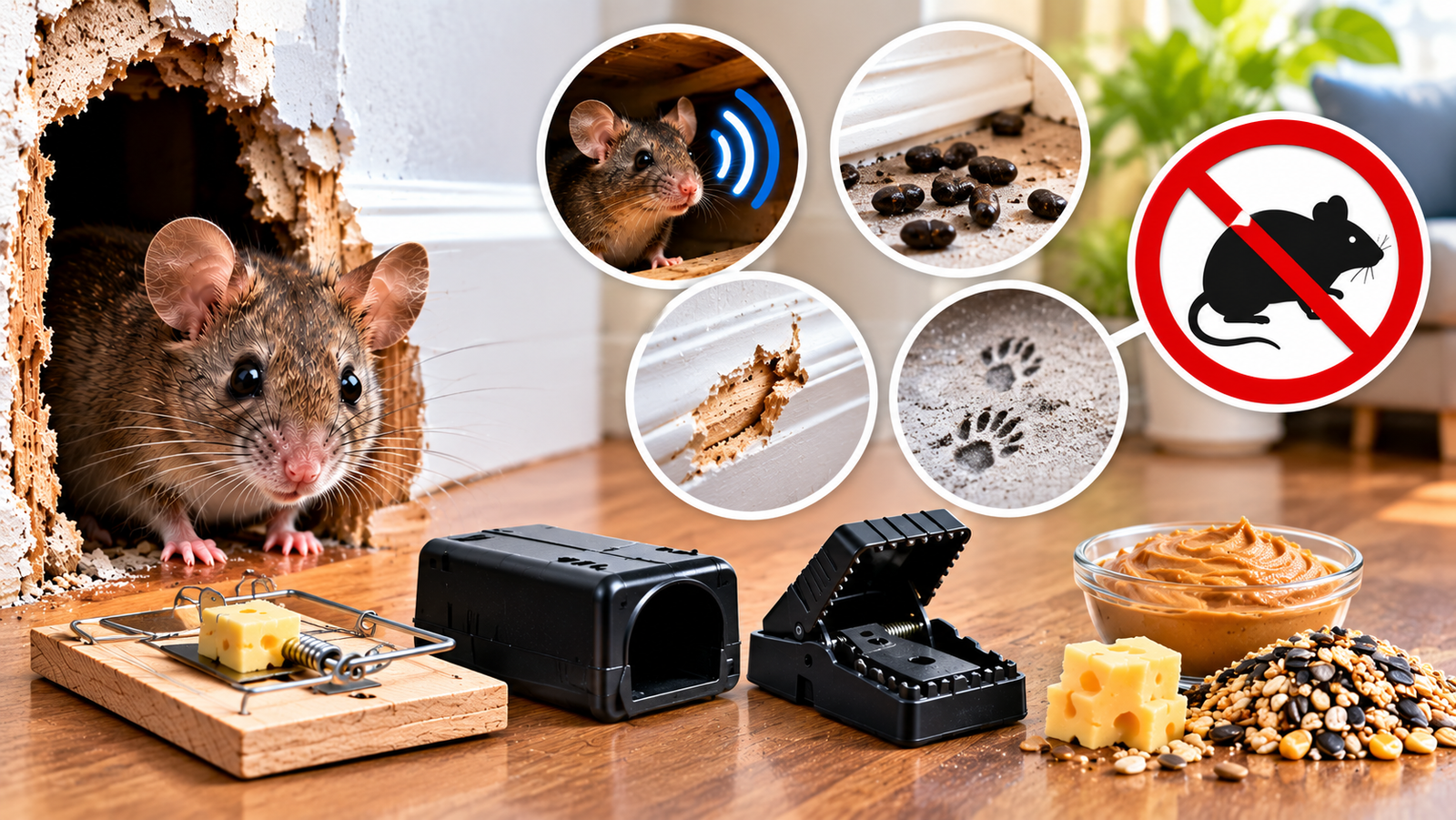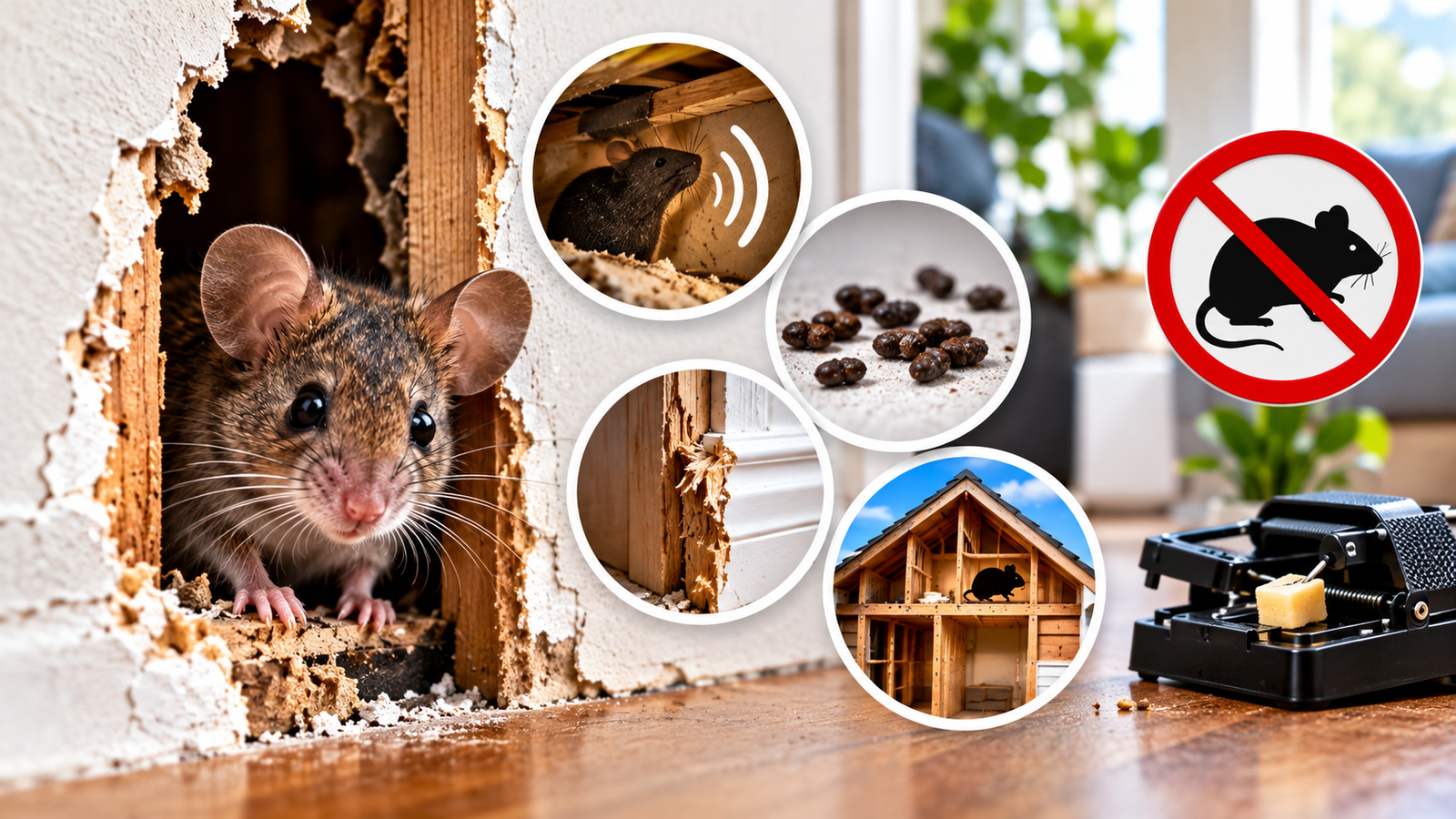
Keeping mice out is far easier than getting them out. Once mice are inside, they nest in walls, breed through the winter and leave droppings behind them. Before that happens, a weekend of work around the house takes away almost everything that draws them in.
This checklist covers the whole job, from the yard to the kitchen cupboard. Work through it in the fall, before the cold nights arrive, and check it again each spring.
Quick Checklist: How to Keep Mice Away from Your Home
| Area | What to do |
| Yard | Move firewood and compost away from walls, trim plants back from the house, clear leaves and take in bird feeders |
| Exterior walls | Seal gaps larger than 6 mm around pipes, vents, doors and the foundation |
| Garage and shed | Fix the door seal, store pet food and seed in sealed bins, clear cardboard |
| Kitchen | Store food in sealed containers, wipe crumbs daily, don't leave pet bowls out overnight |
| Storage areas | Swap cardboard boxes for plastic bins, declutter the basement and attic |
| Monitoring | Check for droppings monthly, and set a few traps at the first sign |
Why Prevention Works Better Than Removal
Mice come indoors in the fall looking for warmth, food and shelter. They don't hibernate, so a house keeps them going all winter.
Prevention works because it removes what they're looking for. Trapping, on its own, doesn't. If the gaps stay open and the food stays available, new mice simply replace the ones you catch. The two jobs that matter most are sealing the way in and taking away easy food.
1. Start With the Yard
Mice live outdoors all summer. The closer they can get to your walls, the more likely they are to find a way in.
- Move firewood away from the house — at least a few metres, and raised off the ground. Stacked wood against a wall is ideal shelter for mice.
- Trim shrubs, ivy and tree branches back from the walls and roof. Climbing plants and overhanging branches give mice a route up to the roofline.
- Keep grass cut and clear tall weeds near the foundation.
- Rake up leaves and clear out window wells, where mice hide while looking for a way in.
- Take in bird feeders, or move them well away from the house. Spilled birdseed is one of the biggest mouse attractants in GTA yards.
- Close up compost — use a sealed bin rather than an open pile, and keep it away from the house.
- Use bins with tight lids for garbage and recycling, and don't let bags sit outside overnight.
- Clear out clutter — stacked lumber, old furniture, tires and equipment against the wall all give mice cover.
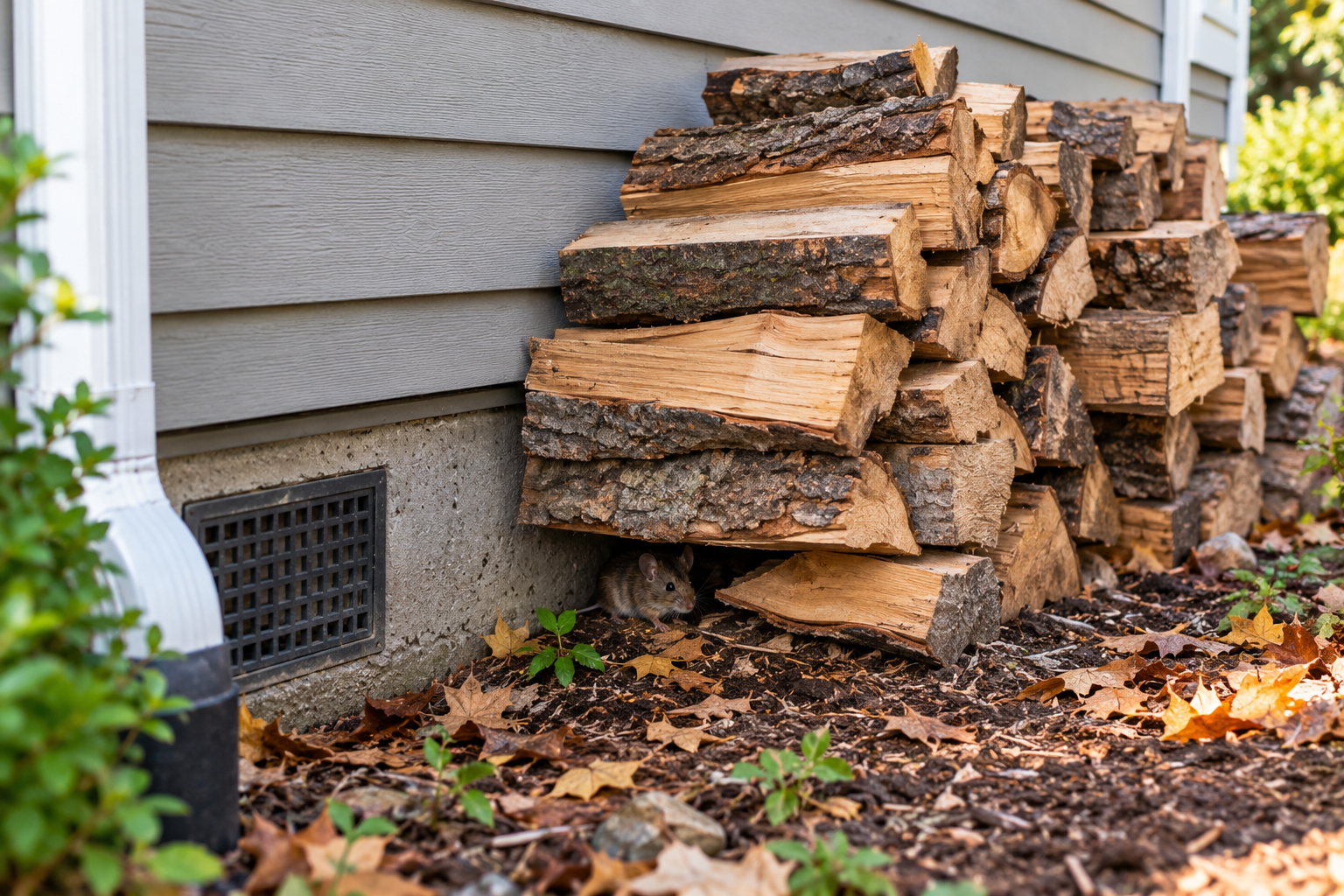
What about mice in the yard or garden?
You can't get rid of every mouse outdoors, and you don't need to. Mice belong outside. The goal is to make the area next to your house less attractive, and to make sure they can't get in. A tidy border around the walls — no woodpiles, no dense planting, no spilled seed — does more than anything you can spray or scatter.
2. Seal the Outside of Your House
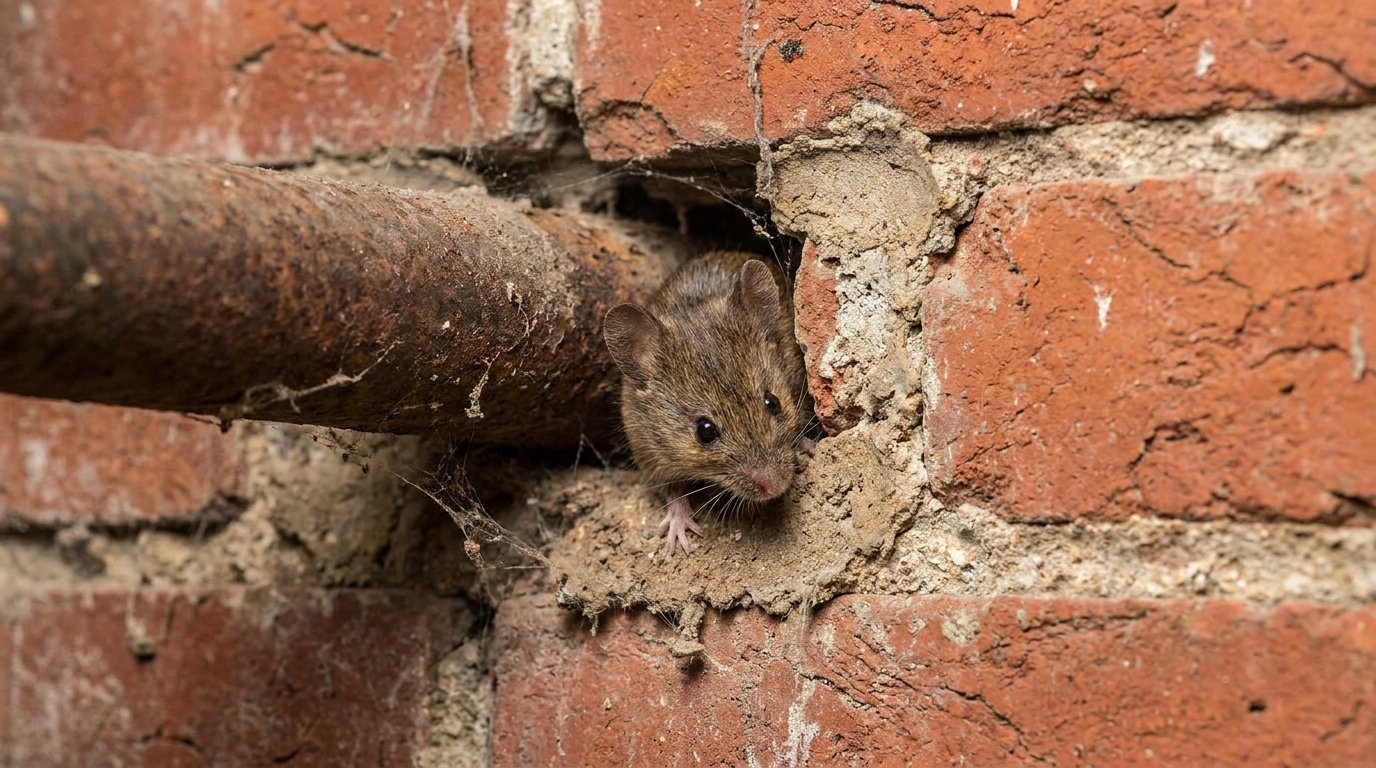
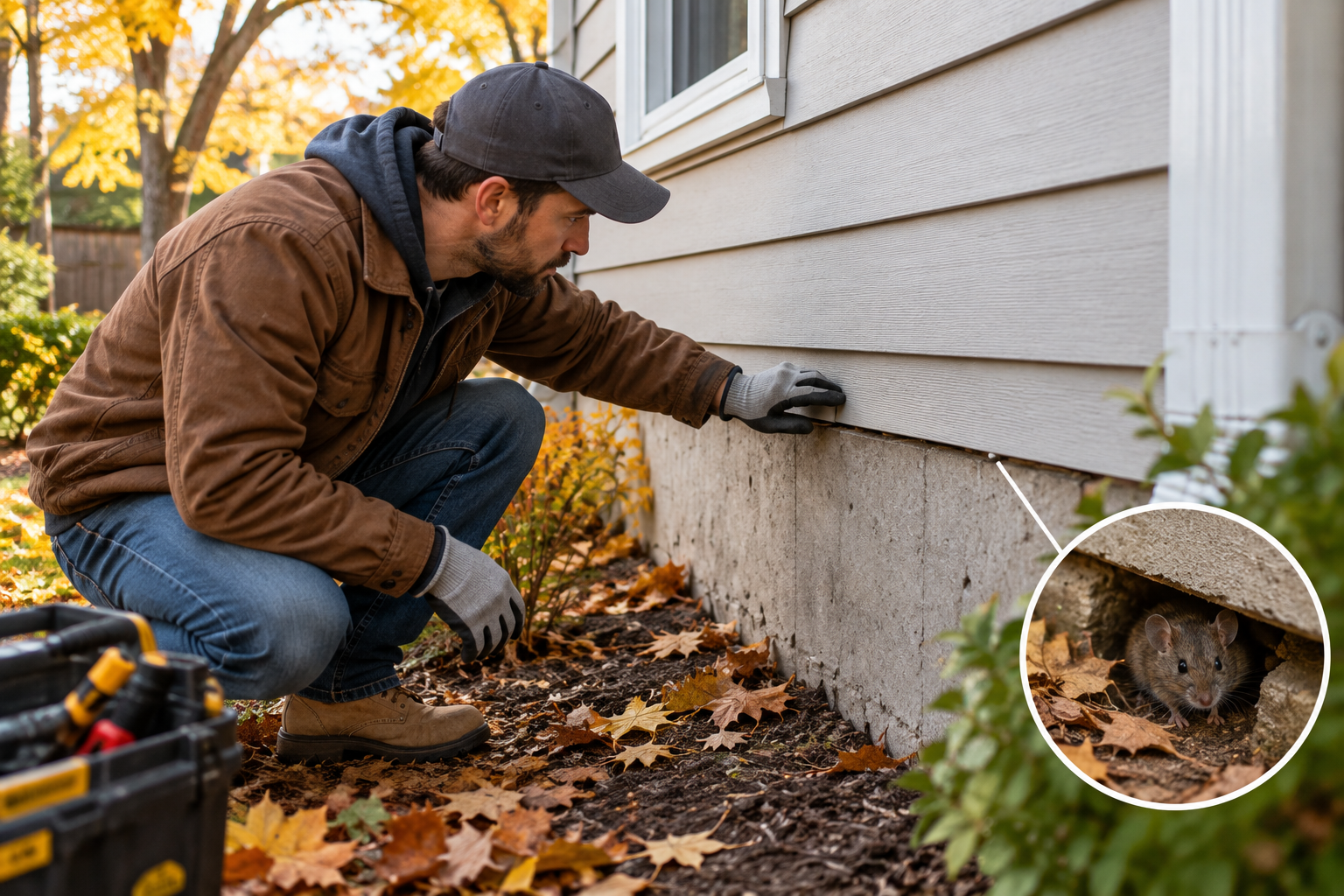
This is the single most important step. Mice can squeeze through a gap about 6 mm wide — roughly the width of a pencil.
Walk around your home and check:
- Gaps around pipes, cables, gas lines and air conditioner lines
- The bottom corners of the garage door, and the seal along the bottom
- Under exterior doors — look for daylight
- Dryer vents and exhaust vents that don't close fully
- Cracks in the foundation and the gap where the wall meets it
- Basement windows and frames
- Weep holes in brick walls (these need guards, not sealant)
- Soffits, roof vents and the gaps where the roof meets the wall
Seal with materials mice can't chew, such as copper mesh held with sealant, metal mesh, metal flashing, mortar or rodent-resistant door sweeps. Never block vents or weep holes completely — fit the right guard so air and water can still get through.
Our full guide covers each entry point and how to seal it properly: how mice get into your house.
3. Don't Forget the Garage and Shed
The garage is usually the first place mice get into, and the door into the house is their next step.
- Replace worn weatherstripping and fit a rodent-resistant garage door seal
- Check the door between the garage and the house for gaps, and add a door sweep
- Store pet food, birdseed and grass seed in sealed metal or thick plastic bins — not bags
- Replace cardboard boxes with plastic bins with tight lids
- Keep stored items off the floor and away from the walls
- Sweep up spilled seed, crumbs and pet food
If you park in the garage, check your car too. Mice can nest in an engine bay and chew wiring.
4. Take Away the Food Inside
Mice need very little food. Crumbs and an open bag of cereal are enough.
- Store dry goods in sealed containers — glass, metal or thick plastic with tight lids. Mice chew through bags, cardboard and thin plastic.
- Wipe counters, the stove top and the toaster daily, and sweep under appliances weekly.
- Don't leave pet food out overnight, and store the bag in a sealed bin.
- Keep fruit bowls and bread off the counter overnight if you've had mice before.
- Take out the garbage regularly, and use a bin with a lid.
- Fix dripping taps and leaky pipes under sinks — mice need water too.
- Clean up after meals outdoors — crumbs under a deck or patio table attract mice to the walls.
5. Tidy Storage Areas
Basements, attics and closets give mice quiet places to nest.
- Swap cardboard storage boxes for sealed plastic bins
- Keep boxes off the floor, on shelves, and away from walls
- Declutter piles of paper, fabric and old bedding — prime nesting material
- Don't store pet food, seed or bulk dry goods in the basement in their original bags
- Check the attic for droppings once or twice a year
6. Keep Watching Through the Winter
Prevention only works if you notice early when something slips through.
- Check under sinks, behind the stove and along basement walls for droppings once a month see what mouse poop looks like
- Listen for scratching in walls and ceilings at night see mice in walls
- Keep two or three traps set in the basement, garage or utility room as an early warning see the best mouse traps and bait
- Act at the first sign. A single mouse dealt with in October is a much smaller job than a family of mice in January.
Do Natural Repellents Keep Mice Away?
Peppermint oil, vinegar, mothballs and plug-in ultrasonic devices are the most common "keep mice away" products. The honest answer is that none of them replace sealing and sanitation:
- Scents like peppermint may put mice off briefly, but the smell fades and won't clear an infestation
- Mothballs aren't made or labelled for mice, and the fumes aren't safe to breathe indoors
- Ultrasonic repellers give inconsistent results, and mice often get used to the sound
Use them as a small extra if you like, but not instead of the checklist above.
What about a cat?
A cat may catch the occasional mouse, and mice may avoid areas a cat uses. But cats don't reach mice inside walls or attics, and plenty of homes with cats still have mice. A cat isn't a mouse control plan.
Your Fall Prevention Timeline
| When | What to do |
| Late August – September | Walk the outside of the house and seal gaps; fix garage and door seals; move firewood and take in bird feeders |
| October – November | Switch to sealed food storage; declutter garage, basement and attic; set a few monitoring traps |
| December – February | Check monthly for droppings and sounds, especially in the basement and attic |
| March – April | Inspect for winter damage to vents, siding and weatherstripping, and repair |
| May – July | Best time for bigger exterior repairs, exclusion work and yard clean-up |
When to Call a Professional
Prevention is mostly DIY, but it's worth getting help if:
- You've had mice in previous years and want to stop it happening again
- You can't reach or find the gaps, especially near the roofline
- You already have droppings or sounds in the house
- You own a rental, restaurant or other commercial property where an infestation is costly
- You want the exterior sealed properly with rodent-resistant materials
Preventive Mouse Control With Nomore Pest
Nomore Pest is a licensed and insured pest control company serving Toronto, Mississauga, Vaughan, Scarborough, North York and Etobicoke.A preventive visit covers the parts of this checklist most homeowners can't do safely: a full inspection inside and out, an entry-point map, and sealing with rodent-resistant materials that keeps vents and weep holes working. Learn more about our mouse control and exclusion services.
Want your home sealed before winter? Book a mouse inspection or call 800-461-1827 / 437-922-2705. You can also email info@nomorepest.ca.
Conclusion:
Keeping mice out comes down to three things: seal the gaps, take away easy food and shelter, and check regularly so you catch a problem early. Do the outside work in late summer or early fall, tidy the garage and storage areas, and keep a couple of traps set as an early warning through the winter. If mice have already found a way in, our complete guide to getting rid of mice humanely covers removal and Nomore Pest team can seal your home properly before the cold sets in.
Frequently asked questions
How do I keep mice away from my house?
Seal gaps larger than about 6 mm around pipes, vents, doors and the foundation; store food, pet food and birdseed in sealed containers; keep firewood, compost and clutter away from the walls; and trim plants back from the house. Check for droppings regularly so you catch any problem early.
What keeps mice away naturally?
The most effective natural approach is taking away what mice need: food, water, shelter and a way in. Strong scents like peppermint may discourage mice for a short time, but they don't keep mice out on their own.
How do I get rid of mice in my yard?
You can't remove every mouse outdoors, and you don't need to. Focus on the area next to your home: remove woodpiles and clutter, trim back plants, take in bird feeders, use sealed compost and garbage bins, and make sure mice can't get into the house.
When should I mouse-proof my house?
Late summer and early fall are ideal in the GTA, before mice start moving indoors from about September to November. Spring is a good time to repair any damage from the winter.
Will keeping my house clean keep mice out?
It helps, but it isn't enough on its own. Mice come inside for warmth and shelter as well as food, so a very clean home with open gaps can still get mice. Sealing entry points matters most.
Do bird feeders attract mice?
Yes. Spilled seed under a feeder is an easy food source. If you feed birds, keep feeders well away from the house, use a tray to catch spillage, and clean up regularly — or take them in during the fall.
Does one mouse mean more are coming?
Often, yes. Mice breed quickly and a gap that let one mouse in will let others in. Treat a single mouse as a signal to check for entry points and set a few traps.
Got a pest problem? Don't wait.
Book a professional inspection across Toronto & the GTA and get peace of mind, backed by a licensed & insured local team.
Or email us at info@nomorepest.ca · Toronto & the GTA