You've got itchy red bumps and you're trying to work out the cause. Bed bugs? Hives? Something in your bedding like dust mites? These three get mixed up all the time, and treating the wrong one wastes time and money. The good news is that they behave very differently once you know what to look for.
This guide compares bed bug bites, hives and dust mite reactions side by side, so you can narrow down the cause and know what to do next.
This article is general information, not medical advice. For skin reactions that worry you, talk to your health care provider or call Health811 (811) in Ontario to speak with a registered nurse.
Quick Answer: Bed BugBites vs Hives vs Dust Mites
| Bed bug bites | Hives | Dust mite allergy | |
| What it is | Bites from a blood-feeding insect | A skin reaction, not a bite | An allergy, not a bite |
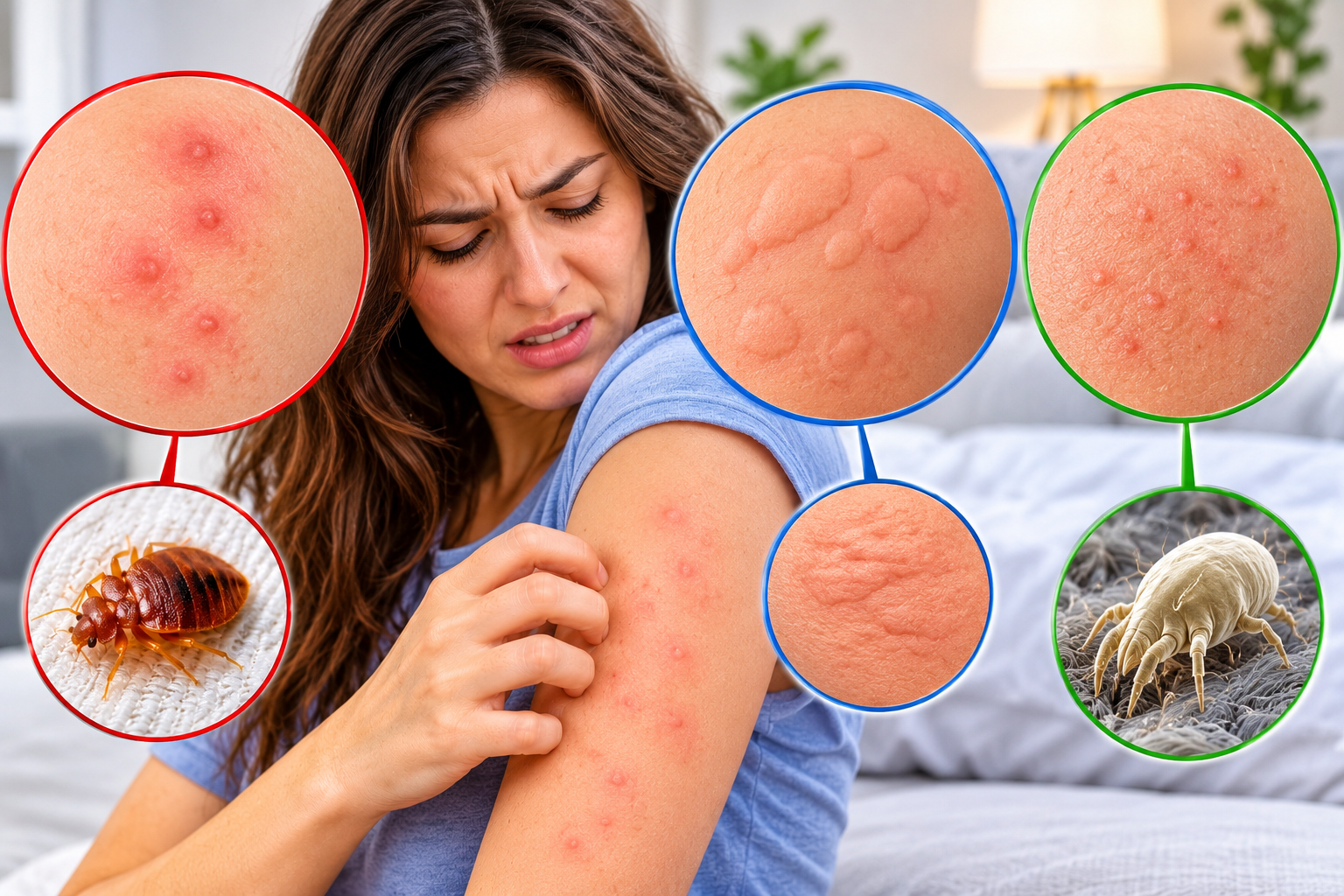
| Looks like | Red bumps or flat welts, often in lines or clusters | Raised pink or red welts that can merge into larger patches | Usually sneezing, stuffy nose or itchy eyes; can worsen eczema |
| Where | Skin uncovered while sleeping: face, neck, arms, hands | Anywhere, often trunk, thighs, upper arms, face | Mostly nose, eyes and airways; skin flares in people with eczema |
| How long each spot lasts | About one to two weeks | Individual welts usually fade within hours | Symptoms continue while you're exposed |
| Pattern over time | New bites after sleeping | Welts fade and new ones appear in different places | Often worse in the bedroom or in the morning |
| Evidence in the bed | Fecal spots, shed skins, eggs, live bugs | None | None you can see; mites are microscopic |
Bed Bug Bites: What to Look For
HealthLinkBC describes a bed bug bite as a red bump or flat welt that may be itchy. Bites usually appear on skin left uncovered while you sleep, such as the face, neck, arms and hands. They often show up in a line or small cluster and can take one to two weeks to go away. Windsor-Essex County Health Unit notes that marks can take up to 14 days to appear, and some people don't react at all.
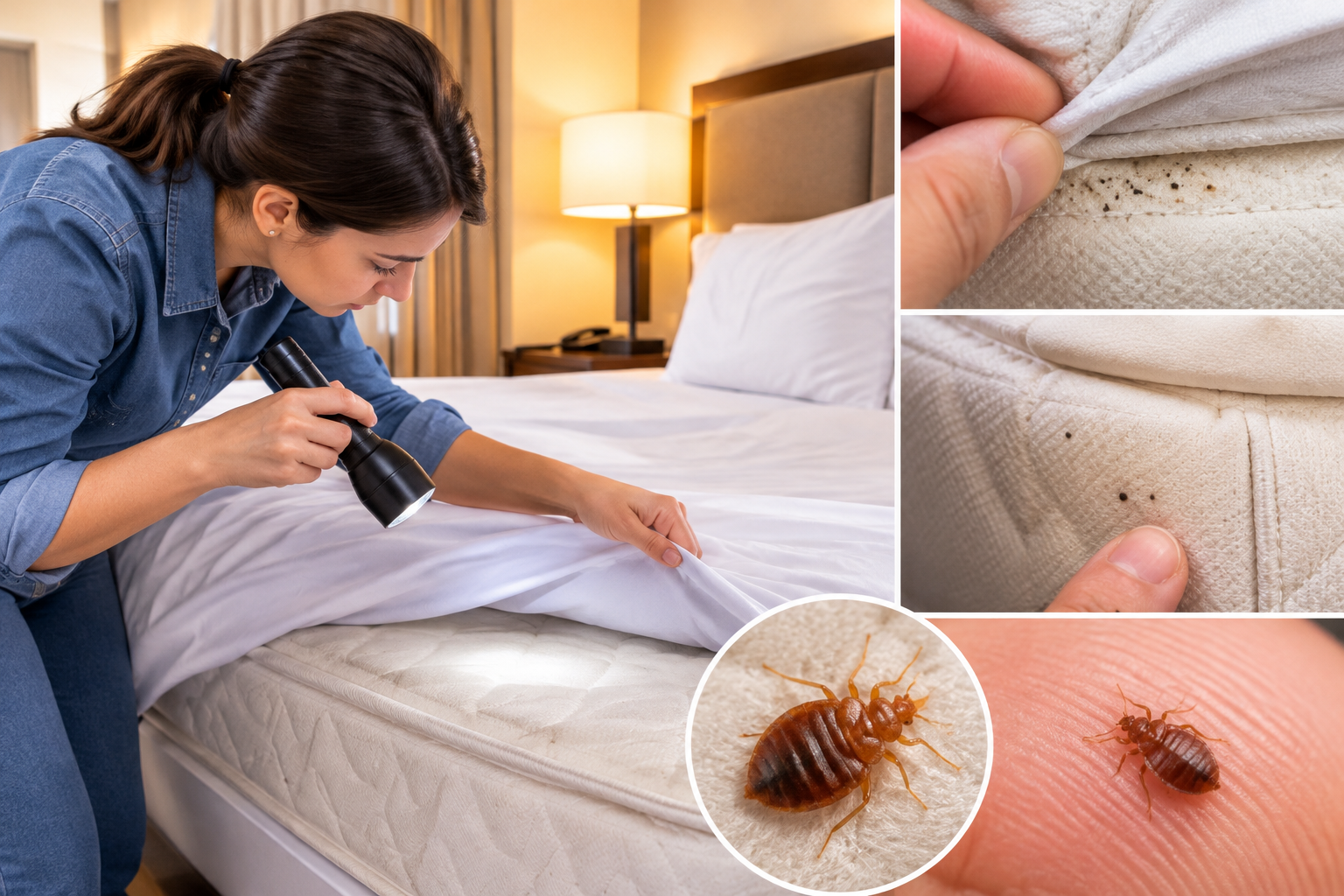
The key difference from hives and dust mites is that bed bugs leave physical evidence in and around the bed:
- Black fecal spots along mattress seams that smear reddish-brown when wiped with a damp cloth
- Empty, light brown shed skins
- Pearl-white eggs about 1 mm long glued into seams and cracks
- Live bugs: flat, oval and reddish-brown, about the size of an apple seed
Hives: What to Look For
Hives (urticaria) are a skin reaction, not a bite. Harvard Health describes them as raised, itchy swellings that are often pink or red, round or oval, and varying in size. They can join together into larger swollen patches and appear anywhere on the body, especially the trunk, thighs, upper arms and face.
The giveaway is timing. Individual hives usually fade within 8 to 12 hours, while new ones may appear in other places. A bed bug bite stays in the same spot for days. If you circle a welt with a pen and it's gone by evening, it's very unlikely to be a bite.
What triggers hives?
Harvard Health lists many triggers, including:
- Allergic reactions to foods, medications, insect stings or pollen
- Physical triggers such as heat, cold, pressure on the skin, exercise and sunlight
- Stress
- Irritating chemicals or soaps
Often no cause is found. Hives that last six weeks or more are considered chronic.
Can bed bugs cause "stress hives"?
Not directly, but the two can overlap. Living with bed bugs is stressful, and public health units note that infestations can lead to stress, anxiety and lost sleep. Stress is a known trigger for hives in some people. So someone dealing with bed bugs may have both bites and hives, which makes the marks even harder to read. Checking the bed for physical evidence is the most reliable way to sort it out.
Dust Mites: What to Look For
HealthLinkBC describes dust mites as tiny spider-like creatures that live in carpets, bedding, pillows, mattresses, upholstered furniture and stuffed toys, feeding on flakes of dead human skin. They're far too small to see without magnification.
Most importantly, dust mites don't bite. HealthLinkBC states that mites do not bite humans or spread disease. Instead, waste particles they leave behind can trigger allergies and asthma in some people. That usually means:
- Sneezing, runny or stuffy nose
- Itchy, watery eyes
- Coughing or wheezing in people with asthma
- Flare-ups of itchy, dry skin in people with eczema
So if you're seeing distinct red bites, dust mites aren't the cause. If your symptoms are mostly in your nose and eyes and get worse in the bedroom, a dust mite allergy is worth discussing with your doctor.
Dust Mite Bites vs Bed Bug Bites
People search for "dust mite bites" all the time, but there's no such thing. Here's how to tell the two situations apart:
- Distinct bumps in lines or clusters on exposed skin after sleeping point to bed bugs.
- Sneezing, congestion or itchy eyes without distinct bite marks point to an allergy, which could be dust mites.
- Visible evidence in the bed like fecal spots, skins or eggs means bed bugs. Dust mites leave nothing you can see.
A Simple Way to Narrow It Down
- Circle a few marks with a pen and check them over the next 12–24 hours. Gone or moved? Think hives. Still there? Think bites.
- Note where the marks are. Exposed skin while sleeping fits bed bugs. Large patches anywhere, including covered skin, fit hives.
- Check the mattress seams, box spring and bed frame with a flashlight for fecal spots, shed skins, eggs and live bugs.
- Put interceptor traps under the bed legs for a week or two to catch bed bugs you can't see.
- Think about triggers: new foods, medications, soaps, stress or a recent illness can all set off hives.
- Notice other symptoms. Sneezing and itchy eyes in the bedroom suggest allergy rather than bites.
Other Causes of Itchy Bumps
| Cause | Clues |
| Fleas | Small itchy bumps, often around ankles and lower legs; pets scratching |
| Mosquitoes | Single puffy bumps after time outdoors or with an open window |
| Carpet beetle larvae | Itchy rash that looks like bites, often under clothing; fuzzy larvae in closets and rugs |
| Scabies | Intense itching, often worse at night, with a rash between fingers, on wrists or waist; needs a doctor's diagnosis |
| Contact dermatitis | Red, itchy rash where skin touched a new detergent, soap or fabric |
When to See a Health Care Provider
- Hives keep coming back or last more than a few weeks
- Bites or rashes look infected: spreading redness, warmth, pain or pus
- Itching is severe or affecting your sleep
- You suspect an allergy, including dust mites, and want it confirmed
- Swelling of the lips, tongue or face, wheezing, chest tightness, dizziness or trouble breathing. Call 911. These can be signs of a serious allergic reaction
What to Do If It's Bed Bugs
- Keep sleeping in your bed so you don't spread them to another room.
- Bag your bedding in the bedroom, then wash it hot and dry it on the hottest setting for at least 30 minutes.
- Vacuum mattress seams and cracks, then seal the vacuum contents in a plastic bag and throw it out.
- Skip bug bombs and sprays on the bed. They don't reach where bed bugs hide.
- Book a professional inspection to confirm and treat every life stage.
How Nomore Pest Can Help
We can't diagnose skin conditions, but we can tell you whether bed bugs are part of the picture. Our licensed technicians inspect the bed, furniture and room for evidence. If bed bugs are confirmed, we use proven bio and chemical treatments that target every life stage, including eggs, with a follow-up inspection built into every plan.
We serve homes, apartments and businesses across Toronto, Mississauga, Vaughan, Scarborough, North York and Etobicoke.. If you're not sure what's causing your bumps, book a free bed bug inspection and rule bed bugs in or out.
Conclusion
Bed bug bites stay put for days, appear on exposed skin after sleeping, and come with evidence in the bed. Hives fade within hours and pop up in new places, often triggered by allergies, heat or stress. Dust mites don't bite at all; they cause allergy symptoms like sneezing and itchy eyes. Watch how the marks change, check the bed for signs, and see a health care provider for anything that doesn't fit or gets worse.
Want to rule out bed bugs? Call Nomore Pest at 800-461-1827 or 437-922-2705, or email info@nomorepest.ca for a free bed bug inspection anywhere in Toronto and the GTA.
Frequently asked questions
How can I tell if it's hives or bed bug bites?
Watch the marks over a day. Individual hives usually fade within 8 to 12 hours, and new ones appear in other places. Bed bug bites stay in the same spot for days and usually appear on skin uncovered while sleeping. Checking the bed for fecal spots, shed skins and eggs confirms bed bugs.
Do dust mites bite?
No. Dust mites don't bite people or spread disease. Waste particles they leave behind can trigger allergy and asthma symptoms like sneezing, a stuffy nose, itchy eyes and eczema flare-ups, but not individual bite marks.
Can stress cause hives that look like bed bug bites?
Yes. Stress is a known trigger for hives in some people, and hives can look like bites at first. Hives usually fade within hours and move around, while bed bug bites stay put for days. Since bed bugs themselves cause stress, it's possible to have both.
What do bed bug bites look like compared to hives?
Bed bug bites are usually smaller red bumps or flat welts, often in a line or cluster on exposed skin. Hives are raised pink or red welts that vary in size, can merge into larger patches, and appear anywhere on the body, including skin covered by clothing.
How do I know if I have dust mites or bed bugs?
Bed bugs leave visible evidence in the bed: black fecal spots, shed skins, tiny white eggs and live bugs. Dust mites are microscopic and leave nothing you can see. Bite marks point to bed bugs; allergy symptoms without bites point to dust mites.
When should I see a doctor about itchy bumps?
See a health care provider if hives keep returning, bumps look infected, itching is severe, or you want an allergy confirmed. Call 911 for swelling of the lips, tongue or face, wheezing, chest tightness or trouble breathing.
Got a pest problem? Don't wait.
Book a professional inspection across Toronto & the GTA and get peace of mind, backed by a licensed & insured local team.
Or email us at info@nomorepest.ca · Toronto & the GTA