You woke up with a row of itchy red bumps on your arm or neck, and they weren't there last night. Bed bugs are a common suspect, but bites on their own are hard to read, because many other things cause similar marks. This guide explains what bed bug bites usually look like, the symptoms to expect, how to get relief, and how to confirm whether bed bugs are really the cause.
This article is general information, not medical advice. If you're worried about a skin reaction or any symptoms, talk to your health care provider or call Health811 (811) in Ontario to speak with a registered nurse.
Quick Answer: What Bug Bites Bites Look Like
- Appearance: small red bumps or flat welts, often itchy
- Pattern: frequently in a line, zigzag or small cluster
- Where: skin left uncovered while sleeping: face, neck, arms, hands, shoulders and legs
- When: usually noticed in the morning, but marks can take up to 14 days to appear
- How long: they usually fade within one to two weeks
- Disease: bed bugs are not known to spread disease to people
What Do Bed Bug Bites Look Like?
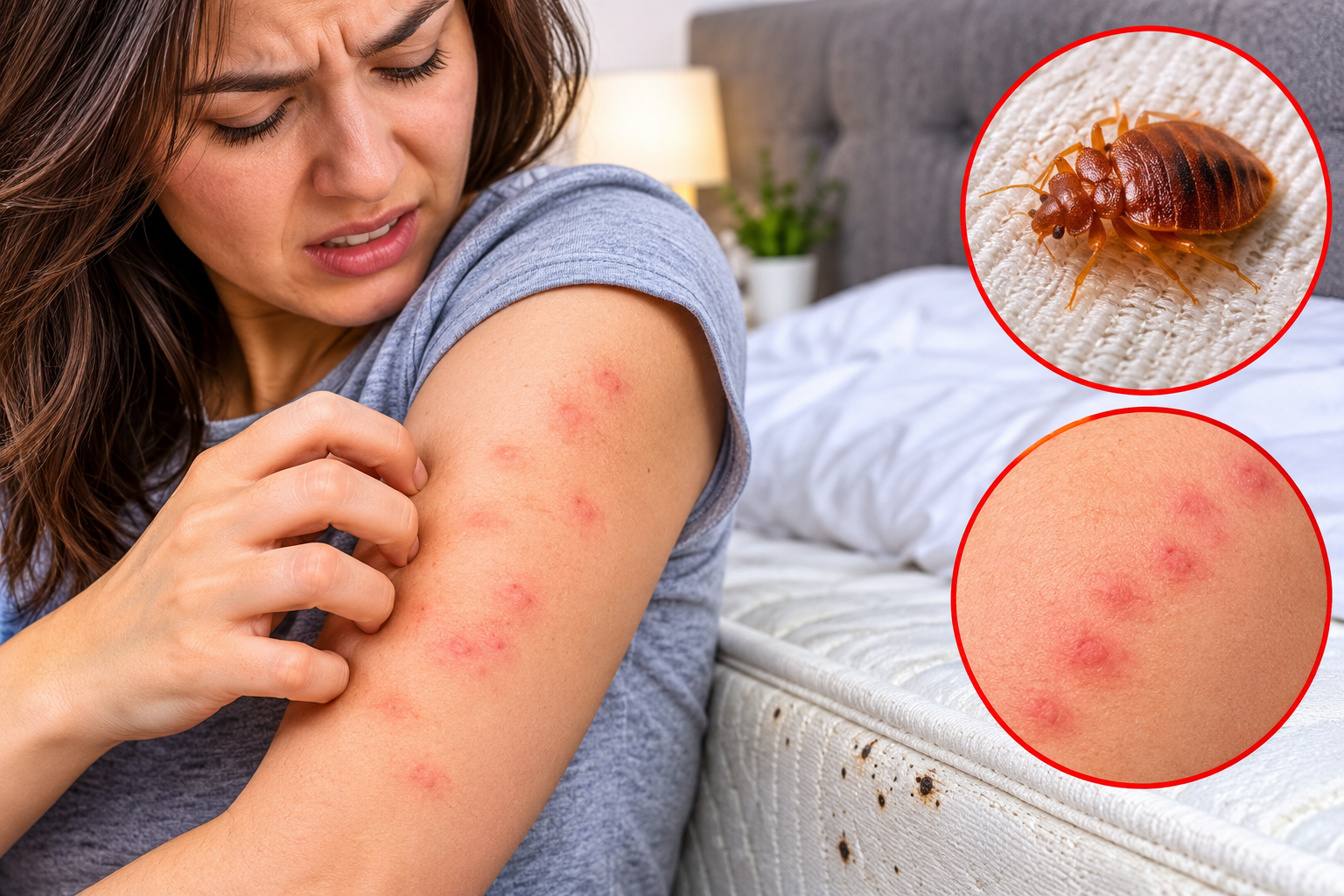
HealthLinkBC describes a bed bug bite as a red bump or flat welt that may be itchy. Beyond that, bites can look very different from one person to the next:
- Small red bumps, similar to a mosquito bite, sometimes with a darker red centre
- Raised, swollen welts in people who react more strongly
- Lines or clusters of three or more bites, because a bed bug may probe several times or several bugs feed along the same patch of exposed skin
- Little or nothing at all. Some people don't react to bites, so one person in a bed can be covered while another shows no marks
Because reactions vary so much, there's no single "bed bug bite" look that a photo can confirm.
Where Bed Bugs Bite
Bed bugs feed on skin they can reach easily while you sleep. HealthLinkBC lists the face, neck, arms and hands as common spots, since they're usually uncovered. Shoulders, the upper back and legs are common too if you sleep without covering them.
Can bed bugs bite through clothes?
No. Bed bugs can't bite through fabric. They crawl under loose clothing or bite along edges like the neckline, waistband or cuffs. That's why bites often appear in a line along the edge of pyjamas or a sleeve.
Symptoms of Bed Bug Bites
Do bed bug bites itch?
Usually, yes. Itching is the most common symptom, and it can be intense for some people. Windsor-Essex County Health Unit notes that bites can cause swelling, redness and itching.
Common reactions
- Itchy red bumps or welts
- Mild swelling around the bite
Less common reactions
- Skin infection from scratching. Signs include increasing redness, warmth, swelling, pain or pus.
- Severe allergic reactions, which public health units describe as rare
Effects beyond the skin
Living with bed bugs can affect sleep and wellbeing. Windsor-Essex County Health Unit notes that infestations can lead to loss of sleep, stress, anxiety and fatigue. That's a real part of the problem and one more reason to deal with an infestation quickly.
When Do Bed Bug Bites Appear?
Many people notice bites in the morning, because bed bugs feed at night. But the timing isn't always that clear. Windsor-Essex County Health Unit says bite marks can take up to 14 days to appear. So the bites you see today may come from several nights ago, and a new bite doesn't always mean you were bitten last night.
HealthLinkBC notes that bites can take one to two weeks to go away.
Are Bed Bugs Dangerous?
Bed bugs are a nuisance and can cause a lot of discomfort, but HealthLinkBC states that they're not known to spread disease to people. The main health risks are skin infections from scratching, rare allergic reactions, and the effect on sleep and stress.
Are Bed Bugs Contagious?
The bites aren't contagious, and bed bugs don't live on people the way lice do. You can't pass bites to someone through touch. What spreads is the bugs themselves: they hitchhike in luggage, bags, clothing and furniture from one place to another. That's why an infestation can move between apartments or come home after a trip.
How to Relieve Bed Bug Bites
Most bites settle down on their own. Public health guidance from HealthLinkBC and Windsor-Essex County Health Unit recommends:
- Try not to scratch. Scratching is the main cause of skin infections.
- Wash the bites gently with soap and water and keep the skin clean.
- Apply an antiseptic cream or lotion to help prevent infection.
- Ask a pharmacist about antihistamines or anti-itch creams if itching is keeping you up.
- Use a cool compress to calm swelling and itch.
When to see a health care provider
- The bites are very itchy or aren't improving after a couple of weeks
- You see signs of infection: spreading redness, warmth, swelling, pain or pus
- You have a strong reaction, such as large swollen areas or blisters
- You have trouble breathing, swelling of the face or throat, or feel faint. Call 911
- Bites are affecting your sleep or mental health
Bed Bug Bites vs Other Bites
| Cause | Typical look and location | Other clues |
| Bed bugs | Red bumps or welts on exposed skin, often in lines or clusters | Fecal spots, shed skins or eggs in mattress seams |
| Fleas | Small itchy bumps, often around ankles and lower legs | Pets scratching; pepper-like specks in pet fur |
| Mosquitoes | Single puffy bumps scattered on exposed skin | Bites after time outdoors or with an open window |
| Spiders | Usually one or two bites, not lines or clusters | No bed bug signs in the bed; check for spiders or webs nearby |
| Carpet beetle larvae | Itchy rash that looks like bites, often under clothing | Not a bite; fuzzy larvae found in closets, rugs and fabrics |
| Hives or skin conditions | Raised, itchy patches that can move or change within hours | No bugs or signs in the bed |
A dermatologist or family doctor can help when it isn't clear whether marks are bites at all.
How to Confirm It's Bed Bugs
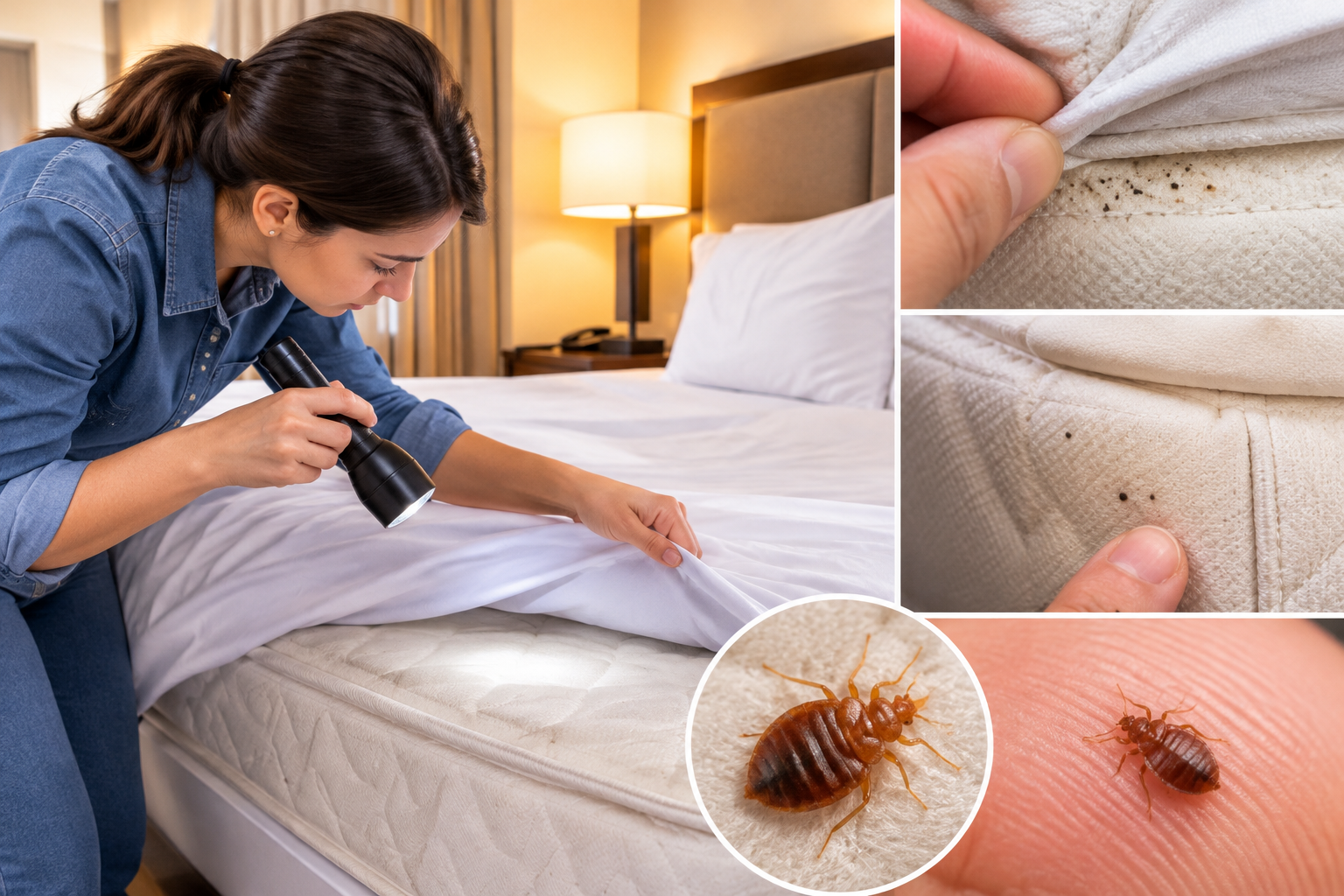
Bites alone can't confirm bed bugs. To know for sure, look for physical evidence in and around the bed:
- Fecal spots: clusters of tiny black dots along mattress seams that smear reddish-brown when wiped with a damp cloth
- Shed skins: empty, see-through, bug-shaped shells in different sizes
- Eggs: pearl-white ovals about 1 mm long, glued into seams and cracks
- Live bugs: flat, oval, reddish-brown adults about the size of an apple seed, or pale nymphs
- Blood smears on sheets and pillowcases
Check the mattress seams, box spring, bed frame, headboard and nearby furniture with a flashlight. Placing interceptor traps under the bed legs for a week or two can also catch bugs you can't see.
What to Do If You Think You Have Bed Bugs
- Look after the bites as described above.
- Check the bed and nearby furniture for fecal spots, skins, eggs and live bugs.
- Keep sleeping in your bed. Moving to the couch or another room can spread them.
- Bag your bedding in the bedroom, then wash it hot and dry it on the hottest setting for at least 30 minutes.
- Avoid bug bombs and spraying products on your bed or skin. Foggers don't reach where bed bugs hide, and pesticides should never go on people or bedding unless the label allows it.
- If you rent, tell your landlord in writing as soon as you find signs.
- Book a professional inspection to confirm the cause and treat it.
How Nomore Pest Can Help
We can't diagnose bites, but we can find out whether bed bugs are behind them. Our licensed technicians inspect the bed, furniture and room for evidence. If bed bugs are confirmed, we use proven bio and chemical treatments that target every life stage, including eggs, with a follow-up inspection built into every plan.
We serve homes, apartments and businesses across Toronto, Mississauga, Vaughan, Scarborough, North York and Etobicoke. If you're waking up with bites and want to know the cause, book a free bed bug inspection.
Conclusion
Bed bug bites are usually itchy red bumps or welts on skin left uncovered while you sleep, often in lines or clusters. They can take up to two weeks to show up and one to two weeks to fade, and some people don't react at all. They aren't known to spread disease, but scratching can lead to infection, so keep them clean and see a health care provider if they get worse. Bites alone can't confirm bed bugs, so check the bed for fecal spots, shed skins and eggs, and get an inspection if you find them.
Waking up with bites? Call Nomore Pest at 800-461-1827 or 437-922-2705, or email info@nomorepest.ca for a free bed bug inspection anywhere in Toronto and the GTA.
Frequently asked questions
What do bed bug bites look like?
Bed bug bites usually look like small red bumps or flat welts that itch. They often appear in a line, zigzag or small cluster on skin left uncovered while sleeping, such as the face, neck, arms, hands and shoulders. Some people don't react at all.
How long do bed bug bites last?
They usually fade within one to two weeks. Bite marks can also take up to 14 days to appear, so the bites you notice may be from several nights earlier.
Do bed bug bites spread disease?
Bed bugs are not known to spread disease to people, according to Canadian public health guidance. The main risks are skin infections from scratching, rare allergic reactions, and lost sleep and stress.
How do I stop bed bug bites from itching?
Try not to scratch, wash the bites with soap and water, and apply an antiseptic cream. A pharmacist can recommend an antihistamine or anti-itch cream. A cool compress can also help. See a health care provider if bites get worse or look infected.
Can bed bugs bite through clothes?
No. Bed bugs can't bite through fabric. They crawl under loose clothing or bite along edges like the neckline, waistband or cuffs, which is why bites often appear in a line along a sleeve or collar.
How do I know if bites are from bed bugs?
You can't tell from bites alone. Check the mattress seams, box spring, bed frame and headboard for black fecal spots, shed skins, tiny white eggs or live bugs. Interceptor traps under the bed legs help too. If you find those signs, bed bugs are the likely cause.
Got a pest problem? Don't wait.
Book a professional inspection across Toronto & the GTA and get peace of mind, backed by a licensed & insured local team.
Or email us at info@nomorepest.ca · Toronto & the GTA